White House AI Framework Rejects EU-Style Regulation, Prioritizes Innovation
The White House unveiled an AI framework replacing 50 state laws with one national standard, rejecting EU-style regulation while Republican state lawmakers push back amid congressional gridlock.
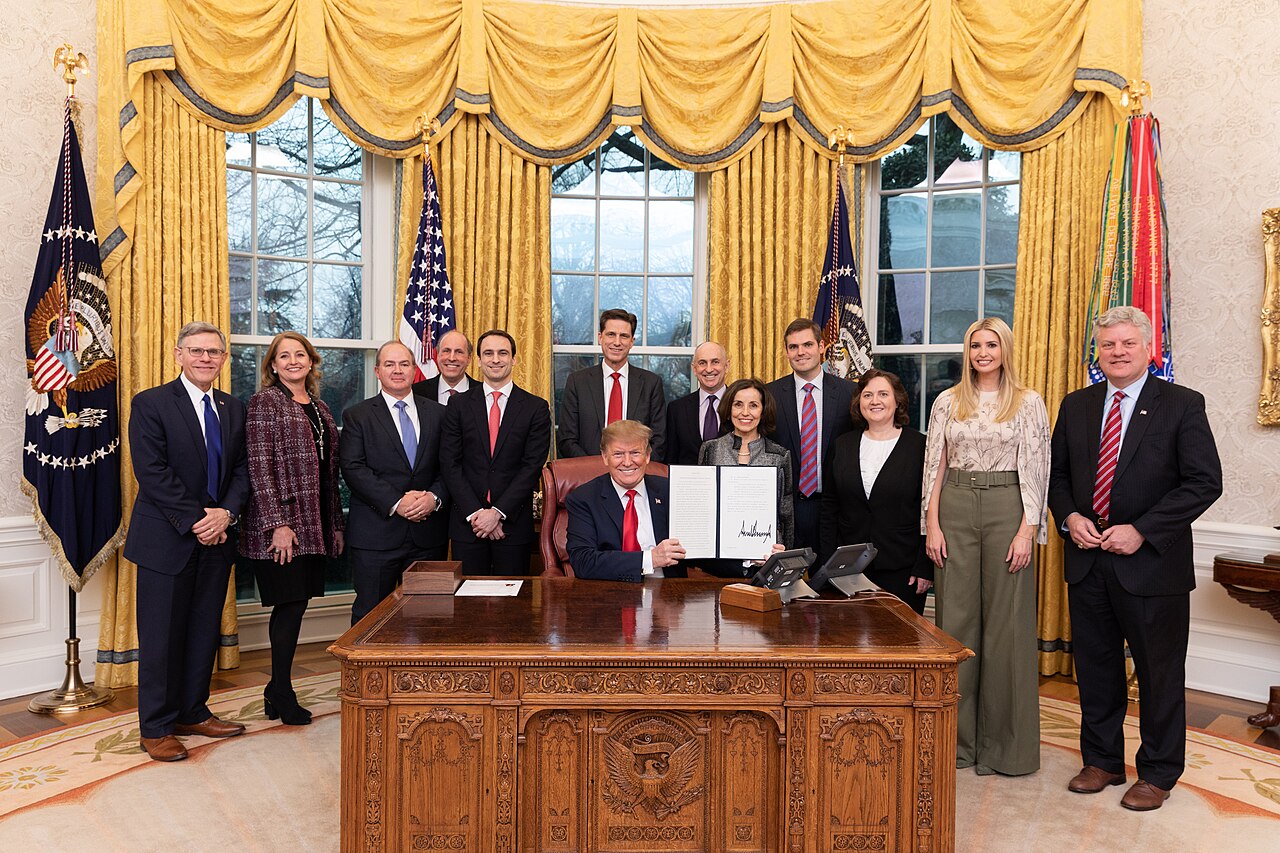
The White House unveiled a four-page AI framework on March 20 that would replace 50 conflicting state laws with one national standard — explicitly rejecting the EU-style precautionary regulation that has hampered European tech development. But even as the administration pushes Congress to act this year, Republican state lawmakers say federal gridlock forces them to protect their own constituents.
The National Policy Framework for Artificial Intelligence calls for congressional action to establish a single national standard, replacing the patchwork of state regulations that administration officials argue threatens American innovation. "We need one national policy — not a 50-state patchwork of laws," said Michael Kratsios, director of the Office of Science and Technology Policy. "This legislative proposal delivers on that."
The framework positions America's approach in direct contrast to the European Union's AI Act, which imposes penalties up to 7 percent of global turnover and follows a precautionary regulatory model. The White House document advocates no new federal regulatory body and emphasizes voluntary standards, positioning innovation and American competitiveness as primary objectives. This innovation-first philosophy represents a calculated rejection of the Brussels model that conservative analysts say has stifled European tech development.
Six key objectives form the framework's core, with free speech protections and child safety measures receiving prominent emphasis. The document proposes preventing government coercion of tech providers while establishing parental controls for privacy and content exposure. "The framework helps parents to safeguard their children from online harm, shield communities from higher electric bills, protect our First Amendment rights from AI censorship, and ensure that all Americans benefit from this transformative technology," said David Sacks, former White House AI and Crypto Czar.
A revealing Fox News poll exposes a tension between abstract AI anxiety and personal job security that suggests regulatory momentum may be driven by fear rather than genuine stakes. Sixty-six percent of registered voters now express concern about AI, up 10 points since 2023, but 69 percent of employed voters report no worry about their own jobs. The poll, conducted March 20-23, found AI concern ranking below inflation, healthcare costs, gas prices, political divisions and unemployment in voter priorities.
Preemption provisions would block state AI laws that impose "undue burdens" while preserving state authority over children, consumers, fraud and zoning. The framework characterizes AI development as "an inherently interstate phenomenon" that requires federal oversight to avoid conflicting regulations across state lines. This approach has drawn immediate criticism from state lawmakers who argue Congress cannot act quickly enough.
Republican state legislators in Utah, Pennsylvania and Texas are pushing back against the White House position, insisting states must continue legislating despite federal ambitions. "Congress is in a gridlock and they not only will not act, they can't act," said Utah State Rep. Doug Fiefia. "In states like Utah we see this as an opportunity to step forward to protect our constituents and our citizens, especially as it relates to child safety."
Pennsylvania State Sen. Tracy Pennycuick expressed skepticism about federal effectiveness. "I am mildly interested in what the federal government's doing at this point," she said. "It just takes too long. I think states are the first ones to see when there's a problem and they have the ability to pivot and act quickly."
Congressional leaders have endorsed the administration's timeline despite election year complexities. House Speaker Mike Johnson stated, "The first thing is we have to deliver a single national framework that protects children, safeguards communities, supports creators and avoids a patchwork of state regulations." Senate support comes from Tennessee Republican Marsha Blackburn, whose 291-page TRUMP America AI Act discussion draft aligns with the administration's broad objectives.
The framework's release follows a December 2025 executive order from President Trump directing development of what he termed "One Rulebook" for AI governance. Administration officials want congressional action this year, before new state AI laws take effect in California, Colorado, Illinois and Texas.
Industry advocates praised the light-touch approach. Patrick Hedger, policy director at NetChoice, said the framework shows the White House knows "what is at stake and what it will take to win the future," adding that "a light-touch regulatory environment is required for AI innovation." Daniel Castro of the Center for Data Innovation noted the framework avoids "the worst instincts in today's AI debate" including "alarmism about unemployment."
The broader implications position America's AI governance as a choice between innovation and precaution, with significant consequences for the global leadership race. While the EU implements its risk-based framework starting August 2026, the U.S. approach emphasizes sector-specific existing authorities and voluntary compliance, setting up competing models for how democracies should govern emerging technologies. Families, workers and communities will feel the difference as one path promises restraint and another champions American ingenuity.