Progressive Billionaire's Own Tax Bill 'Not the Answer'
California gubernatorial candidate Tom Steyer told a live debate audience that paying more taxes is not the solution, sparking backlash as the billionaire pushes wealth taxes on his peers while exempting himself.
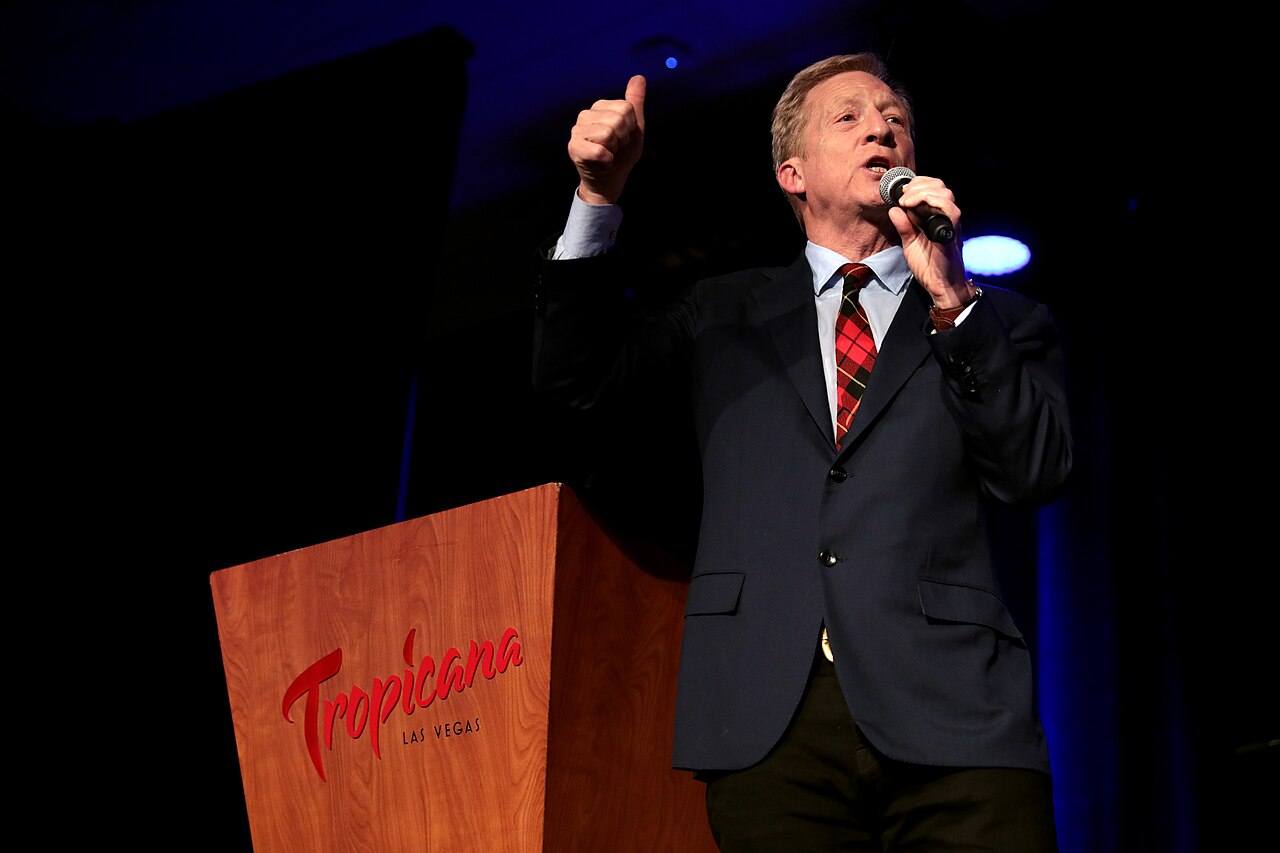
California gubernatorial candidate Tom Steyer stared down a live debate audience on April 22 and delivered a message that would define his campaign: He does not believe he should pay more taxes. The $2.4-billion private equity billionaire, who campaigns on taxing his wealthy peers, called his own tax bill "not the answer."
The exchange captured a contradiction that has haunted Steyer's bid for governor. A candidate built on the promise of making the rich pay more declined to do so himself.
"Steyer pays the lowest tax rate of anyone on this stage," Republican candidate Steve Hilton declared during the televised debate.
Steyer responded that he and his wife intend to give away the bulk of their money while they are alive. He drew the line at higher taxes.
"My wife and I have said that we will give the bulk of our money while we're alive," Steyer said. "But me paying more taxes is not the answer."
He argued that structural change, not individual sacrifice, solves the state's problems.
KRON4 moderators gave Steyer a D grade for his performance, the worst of the night. They criticized his answer on wealth as overly animated and overcomplicating. The billionaire has poured $112 million into his campaign while championing a ballot initiative to impose a 5 percent wealth tax on individuals worth $1 billion or more. He also supports a 2027 special election to reassess commercial properties at market value under a split-roll reform of Proposition 13.
The contradiction grew sharper on April 20 when Our Revolution endorsed Steyer. The anti-billionaire organization founded by Sen. Bernie Sanders, whose personal net worth totals $2.5 million, broke precedent to back a billionaire candidate.
"Yes, Tom Steyer is a billionaire," the group's statement read. "But it matters what he is doing with that power."
Joseph Geevarghese, Our Revolution's executive director, called Steyer someone challenging the very system that benefits people like him. Investor Spencer Camp responded on X with a question that resonated beyond the progressive circle.
"How does the anti-billionaire group get away with endorsing a billionaire for California governor?" Camp wrote.
Steyer's debate statement already fueled political attacks. The anti-Steyer committee California is Not for Sale released an ad accusing him of investing in Trump-tied properties and casinos, along with the coal and private prison industries, while stashing earnings offshore. Steyer's campaign sent a cease-and-desist letter to KABC-TV. The ad had already reached viewers.
Additional scrutiny surrounds Steyer's hedge fund Farallon Capital, which invested $89.1 million in CoreCivic, a private prison company operating Immigration and Customs Enforcement detention facilities in California. Steyer called the investment a mistake and sold his stake in 2012.
State Supt. of Public Instruction Tony Thurmond spoke with a political influencer known as Mrs. Frazzled and recounted Steyer's financial history.
"Before he was a progressive, he made millions off of companies that operate ICE detention centers, that operate private prisons that incarcerated young children," Thurmond said.
San Jose Mayor Matt Mahan questioned whether past billions could buy credibility.
"Now he's using those billions to try to convince us he's seen the light?" Mahan said. "Californians deserve results — not a billionaire working on a rebrand."
Steyer's tax proposals carry significant economic stakes. Using data from the California State Board of Equalization, his campaign estimates the Proposition 13 commercial property exemption has cost the state $243 billion in foregone revenue between 2012 and 2024. His campaign published a document titled "The Trump Tax Loophole: How Billionaires Make You Pay Their Taxes" arguing for commercial reassessment.
Pacific Research Institute economist Wayne Winegarden projected that a 5-year split-roll implementation would shrink California's GDP by 3.4 percent to 4.8 percent. Household income growth would drop by $2,170 to $3,090. Job growth would decline by 225,000 to 322,000 positions. The state would accelerate population exodus by 46,000 to 66,000 residents.
"This isn't tax reform, it's economic self-sabotage," said Ted Jenkin, managing partner at Exit Wealth Advisors. "When you punish the people who create jobs, you don't soak the rich, you soak the workers through layoffs, higher prices, and empty storefronts. A split-roll tax isn't a revenue plan, it's a relocation incentive."
California already projects a $22 billion structural deficit in fiscal year 2027-28. The shortfall could reach $30 billion in future years. The state ranks third worst nationally for business tax burden, trailing only New Jersey and New York.
President Trump's H.R.1 legislation, signed in July 2025, will strip tens of billions in state Medi-Cal funding. Progressive lawmakers want to backfill those losses with billionaire taxes and corporate tax hikes.
UCLA tax law professor Kirk Stark offered a cautionary perspective on the revenue strategy.
"I think that targeting the rich is understandable, but I don't think that it's really the kind of policy that can be expected to durably address very long-term structural fiscal imbalance," Stark said.
Steyer's pattern extends to his immigration platform. He has called for abolishing ICE and prosecuting its agents. The agency issued an official response on April 18.
"Tom Steyer, ICE is not a political football," the agency wrote on X. "Our agents and officers are sworn to protect this nation from dangerous criminals ranging from child abusers to cartel members. We urge you to join us in protecting Californians from these ongoing threats."
Steyer fired back at the message.
"To Californians, you ARE the ongoing threat," Steyer said. "The governor's most important job is to protect Californians — that includes protecting them from ICE."
The full arc runs from refusing to pay more taxes to calling for the arrest of federal law enforcement. Steyer demands power while exempting himself from personal cost. With California's primary approaching on June 2, his tax hypocrisy has become the defining issue of his campaign. Californians are left wondering whether a governor who will not pay what he asks of others will ever truly represent them.