Canadian PM Calls U.S. Ties a Weakness Despite 66 Percent Export Reliance
Prime Minister Mark Carney calls U.S. economic ties a weakness after securing a majority government, even as two-thirds of Canadian exports still flow south. The pivot fuels Alberta's independence movement.
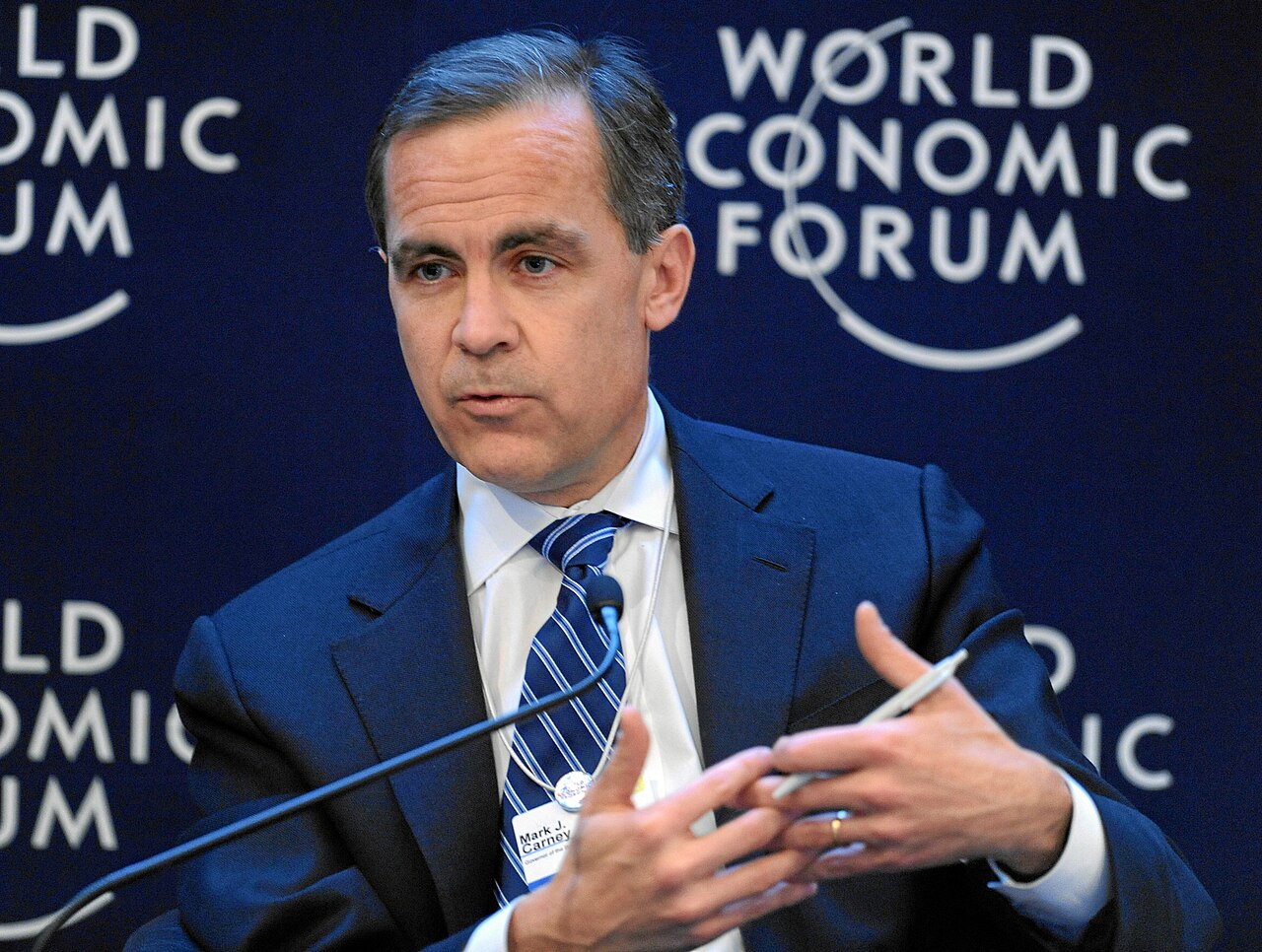
Canadian Prime Minister Mark Carney won a majority government last week, then told his country that America is a liability. In a 10-minute video address on April 19, Carney declared Canada's economic ties to the United States had become "weaknesses that must be corrected." He held up a miniature statue of Maj.-Gen. Sir Isaac Brock, a War of 1812 hero who fought American forces. The gesture signaled a departure from North American integration.
The declaration marks more than rhetorical hostility. It anchors a calculated policy shift away from Washington and toward Beijing and Brussels, now backed by a majority government assembled through defections and by-elections. Carney, a former Goldman Sachs managing director and central banker who spent 13 years at the global investment firm, treats free trade with the world's largest economy as a structural flaw.
The irony proves structural, not accidental. Carney made his statement while roughly two-thirds of Canadian exports still flow south. Canada supplies about 60 percent of America's oil imports. U.S. imports accounted for 66 percent of Canadian exports in February 2026, down from 72 percent in 2025 but still overwhelmingly dominant. "Hope isn't a plan and nostalgia is not a strategy," Carney said in his address.
His pivot toward China and the European Union is already underway. On Jan. 16, Canada signed a deal allowing 49,000 Chinese electric vehicles into the country at just 6.1 percent tariff, down from 100 percent, with the limit rising to 70,000 by year five. China lowered canola tariffs to roughly 15 percent. Canada also joined the EU's €150 billion Security Action for Europe defense procurement program as the first non-European member. Ottawa will contribute €2.5 million upfront plus €7.5 million annually under a "Buy European" clause.
Carney secured the political capital for this strategy on April 13 when Liberals won three by-elections, giving them 174 of 343 seats. Five opposition MPs defected to his party since November — four Conservatives and one New Democrat — marking the first time in Canadian history a majority government formed through by-elections and defections. "The Carney Liberals did not win a majority government through a general election or today's by-elections," Conservative leader Pierre Poilievre said. "Instead, it was won through backroom deals with politicians who betrayed the people who voted for them."
The policy divergence is actively driving western Canada toward the United States. The Alberta Prosperity Project claims to have surpassed 177,732 signatures for an independence referendum by March 31. APP spokesman Jeffrey Rath told Reuters on April 9, "Mark Carney himself has been the biggest help to the Alberta independence movement." In a separate interview, Rath said, "Quite frankly, the Trump administration shows Albertans far more respect than are shown to Albertans by the government in Ottawa."
U.S. Treasury Secretary Scott Bessent called Alberta a "natural partner for the U.S." during a January interview with Real America's Voice commentator Jack Posobiec. The APP has met with American officials in Washington three times since April 2025. An Angus Reid Institute poll from February found 29 percent of Albertans would vote to leave Canada if a referendum were held today.
Tariffs have already reduced Canadian GDP by 1.5 to 2 percent, with households absorbing $1,700 to $2,000 in higher annual costs, according to The Fulcrum. U.S. tariffs stand at 50 percent on Canadian steel and aluminum, 25 percent on automobiles, and 10 percent on energy. The United States offered tariff relief to Canadian aluminum and steel companies on April 24, but only if they commit to moving production south of the border.
White House spokesman Kush Desai responded to Carney's speech Monday. "No country should expect one-sided access to America's economy — the world's biggest and best consumer market — and defense shield when President Trump is in charge," he said. President Donald Trump warned Carney at Davos in January, "Canada lives because of the United States. Remember that, Mark."
Domestic criticism mounts alongside economic strain. Poilievre told Carney to "get away from theatrics and YouTube videos." Conservative deputy leader Melissa Lantsman said, "Canadians don't need forward guidance. They live in the real world, not the Bank of Canada press conference world." Ontario Premier Doug Ford refused to lift a province-wide ban on American liquor. "You never roll over to a bully," he said.
Auto industry leaders warn the China deal undermines USMCA renewal talks, which begin May 25 with Mexico only. Unifor President Lana Payne called the agreement "a self-inflicted wound to an already injured Canadian auto industry." Canadian Vehicle Manufacturers' Association President Brian Kingston said engagement with China on electric vehicles is "extremely risky" and puts trilateral trade negotiations at risk.
Formal USMCA renegotiation begins next month with Canada's leverage evaporating. A former central banker who called U.S. economic ties a "weakness" is opening Canada's auto sector to state-subsidized Chinese competition while exports remain overwhelmingly dependent on the United States. The result is not independence; it is economic isolation. For Albertans watching Ottawa play geopolitical games with their livelihood, the message is clear: Canada's future may lie south of the border.