Reform UK Landslide Signals End of Socialist Britain
Reform UK faces a historic surge in Britain's May 7 local elections, with projections showing the party could win 2,260 council seats as Labour hemorrhages support across the nation's traditional strongholds.
British voters are preparing to hand Reform UK a projected 2,260 council seats in the May 7 local elections, eclipsing Tony Blair's 1995 Labour record and signaling the end of socialist Britain's electoral dominance. The anti-establishment party's historic surge arrives as Keir Starmer's Labour government faces projections of losing 1,900 seats. The Guardian has described such a result as the worst local election performance for any prime minister since comparable data began.
Stephen Fisher's March 25 projection shows Reform more than tripling its previous record with 2,260 net gains while Labour hemorrhages 1,900 seats. This structural shift exceeds Blair's historic Labour record of 1,661 seats by nearly 60 percent.
"If they can maintain the same conversion rate for opinion poll ratings into council seat gains, Reform should do even better this year," Fisher states.
Reform leads national polling with 27 percent support versus Labour's 16 percent in the latest YouGov survey. The 10-point gap marks the party's widest lead at this stage of a local election cycle. Electoral Calculus MRP polling places Reform at 24 percent nationally, ahead of the Conservatives at 21 percent and Labour at 17 percent.
Fisher projects Labour will win just 13 percent of seats up for election. The Conservatives face 1,010 seat losses, while the Greens gain 450 and the Liberal Democrats add 200. The combined net gain for Reform, the Greens and the Lib Dems represents nearly 3,000 council seats moving from traditional parties.
The momentum builds on a foundation laid just last year. Reform won 677 seats in the 2025 local elections, capturing 41 percent of all seats up. Psephologists Colin Rallings and Michael Thrasher called it "easily the best ever performance by a third party and 10 points higher than UKIP achieved in 2013." The projected jump to 2,260 seats represents a 234 percent increase in just one year.
By-election evidence since May 2025 confirms this trajectory across 228 contests. Reform gained 68 net seats while Labour lost 53 and the Conservatives lost 23. Labour lost 33 council seats in the first six months after the 2024 general election while gaining only 6. The sustained pattern shows a confirmed downward spiral, not statistical fluctuation.
Reform's breakthrough extends into Labour's traditional strongholds, reaching communities that voted for the party for decades. YouGov London MRP projects Reform leading three London councils—Barking and Dagenham, Bromley and Havering—while Labour's vote share collapses 16 points in the capital. JL Partners MRP forecasts Reform winning 29 of 96 Welsh seats, reducing Labour to third place in Wales for the first time since the Senedd's creation in 1999.
Starmer's defiant campaign rhetoric at Labour's March 29 launch contrasted sharply with the polling evidence. "We're going to go out there and fight for every vote," the prime minister said in Wolverhampton. Deputy leader Lucy Powell claimed Reform councils "are cutting children's services and they're cutting the early years."
BBC documentary evidence contradicts Powell's claims. Reform-controlled Kent County Council proposed council tax rises of nearly 4 percent—lower than the previous Conservative administration's rate. The Mandelson scandal compounds pressure on Starmer as Labour's London vote share drops below Reform and Green levels.
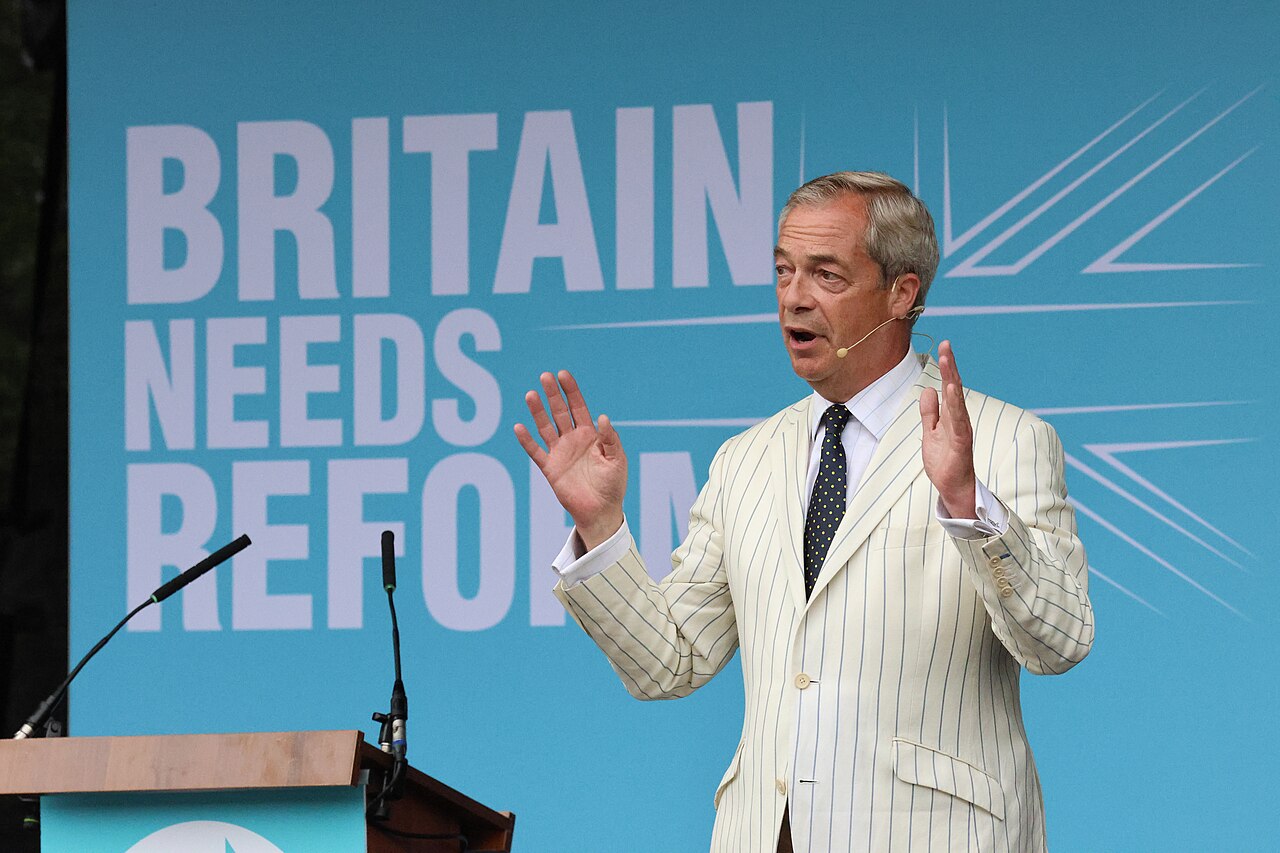
Nigel Farage declared at an April 22 Barnsley press conference that Britain faces a political realignment. "I don't want to sound overconfident, but I do genuinely think we're at a moment of something changing on May 7 that isn't just a short-term protest vote, it's a genuine shapeshift in British politics," the Reform leader said.
Fisher's projections may underestimate Reform's seat conversion rate. His 2025 forecast of 350 to 500 Reform gains fell well short of the actual 677 seats. If the same pattern holds, Reform's actual gains could exceed the 2,260 projection. Labour's projected "worst night in history" may prove an understatement.
Thirty percent of voters cannot identify which party leads their local council according to Electoral Calculus. Voter disorientation compounds Labour's collapse as Reform expands beyond Conservative heartlands into Labour's most secure fortresses. Sixteen-year-olds voting for the first time add another unpredictable element.
Electoral Calculus projects Reform would win 188 Westminster seats with tactical voting—enough to form a coalition government with the Conservatives. Without tactical voting, Reform reaches 273 seats, still short of a majority but the largest party. Labour would crash to just 86 seats nationally from 412 in 2024.
Reform's geographic spread confirms a structural shift as the party breaches Labour's traditional Welsh and outer London strongholds.
Labour faces unprecedented losses across every region. Birmingham City Council projections show Labour dropping from 65 to just 14 seats while Reform gains 18. The Green surge compounds Labour's collapse, with the Greens projected to lead four London councils including Hackney, Lambeth, Lewisham and Waltham Forest.
The projected May 7 results represent the culmination of a two-year decline for Labour. The party has hemorrhaged local support consistently since taking power in 2024. Reform's sustained by-election performance demonstrates voter conversion that extends beyond protest voting to systemic realignment.
Britain's traditional two-party system collapses as approximately 3,000 council seats move from Labour and the Conservatives to Reform, the Greens and the Liberal Democrats. The May 7 elections mark not merely an electoral defeat for Labour but the end of socialist Britain's electoral dominance and the emergence of Reform as the country's new anti-establishment, pro-sovereignty political force.