Supreme Court Hears Landmark Roundup Case — 100,000 Cancer Lawsuits Hang in Balance
The Supreme Court hears arguments Monday on whether state juries can override federal pesticide safety rulings, with more than 100,000 cancer lawsuits and the future of American agriculture hanging in the balance.
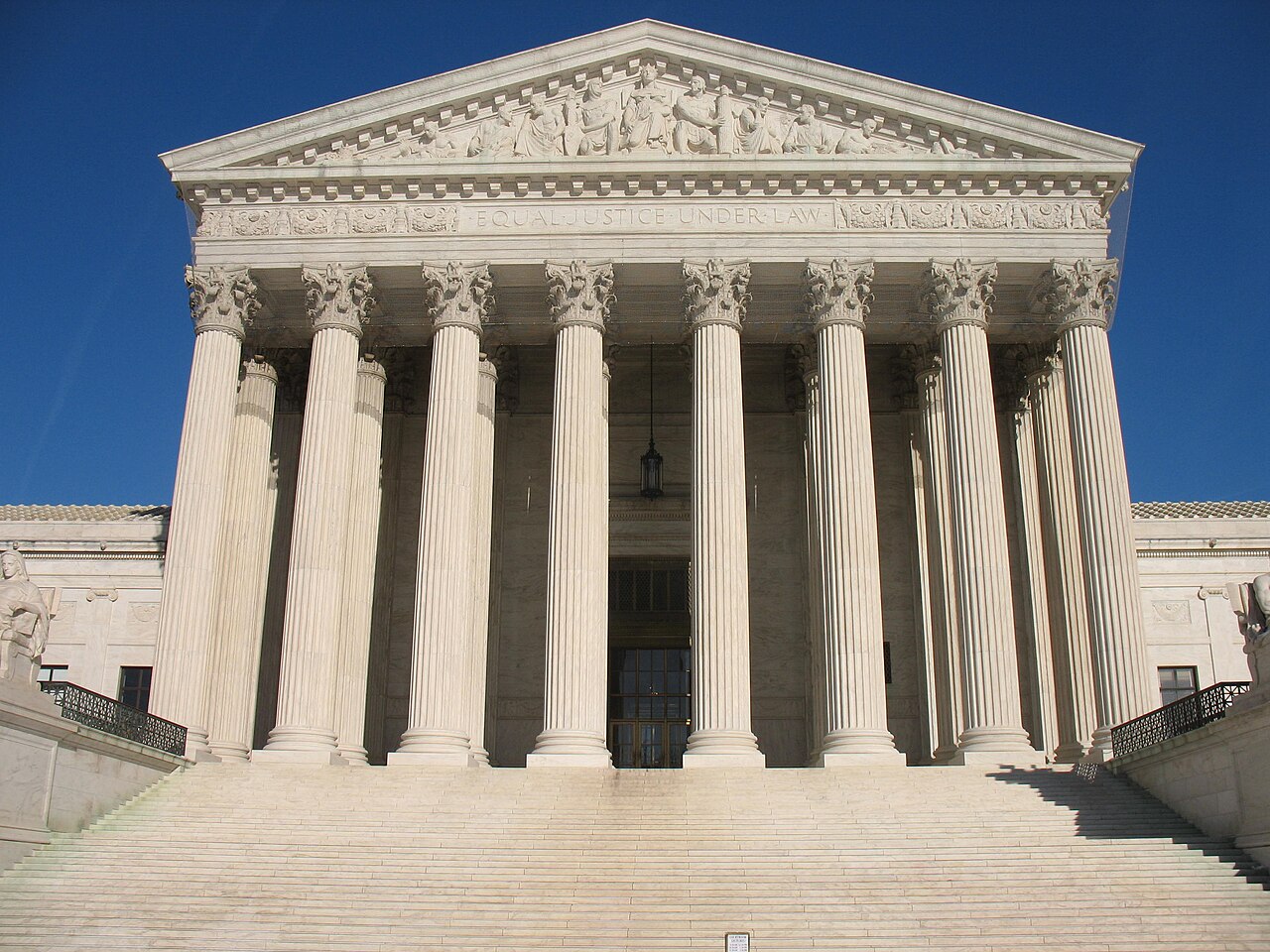
The Supreme Court heard arguments Monday in a case that could determine whether state juries can overturn 50 years of EPA pesticide safety determinations, potentially exposing chemical manufacturers to unlimited liability under 50 different state standards. More than 100,000 cancer lawsuits hang in the balance. So does the future of glyphosate, the most widely used herbicide on American farmland.
Monsanto Company v. Durnell poses a federalism question with enormous consequences for American agriculture and consumer safety. The case asks whether state courts and juries can impose liability standards that effectively override the EPA's safety determinations on federally registered pesticides. That question reaches far beyond glyphosate to any product carrying federal approval.
The dispute traces back to John Durnell, a Missouri gardener who developed non-Hodgkin's lymphoma after years of regular Roundup use. A jury awarded him $1.25 million in September 2023, finding Monsanto failed to warn about cancer risks. The Missouri Court of Appeals affirmed the verdict in February 2025. The state supreme court declined to review it.
At issue is the Federal Insecticide, Fungicide, and Rodenticide Act. The law allows states to regulate pesticide use but bars them from imposing labeling requirements "in addition to or different from" those approved by the EPA. Monsanto argues FIFRA's uniformity requirement prevents states from demanding cancer warnings the EPA does not mandate.
The EPA first registered glyphosate in 1974 and has consistently concluded it "does not pose a public health risk" and is "not likely to be carcinogenic to humans." That stands in conflict with a 2015 World Health Organization classification of glyphosate as "probably carcinogenic to humans." In 2022, the Ninth Circuit vacated EPA's cancer finding for discounting studies that correlated glyphosate exposure with cancer.
"Congress enacted FIFRA to establish a uniform, nationwide framework governing pesticide registration and labeling," Monsanto stated in an April 23 press release. "Companies should not face liability under state law for complying with federally approved and science-based labeling requirements."
A ruling for Monsanto could immunize manufacturers of federally registered products from state failure-to-warn claims across industries. A ruling for Durnell could allow state juries to second-guess EPA science. The Third Circuit supports preemption, while the Ninth and Eleventh Circuits do not. The Supreme Court must resolve the split.
The stakes extend to Bayer's proposed $7.25 billion class-action settlement covering current and future claims. The opt-out deadline arrives June 4, 2026. Bayer has already paid more than $10 billion in prior verdicts and settlements, increased litigation reserves to nearly €11.8 billion, and secured an $8 billion loan facility.
Herbicides save farmers an estimated $21 billion annually. Roughly 280 million pounds of glyphosate are sprayed on 300 million acres of U.S. farmland each year. CropLife America warns that nonuniform labeling could drive glyphosate off the commercial agricultural market, increasing reliance on imports from China and India.
The Trump administration's Solicitor General filed an amicus brief supporting Monsanto. "Leaving the Missouri court's ruling in place means 'a jury may second-guess the [EPA's] science-based judgments,'" Solicitor General D. John Sauer wrote. "FIFRA's uniformity requirement bars states from requiring cancer warnings the EPA does not require."
President Trump signed Executive Order 14387 on February 18, invoking the Defense Production Act to declare glyphosate "critical to national defense." Meanwhile, Make America Healthy Again activists organized a "People vs. Poison" rally outside the Supreme Court on April 27.
"If you have a pesticide label with a zillion different warnings, how is the user supposed to know the ones that really matter?" said Larry Ebner, executive vice president of the Atlantic Legal Foundation, which backs Monsanto.
Opponents argue preemption would eliminate accountability. "If there is no potential for liability, corporations can do whatever they want, sell whatever they want and create harms that they don't have to pay for," said Danielle Fugere, president of As You Sow.
The Supreme Court decision, expected by early July 2026, will shape pesticide liability law for decades. If state juries can second-guess EPA science through failure-to-warn claims, manufacturers face a regulatory patchwork that could drive critical agricultural chemicals off the market and increase reliance on foreign imports. For farmers who depend on these products to feed a nation, the cost runs far deeper than dollars.