NRA Challenges Maryland's Glock Ban as Rights Assault
The NRA and gun rights groups file a Second Amendment lawsuit after Maryland Governor Wes Moore signs legislation banning Glock-style pistols, imposing prison sentences on law-abiding owners for crimes they did not commit.
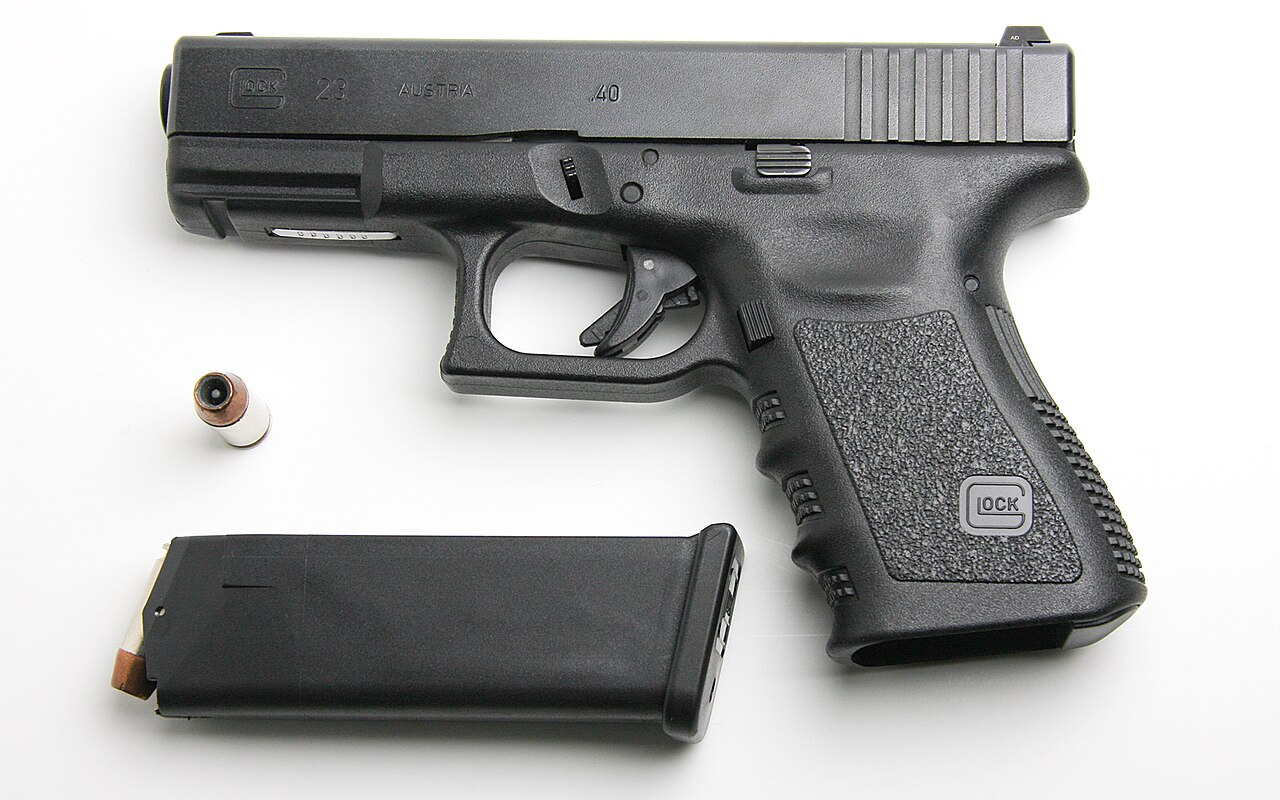
Maryland gun owners woke up to a ban on their firearms. Governor Wes Moore signed a law outlawing the state's most popular handgun on May 26, and within hours the National Rifle Association filed a federal lawsuit calling it an unconstitutional attack on law-abiding citizens.
The legislation targets Glock-style pistols based on theoretical modifications criminals might make in the future. It imposes prison sentences on ordinary Marylanders who own perfectly legal firearms.
The NRA, Firearms Policy Coalition and Second Amendment Foundation filed the lawsuit hours after Moore signed Senate Bill 334 into law. The ban takes effect Jan. 1, 2027. It prohibits the sale, purchase and transfer of pistols with a "cruciform trigger bar," a design feature found in all factory Glock and Glock-style handguns since 1986. Violators face up to three years in prison and $5,000 fines.
"With a single stroke of his pen, Gov. Wes Moore has banned one of the most popular handguns in America," said John Commerford, executive director of the NRA Institute for Legislative Action. "Instead of going after criminals and enforcing existing laws, he has chosen to disarm law-abiding Marylanders and strip them of their constitutional rights."
The statute defines prohibited "machine gun convertible pistols" as firearms that can be modified with common household tools to fire automatically. That definition functionally bans guns holding 35 to 65 percent of the U.S. handgun market share. Millions of Americans use them for self-defense. Law enforcement agencies across the country prefer them.
State lawmakers criminalize law-abiding citizens for hypothetical actions by criminals. Federal law already prohibits possessing illegally converted machine guns.
"We're essentially telling a private company how they have to make — or companies — how they have to manufacture their legal product so that they cannot be illegally manipulated by a third party actor without their consent or their knowledge or their intent in the future," said Del. Jason Buckel, House Republican leader, during floor debate in April.
The numbers do not support such a sweeping prohibition. ATF data shows only 36 machine gun conversion devices were recovered in Maryland in 2023.
"To borrow on a line from James Carville, whom Democrats revere, 'it's the criminal, stupid,'" said Lawrence G. Keane, senior vice president of the National Shooting Sports Foundation. "These bills punish law-abiding citizens by infringing on their Second Amendment rights."
Existing Glock owners face financial ruin under the new law. The statute does not require surrender, but it prohibits sale or transfer, wiping out resale value for legally purchased firearms.
"It renders those $700 or $800 guns completely worthless," said Mark Pennak, president of Maryland Shall Issue. "They have no market value."
Maryland becomes the second state to pass such a ban. California led the way with AB 1127, signed by Gov. Gavin Newsom in October 2025. Connecticut is considering similar legislation, part of a pattern of states systematically eroding constitutional rights through incremental restrictions.
The law's public safety impact appears minimal while the taxpayer burden grows. Implementation costs $220,200 in fiscal year 2027 and rises to $262,900 by fiscal 2031, according to a Baltimore Sun fiscal note. Possessing a converted machine gun already carries federal penalties of up to 10 years imprisonment and $250,000 fines.
"Not only is this law as foolish as banning hops and barley to prevent drunk driving, but these commonly owned arms are clearly protected by the Second Amendment," said Adam Kraut, executive director of the Second Amendment Foundation.
The lawsuit, National Rifle Association of America et al. v. Westley Moore et al., seeks a declaratory judgment that the ban violates the Second Amendment under Supreme Court precedents in District of Columbia v. Heller and New York State Rifle & Pistol Association v. Bruen. The NRA vows to exhaust all legal options against what it calls an unconstitutional overreach.
"These pistols are in common use; indeed, they are among the most popular firearms in the nation," states the complaint filed in U.S. District Court for Maryland. "Yet if SB 334 is enforced, ordinary Marylanders will have no way to lawfully acquire these common, constitutionally protected arms."
Governor Moore's office did not immediately respond to requests for comment. The governor signed over 275 bills on May 26, including one that prioritizes ideological posturing over genuine public safety while stripping everyday Americans of their right to own firearms in common use.