Supreme Court Blocks Administrative State From Disarming Weed Users
A unanimous Supreme Court ruling strikes down the federal government's sweeping ban on gun ownership for marijuana users, dealing a major blow to bureaucratic overreach and affirming Second Amendment rights for millions of Americans.
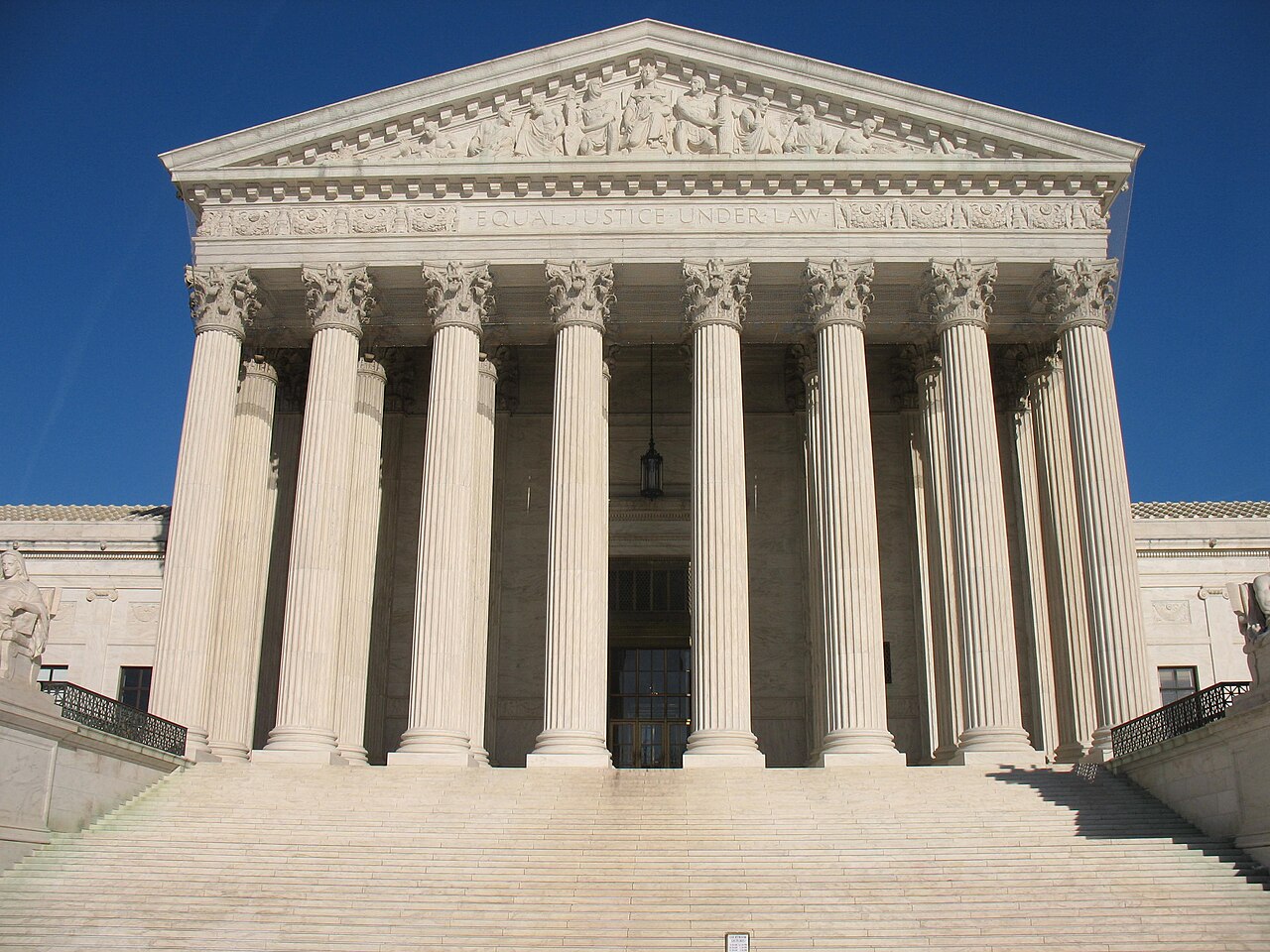
The federal government can no longer strip millions of Americans of their right to bear arms simply because they use marijuana. The Supreme Court's unanimous 9-0 ruling in United States v. Hemani delivers a sweeping rebuke to the administrative state, confirming that federal agencies cannot disarm citizens based on arbitrary drug classifications without historical justification.
Justice Neil Gorsuch's majority opinion dismantles the government's core argument that casual marijuana users pose a categorical danger to public safety. "The government asks us to conclude that anyone who regularly uses marijuana is categorically violent and dangerous without any further showing," Gorsuch wrote June 18. "All based on little more than its current say-so, one at odds with its own regulatory actions."
The decision exposes how bureaucrats expanded their power well beyond congressional intent to disarm citizens without due process. The National Instant Criminal Background Check System denied more than 10,000 firearm transactions under 18 U.S.C. § 922(g)(3) in 2024 alone. That provision accounts for approximately 5 percent of all federal firearm possession convictions annually, affecting roughly 300 people each year.
Gorsuch systematically rejected the government's reliance on historical "habitual drunkard" laws as justification for the modern ban. Historical records show those laws targeted individuals so intoxicated they were mentally incompetent or economically ruined, not casual users. The current enforcement lacks any constitutional pedigree under the Bruen test, which demands historical analogies for firearm regulations.
The ruling also highlights the federal government's contradictory policies on marijuana. Prosecutors argued marijuana users are uniquely dangerous even as the Trump administration moved marijuana products to Schedule III in April 2026. Nearly 50 states have legalized marijuana use to some degree. "Whatever one thinks of these developments, the federal government has not just tolerated them; it helped fuel them," Gorsuch noted. "All of which leaves it awkwardly positioned to suggest that the millions of Americans who now regularly use marijuana are categorically and unusually dangerous."
Ali Hemani's case illustrates the law's absurd application in practice. Federal agents found cocaine in Hemani's mother's room during a 2022 search, yet the government charged him with possessing a firearm while unlawfully using both marijuana and cocaine. The 25-year-old University of Texas graduate surrendered his firearm voluntarily and faced up to 15 years in prison under a law the court now deems unconstitutional as applied.
John Commerford, NRA-ILA executive director, called the decision "a major victory for the Second Amendment and peaceable gun owners across the United States." He stated the court "correctly rejected the government's attempt to disarm millions of responsible citizens—without any pre-deprivation process—based solely on their status as occasional marijuana users."
The unanimous decision marks a significant victory for originalist jurisprudence and gun rights advocates. All nine justices agreed the government overreached, though they differed in reasoning. Justice Clarence Thomas suggested the entire § 922(g) structure may exceed Congress's Commerce Clause power. Justice Samuel Alito, joined by Justice Elena Kagan, concurred only in judgment, arguing for a narrower ruling.
Justice Ketanji Brown Jackson, joined by Justice Sonia Sotomayor, used her concurrence to criticize the Bruen framework itself. She argued the history-and-tradition test imposes "unfamiliar and difficult tasks" on judges and yields inconsistent results. Her critique underscores the ongoing divide between originalist and living constitutionalist approaches, even as all justices united against administrative overreach.
The ATF posted a draft revision of Form 4473 in May 2026 to acknowledge the federally legal status of medical marijuana following the Schedule III rescheduling, and advocates expect further changes may be needed in the wake of the court's ruling. A draft published that month narrows the marijuana question to focus on recreational use, acknowledging that state-authorized medical cannabis patients may legally purchase firearms. The agency posted on social media June 19 that it is "reviewing the decision and assessing its impact" and will provide "additional guidance soon."
Andrew Willinger of Duke Center for Firearms Law noted the opinion leaves open prosecutions with proper evidence. "The court's discussion suggests that evidence showing a person's drug use was seriously affecting their ability to manage their affairs could be enough to charge them with violating the ban," he said.
The decision forces a reckoning over how deeply federal agencies weaponized drug policy to restrict gun ownership beyond congressional intent. While marijuana legalization remains controversial—mental health experts note medical benefits for mental health conditions lack credible scientific support—the principle that constitutional rights apply equally to all citizens remains paramount.
The ruling permanently curtails the administrative state's ability to disarm law-abiding Americans through executive fiat. It affirms that courts must check bureaucratic overreach when fundamental rights are at stake, regardless of shifting political preferences about controlled substances. For millions of Americans who simply want to exercise their God-given right to self-defense, the message is clear: the government cannot take that away without a constitutional basis.