Britain Faces Political Chaos as Labour's Leftist Experiment Fails
Britain prepares for its seventh prime minister in a decade as Keir Starmer resigns following devastating election losses, minister revolts, and economic stagnation that shattered Labour's landslide mandate.
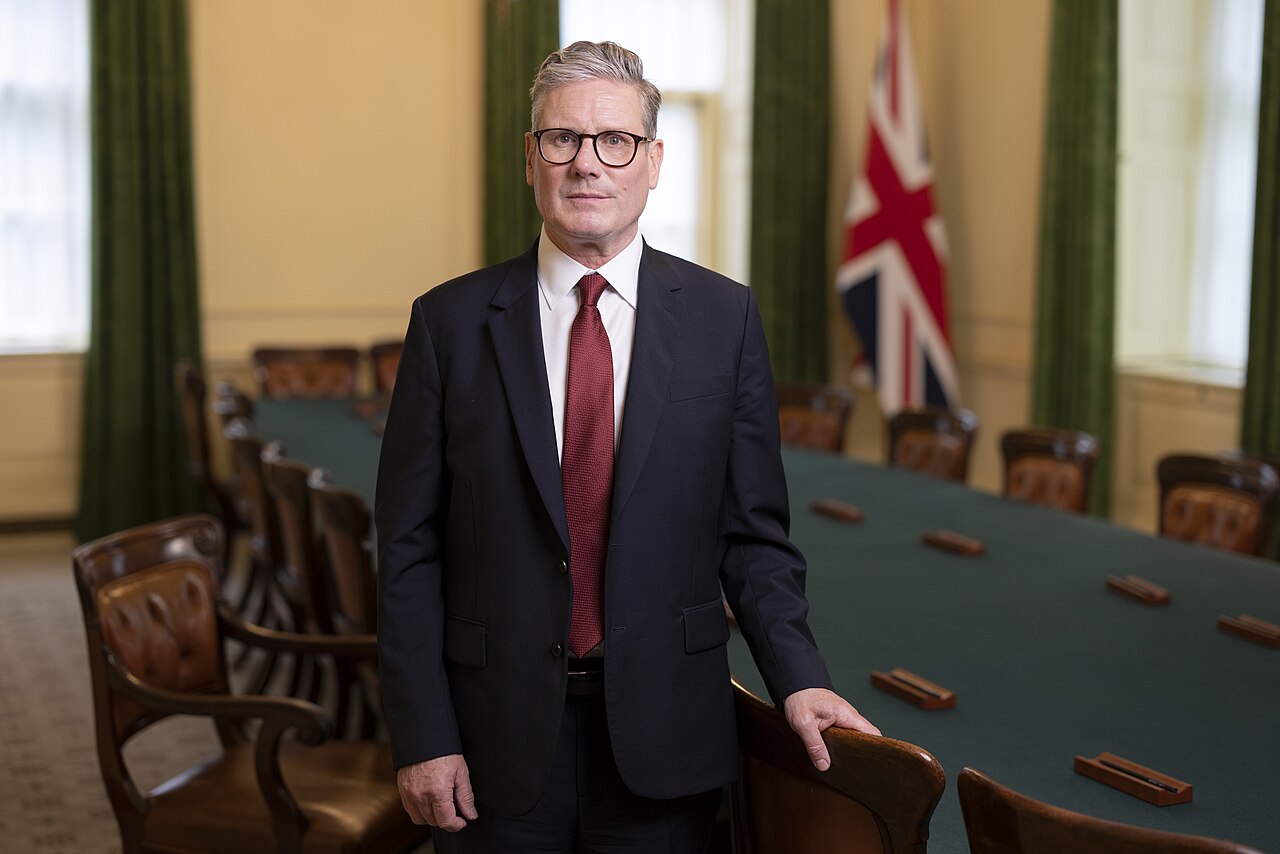
Britain has endured six prime ministers in 10 years and is bracing for a seventh. Voters who demanded stability watched a Labour government collapse under the weight of its own policy failures, internal revolts, and a public that has abandoned any faith in its leadership.
Keir Starmer announced his resignation outside 10 Downing Street on Monday morning after Labour MPs forced his hand following crushing local election losses. "The question my party is asking now is whether I am best placed to lead us into the next general election," Starmer said. "I have heard the answer of my parliamentary party to that question, and I accept that answer with good grace." He remains caretaker prime minister until a successor takes office by September.
His departure makes Starmer the sixth leader to step down before completing a full term in roughly a decade since the Brexit referendum. The revolving door of leadership includes David Cameron in 2016, Theresa May in 2019, Boris Johnson in 2022, Liz Truss after 49 days, Rishi Sunak in 2024, and now Starmer, with Andy Burnham expected to follow. The pattern points to systemic failure rather than isolated missteps.
Starmer captured a July 2024 landslide with 411 seats and a 174-seat majority, the third-largest Labour haul in history. He governed, however, with just a 34 percent vote share, and his net satisfaction rating plummeted to minus 66 on Ipsos polling, the lowest for any prime minister since 1977.
"He does not have a narrative, a story on what his long-term objectives are, what he wants and had no sense of direction," said John Curtice, professor of politics at the University of Strathclyde.
The local election results that triggered Starmer's downfall told the story plainly. Labour lost 1,498 council seats and control of 38 councils in May. Reform UK surged ahead with 1,452 seats while the Green Party gained 441.
Only 46 percent of 2024 Labour voters stayed loyal. Twenty-two percent switched to the Greens and 6 percent to Reform UK. Ipsos poll data shows 52 percent of the public now believe Starmer should stand down, and 67 percent think he should not lead Labour into the next general election.
The rebellion inside his own government accelerated the collapse. At least 20 ministers resigned from Starmer's government in under two years. Health Secretary Wes Streeting departed on May 14. Defense Secretary John Healey quit over military funding disputes. Safeguarding minister Jess Phillips called for leadership with more "gusto." Streeting endorsed Andy Burnham on June 22, effectively ending any serious contest for the Labour leadership.
Scandals compounded the damage throughout Starmer's tenure. He appointed Peter Mandelson as US ambassador despite Mandelson's friendship with Jeffrey Epstein, and Mandelson was arrested in February 2026 on suspicion of misconduct in public office connected to the disgraced financier. Welfare U-turns on winter fuel allowances for pensioners and disability benefits created policy chaos.
"He made a whole bunch of promises to progressives to win control of his party but then steered to the center, leaving his government without the financial means to bring about lasting change," said Tim Bale, professor of politics at Queen Mary University of London.
Britain's economy under Starmer offered little relief. The UK carries the highest borrowing costs in the G7 and has been the most inflationary economy in the group for most of the past decade. Real GDP grew by only 1.5 percent under Starmer's leadership.
"The U.K. still has the highest borrowing costs in the G7, and has remained the most inflationary economy in the group on average for most of the past 10 years," said Kallum Pickering, chief economist at Peel Hunt. The pound dropped 0.19 percent to $1.3207 on June 22.
Former Greater Manchester Mayor Andy Burnham stands as the overwhelming favorite to succeed Starmer. Burnham won the Makerfield by-election on June 18 with 54.8 percent of the vote, defeating Reform UK's Rob Kenyon by more than 9,000 votes. Ipsos polling shows Burnham preferred by 21 percent as Labour leader while Starmer sits at 6 percent.
"The narrative he can bring is, 'No one else could have won that seat. I won that. I bring something unique. I bring an ability to renew our appeal,'" said Rob Ford, professor of political science at the University of Manchester.
Britain's political instability reflects a system unable to deliver results under progressive leadership. "Starmer came to power thinking that if the Labour Party provided stability, then everything would fix itself," said Anand Menon, professor of European politics and foreign affairs at King's College London. "To combat populism, you need to prove that mainstream politics can deliver to the people, and he hasn't. Labour misunderstood the problem of the country — the need for bold economic reform."
Families who voted for change found their lives no better two years later. The question now is whether the next leader will break the cycle or simply turn the wheel again.