Christian Police Officer Wins Settlement After Being Barred for Questioning Islam in Diversity Training
A Christian PCSO won a confidential settlement after being barred from UK policing for asking questions about Islam and Gaza during mandatory diversity training, raising concerns about ideological enforcement in police forces.
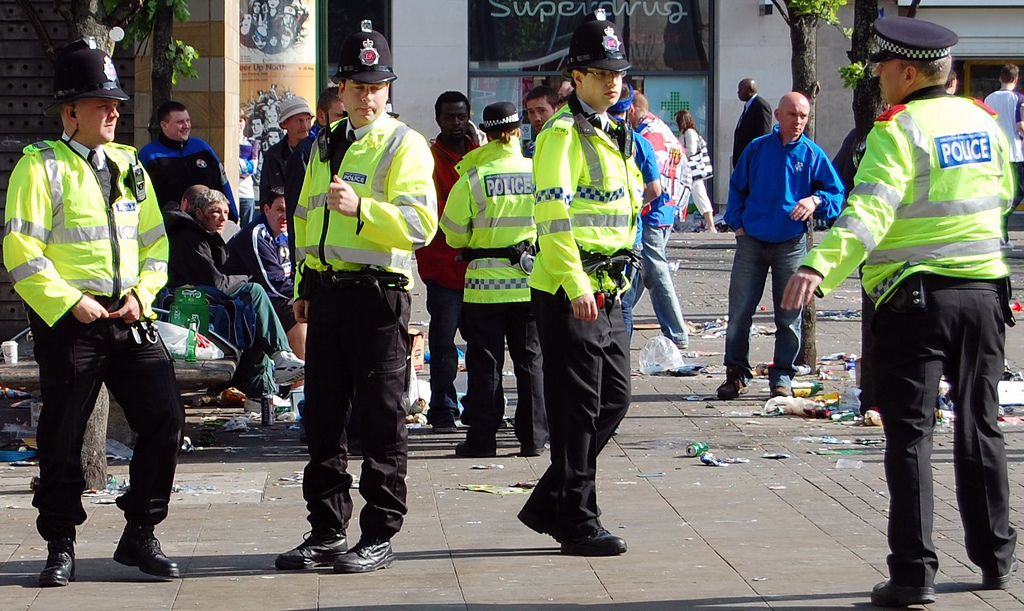
Luke Salmons served eight years as a police community support officer in North Yorkshire before a single training session ended his career. The 46-year-old father of two won a confidential settlement this month after the force suspended and barred him for asking questions about Islam and Gaza during mandatory diversity training.
Chief Constable Tim Forber overturned the gross misconduct finding, ruling that Salmons' conduct did not breach Police Staff Standards and could have been handled through "reflective learning." The case exposes how UK police diversity training has evolved into a mechanism for ideological enforcement, systematically suppressing Christian perspectives and legitimate security questions while insulating certain faiths from scrutiny.
Salmons learned quickly that "safe space" diversity training in British policing has become a facade for enforced conformity. During an October 2024 training session at North Yorkshire Police headquarters that was explicitly advertised as a "safe space" with "no such thing as a bad question," Salmons asked a Muslim sergeant about Gaza, Hamas, ISIS, and the meaning of "jihad." The sergeant engaged fully in what both described as respectful dialogue and later invited Salmons for coffee to continue the conversation.
The immediate backlash revealed the training's true purpose. A colleague photographed Salmons' copy of "Answering Jihad" in his locker and reported him to senior officers. A female inspector told Salmons "I don't like your beliefs" and sent him home that same day. Within 48 hours of the training session, North Yorkshire Police suspended the father-of-two on full pay, beginning a process that would end his eight-year policing career.
"This process devastated me and my family," Salmons stated. "For months we lived in total uncertainty, with my reputation being shredded in secret. The most frightening moment was being told I was effectively banned from policing for life."
The disciplinary process bypassed standard safeguards. An inspector alleged Salmons held "racist and homophobic views" in a December 2024 email to a superintendent, copying the Professional Standards Department. These allegations were never put to Salmons for response, demonstrating institutional bias rather than objective misconduct assessment. The inspector claimed Salmons posed an "organisational risk" despite his clean record and commendation from the chief constable.
Salmons resigned under pressure in spring 2025, but North Yorkshire Police proceeded with a gross misconduct hearing in his absence that July. The panel found him guilty of "gross misconduct" and placed him on the College of Policing Barred List, preventing him from working in any UK policing role for at least five years and potentially for life.
Chief Constable Tim Forber overturned the decision in December 2025, providing hard evidence of ideological overreach. "I do not however find that this represents a breach amounting to gross misconduct," Forber wrote in his appeal letter. "I believe these matters could potentially have been dealt with more appropriately in-line with reflective learning." The chief constable's ruling validated Salmons' claim that legitimate security inquiries about Islamic extremism are now treated as forbidden "wrongthink" within UK policing institutions.
North Yorkshire Police settled the case out of court on confidential terms in April 2026 following employment tribunal proceedings. Salmons received no apology from the force and now works at a lower salary for a Christian homelessness charity, having lost his £36,000 annual PCSO position.
Salmons' experience reflects systemic patterns across UK policing. A University of Reading evaluation of Hampshire Police's mandatory "Inclusion Matters" course found 20 percent of officers feared rejection for "saying the wrong thing." The survey of 6,250 officers and staff revealed 15.5 percent felt "controlled and pressured to be certain ways" during diversity training.
"I believed I was on safe ground when the training sessions invited open discussion," Salmons told The Telegraph. "I quickly discovered that questioning Islam is now treated as 'wrongthink' within North Yorkshire Police. I felt pushed out."
Andrea Williams, chief executive of the Christian Legal Centre which supported Salmons' case, argued the settlement reveals institutional capture. "The rise and influence of Islam in our institutions is rapid and alarming," Williams stated. "Luke's case should concern everyone. It exposes how 'inclusivity' training within the police has, in practice, become a vehicle for enforcing a narrow ideological orthodoxy."
North Yorkshire Police issued a statement denying training involved "chanting or religious indoctrination" and cited HMICFRS ratings showing 92.5 percent of staff felt fairly treated. The force described itself as an "inclusive employer" that "respects the rights of all individuals to their beliefs."
"People are weaponising DEI for their own advantage," Salmons countered. "There is a culture of fear — people are scared to say anything or ask anything in case they get pulled up for it. Our institutions are scared of Islam."
The case demonstrates how mandatory diversity training has been weaponized to silence legitimate security discussions while creating a chilling effect on free speech within public institutions. With grooming gang scandals and terrorism concerns requiring robust examination of Islamic extremism, the suppression of such inquiries by police forces raises critical national security questions.
Salmons' forced departure from policing represents a broader institutional failure where ideological conformity now trumps merit and security. As UK police forces implement increasingly restrictive diversity policies, cases like this suggest officers who question prevailing orthodoxies face career-ending consequences regardless of their professional competence or public safety concerns. Communities deserve officers willing to ask difficult questions about threats, not silence in the name of enforced conformity.