Supreme Court Revives Death Row Case, Rules Prosecutors Violated Color-Blind Justice
The Supreme Court overturned a Mississippi conviction in a 5-4 ruling, finding prosecutors illegally excluded Black jurors. The decision reinforces color-blind justice while contrasting with progressive states' efforts to reshape jury selection for ideological purposes.
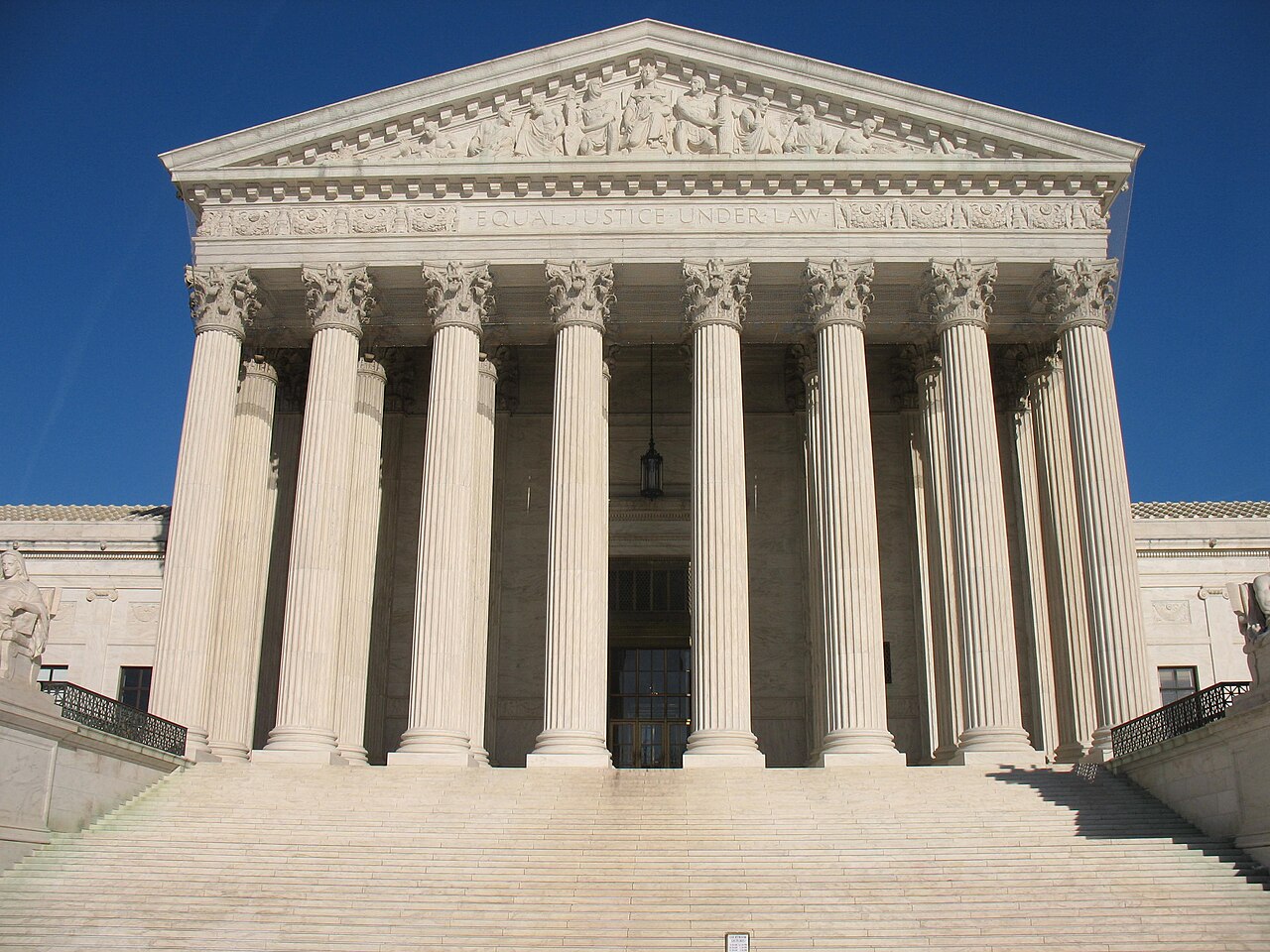
Terry Pitchford spent 20 years on death row for a crime that may have been tried before a jury rigged by racial discrimination.
The U.S. Supreme Court overturned his conviction and death sentence Thursday, ruling 5-4 that Mississippi prosecutors improperly excluded Black jurors based on race. The decision vindicates a fundamental American principle: justice must be color-blind.
Justice Brett Kavanaugh wrote the majority opinion in Pitchford v. Cain, joined by Chief Justice John Roberts and Justices Sonia Sotomayor, Elena Kagan, and Ketanji Brown Jackson. The Court found that trial judge Joseph Loper failed to apply the essential third step of the Batson v. Kentucky framework, which allows defense counsel to prove that a prosecutor's stated race-neutral reasons are mere pretext for discrimination.
"Deference does not mean abdication," Kavanaugh wrote, rejecting Mississippi's argument that Pitchford had waived his discrimination claim. The ruling sent Pitchford's case back to lower courts for further proceedings.
The case involved prosecutor Doug Evans, who faced a 2019 Supreme Court reversal for identical discriminatory practices in the Curtis Flowers case. An APM Reports investigation found Evans struck Black jurors at a rate 4.5 times higher than white jurors over 26 years. During the Flowers trials, Evans struck 41 of 42 qualified Black prospective jurors.
During Pitchford's 2006 trial, Evans struck four of five Black prospective jurors. The resulting jury included 11 white members and one Black member in a county that was approximately 40 percent Black at the time.
When defense counsel attempted to raise the discrimination issue, Judge Loper dismissed their efforts. "I think you already made those, and they are clear in the record," he told them.
Pitchford, 40, spent two decades on death row for a 2004 armed robbery murder in Grenada County. Christopher Kemmitt, director of litigation at the NAACP Legal Defense Fund, stated Pitchford "faced unconscionable racial bias and was denied a trial by a jury of his peers."
The 5-4 coalition demonstrates that color-blind justice remains a unifying principle across ideological lines. The decision continues the Court's recent trend against race-based decision making, following rulings that struck down race-based college admissions in 2023 and race-based legislative districts this April.
Justice Neil Gorsuch dissented, joined by Justices Clarence Thomas, Samuel Alito, and Amy Coney Barrett. Gorsuch argued the Antiterrorism and Effective Death Penalty Act required greater deference to state court determinations. "If the court's decision is mistaken, at least its impact is limited," he wrote.
Yet a different battle over jury composition is unfolding in progressive states. These reforms effectively engineer verdicts by packing juries with anti-police voters, replacing racial manipulation with ideological manipulation.
Democratic states including Washington and Connecticut now prohibit prosecutors from striking jurors who express distrust of law enforcement or have family members with arrest records. Washington's Supreme Court adopted rules barring strikes based on prior contact with law enforcement. California implemented an "objective observer" standard that judges can use to deny strikes they deem racially motivated.
Arizona eliminated peremptory challenges entirely in 2021. New York legislators are considering Senate Bill 2491, which would mandate courts deny strikes a "reasonable person" could view as based on protected characteristics. These measures strip prosecutors of tools to exclude biased individuals while ensuring outcomes align with progressive political goals.
National statistics reveal the scope of jury discrimination that such reforms claim to address. A University of Michigan Law Review study found more than half of jurors struck by judges in Mississippi from 1992 to 2017 were Black. In Alabama, approximately 19 percent of death penalty trials were decided by all-white juries despite Black residents comprising over 30 percent of county populations.
California prosecutors struck potential Black jurors in nearly 75 percent of examined appellate cases while striking white potential jurors at only 0.4 percent. Louisiana prosecutors used nearly 60 percent of peremptory strikes against Black prospective jurors from 2009 to 2017.
The Supreme Court's decision protects equal justice under law against attempts to racialize the courts. True fairness demands color-blind rules that apply equally to all citizens, not a two-tiered system that weaponizes race on one side and ideology on the other. Pitchford's case now returns to lower courts for further proceedings consistent with the ruling.
Twenty years behind bars is a long time to wait for justice. For Terry Pitchford, it was only the beginning.