Artemis II Crew Smashes Apollo Distance Record in Historic Lunar Flyby
Four astronauts shattered the 56-year-old Apollo 13 distance record on April 6, traveling 252,756 miles from Earth in America's boldest return to deep space in 54 years.
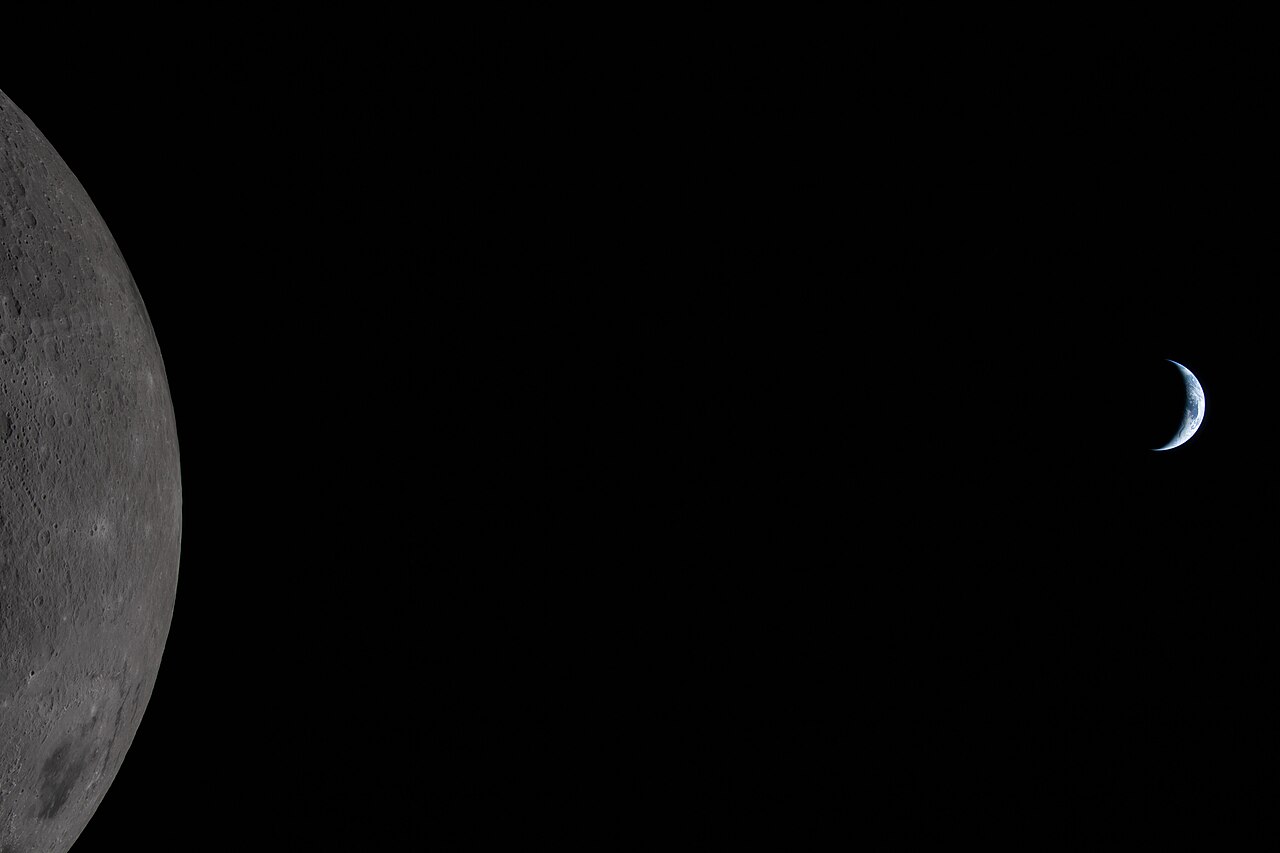
At 7:07 p.m. EDT on April 6, four astronauts became the farthest humans from Earth in history — 252,756 miles out, hurtling behind the Moon's dark side, with every radio link to home severed. The Artemis II crew surpassed the Apollo 13 distance record by 4,111 miles during their lunar flyby, marking America's return to deep space exploration after 54 years of absence.
Commander Reid Wiseman, Pilot Victor Glover, Mission Specialist Christina Koch and Canadian Mission Specialist Jeremy Hansen made history aboard the Orion spacecraft "Integrity" — and not just by distance. Glover became the first Black astronaut to reach the Moon, Koch the first woman, and Hansen the first Canadian. Wiseman became the oldest person to travel beyond low Earth orbit.
The crew emerged from a 40-minute communications blackout at 7:25 p.m., having swept just 4,070 miles above the lunar surface. Their seven-hour observation period delivered sights no crew had ever witnessed: the 600-mile-wide Orientale basin and six meteoroid impact flashes erupting across the darkened lunar face. "We saw sights no human had ever seen before, not even Apollo," Wiseman told President Donald Trump during a congratulatory call.
Koch described the Earthrise moment as something that cuts straight to the bone. "I think one of the biggest highlights was coming back from the far side of the moon and having the first glimpse of the planet Earth again after being out of communication for about 45 minutes," she said. "It really just reminds you what a special place we have and how important it is for our nation to lead and not follow in exploring deep space."
Artemis II marks the first crewed flight beyond low Earth orbit since Apollo 17 in December 1972, closing a 54-year gap in American deep space capability. The mission demonstrates what a mission-driven NASA partnered with private industry can achieve, standing in sharp contrast to state-heavy space programs elsewhere that remain mired in bureaucracy.
NASA Administrator Jared Isaacman made no attempt to soften the political credit. "I want to be incredibly clear, we would not be at this moment right now with Artemis II if it wasn't for President Trump," Isaacman said. "And we certainly would not have an achievable path now to get back to the lunar surface and build that enduring presence."
The Artemis program's architecture runs on commercial partnerships that embody American innovation at scale. SpaceX holds a $4.05 billion contract for Starship Human Landing System vehicles for Artemis III and IV lunar landings, while Blue Origin develops the Blue Moon lander for Artemis V. Some 2,700 suppliers across 47 states contribute to the program, which has cost $93 billion since 2012.
While European state-run programs have stagnated, America leads through partnership rather than command. The Artemis Accords now carry 61 signatory nations — a measure of the world's confidence in American leadership. "On the far side of the Moon, 252,756 miles away, Reid, Victor, Christina, and Jeremy have now traveled farther from Earth than any humans in history," Isaacman said. "This will be remembered as the moment people started to believe that America can once again do the near-impossible and change the world."
President Trump celebrated the milestone directly with the crew. "Today you've made history and made all of America really proud," Trump said. "There's nothing like what you're doing, circling around the moon for the first time in more than a half century and breaking the all-time record for the farthest distance from planet Earth."
Glover reached for something deeper than altitude or speed. "As we are so far from Earth and looking at the beauty of creation, I think, for me, one of the really important personal perspectives that I have up here is I can really see the Earth as one thing," he said. "You guys are talking to us because we're in a spaceship really far from earth, but you're on a spaceship called Earth that was created to give us a place to live in the universe and the cosmos."
Hansen kept one eye on those who came before and one on those yet to launch. "As we surpass the furthest distance humans have ever traveled from planet Earth, we do so in honoring the extraordinary efforts and feats of our predecessors," he said. "We most importantly choose this moment to challenge this generation and the next to make sure this record is not long-lived."
The crew began their return journey April 7 with a ship-to-ship call to the International Space Station Expedition 74 crew. They are scheduled to splash down in the Pacific Ocean off San Diego on April 10 at 8:07 p.m. EDT, completing a 10-day mission that covered 695,081 miles.
Artemis II launched April 1 at 6:35 p.m. EDT from Kennedy Space Center, Florida. The mission paves the way for Artemis III — now revised to a low Earth orbit test with commercial landers in 2027 — and Artemis IV, which will land astronauts on the lunar surface in 2028 for the first time since Apollo 17.
When Glover looked back at Earth from a quarter-million miles out and saw it as "one thing," he wasn't summarizing a mission. He was describing what only four people alive have ever felt — and what an entire generation of engineers, suppliers, and dreamers across 47 states built the machinery to make possible.