Europe's Strategic Autonomy Delusion Meets Harsh Defense Data
Europe is scrambling to build a backup NATO without the United States, but new defense studies reveal the continent lacks the troops, weapons, and political will to deter Russia alone.
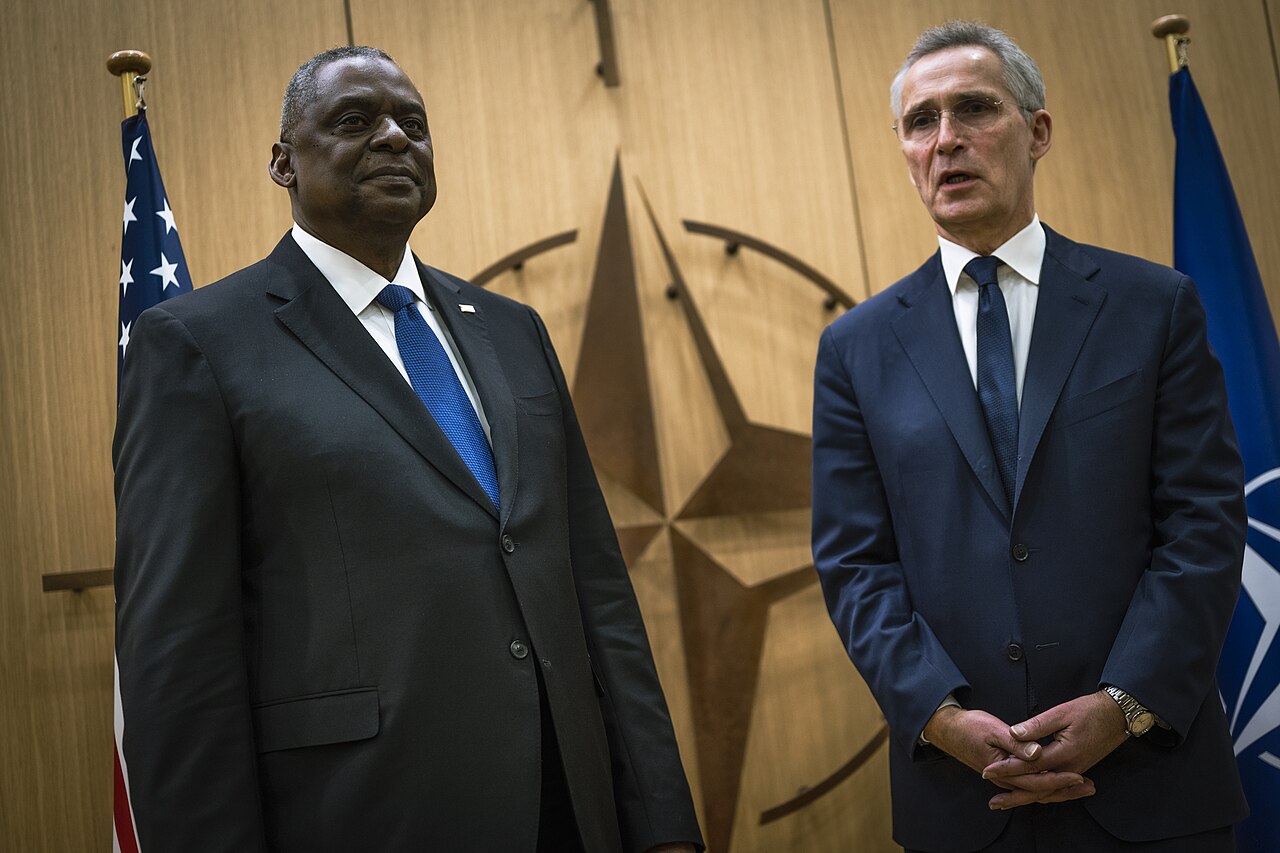
Europe is racing to build a backup NATO, but hard data shows the plan will not hold.
European capitals are accelerating a contingency "European NATO" to replace American military power. New defense studies and intelligence assessments reveal the continent lacks the troops, weapons, and political will to deter a resurgent Russia on its own.
The Wall Street Journal reported April 14 that Finland and Germany are spearheading the fallback plan. President Trump's threats to withdraw U.S. forces if Europe fails to pay its way drove the urgency. "Over the coming years we will more and more see a NATO that is more European-led," NATO Secretary General Mark Rutte stated at the Munich Security Conference in February. The scramble exposes decades of strategic negligence. EU nations outsourced security to Washington while treating the alliance as a free-riding arrangement.
Hard numbers shatter the fallback plan's feasibility. A Bruegel and Kiel Institute analysis requires Europe to field 300,000 additional infantry soldiers and spend at least 250 billion euros annually.
Minimum equipment needs include 1,400 tanks, 2,000 infantry fighting vehicles, 700 artillery pieces and 1 million 155mm shells for 90 days of high-intensity combat.
These requirements exceed current French, German, Italian and British land forces combined. Russia's wartime industrial surge has left Europe's defense base far behind. Russia produced approximately 1,550 tanks in 2024 alone, a 220 percent increase from 2022, and boosted loitering munitions production by 435 percent.
Europe's current military output falls drastically short of sustaining a high-intensity conflict without U.S. manufacturing and supply chains. "Even if the scale is initially considerable: In economic terms, this is manageable in relation to the EU's economic strength," said Prof. Guntram Wolff of the Kiel Institute. "But if each country tries to defend itself alone, it will cost more. Self-insurance is more expensive than collective security."
The human and political will gap presents an even steeper challenge. Gallup polling shows only 32 percent of EU citizens are willing to defend their country in wartime. Italy registered 14 percent. Germany came in at 23 percent.
Finland's President Alexander Stubb acknowledged the cultural deficit and advocated conscription as a necessary civic tool. "In terms of civic education, national identity and national unity, there is probably nothing better than compulsory military service," Stubb said.
Structural coordination failures compound the crisis. U.S. troops operate as a unified corps. European armies remain fragmented across 29 national militaries with competing command structures. Spain has refused to let the United States use bases on its mainland to attack Iran, retired Navy Captain Carl Schuster noted. "Spain has rejected any idea of its ground and air forces being committed to combat outside Spanish territory. So their contribution to NATO defense is more statistical than real."
The immediate threat timeline is accelerating. Dutch military intelligence warned April 22 that Russia could be ready for a NATO conflict within a year after hostilities in Ukraine end.
"Russia poses the greatest and most direct threat to peace and stability in Europe, and thus to our national security and our interests," said Vice Adm. Peter Reesink, director of the Dutch Military Intelligence and Security Service.
Russian President Vladimir Putin issued his own warning in October 2025. "I think no one doubts [European military build-up] will force Russia to act, and Russia's countermeasures will not be long in coming," Putin said. "It seems (to me) that the response to these threats will be, to put it mildly, very convincing."
Trump's threats have forced European spending hikes, but the underlying dependency on U.S. military power remains structurally unfixable. The United States accounted for $838 billion of NATO's $1.4 trillion combined spending in 2025. The 2024 National Defense Authorization Act constrains unilateral U.S. withdrawal from NATO, and the 2026 NDAA limits troop reductions in Europe. Europe's panic still reveals its fundamental lack of strategic autonomy.
NATO's former Secretary General Jens Stoltenberg warned that "it is 'not the law of nature that we have NATO forever' or that it will 'survive the next ten years.'" The European fallback plan is not a roadmap to security. It is a confession of military and political bankruptcy.
The continent's desperate "Plan B" exposes the fatal flaws of the EU's "strategic autonomy" project. Hard data on capability gaps, industrial shortfalls and public apathy prove European militaries cannot deter Russia without the United States. Supranational institutions cannot replace hard power, national sovereignty and the indispensable military backbone that has kept Europe safe for generations.
Europe's fallback plan is a fantasy born of political delusion. It leaves the continent defenseless against a resurgent Russia while admitting that decades of free-riding have produced strategic bankruptcy rather than true security.