Trump's Maximum Pressure Forces Iran to the Brink Over Strait Deal
With Iran's oil infrastructure facing imminent collapse, Tehran's last-minute proposal to reopen the Strait of Hormuz meets Trump's firm demand for zero uranium enrichment before any deal
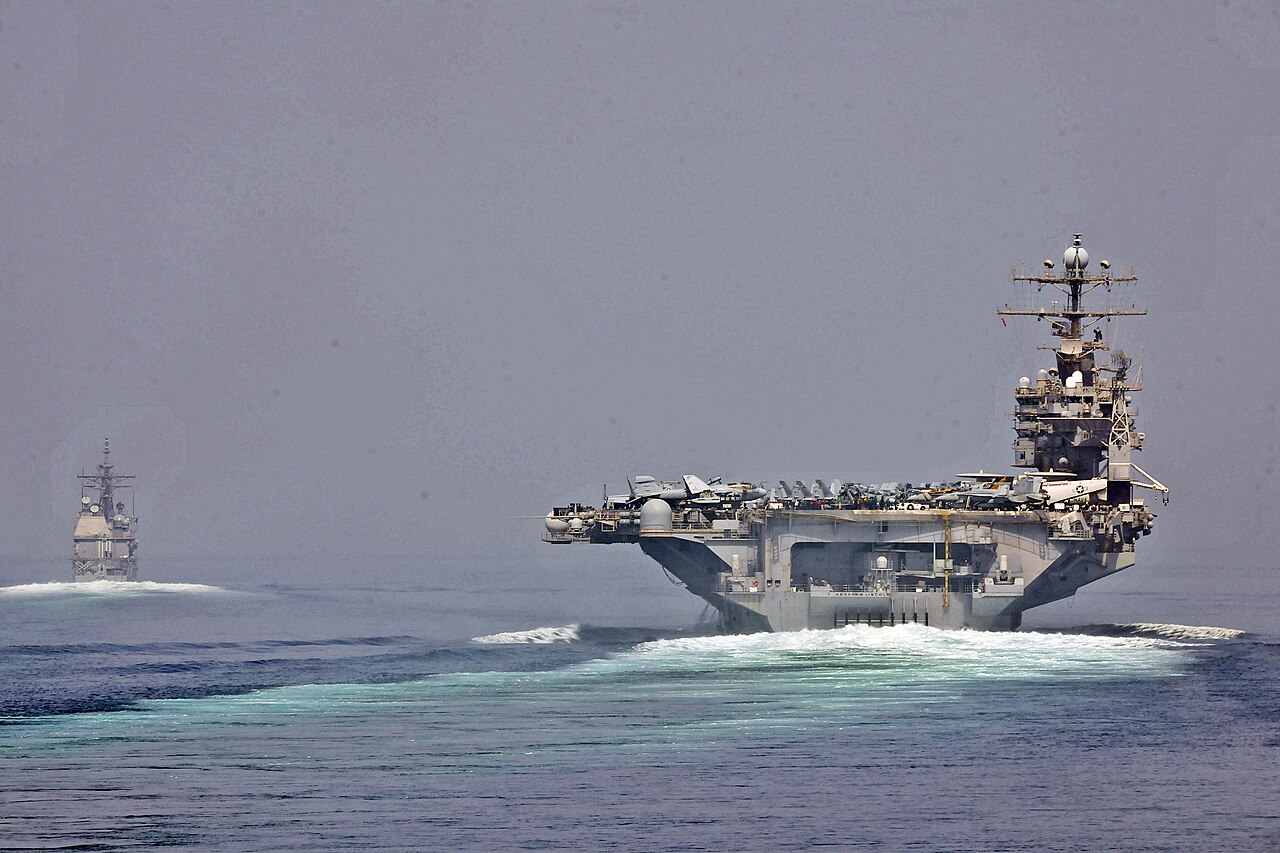
President Trump signaled readiness to seal a peace deal with Iran by phone as Tehran's frantic diplomatic shuttle collided with Washington's economic stranglehold. The blockade threatens to permanently destroy the Islamic Republic's oil infrastructure within days. Iran's desperate alignment with Moscow and rushed negotiations crumbled against the hard reality of American strategic dominance, leaving a state-controlled war economy on the brink of capitulation.
Iranian Foreign Minister Abbas Araghchi presented a new proposal Sunday via Pakistani mediators to reopen the Strait of Hormuz and end the shooting war. The offer would lift the U.S. naval blockade in exchange for Iranian cooperation, but it postpones nuclear negotiations entirely. Trump dismissed the need for face-to-face talks, signaling Washington holds all leverage. "If they want to talk, they can come to us, or they can call us," Trump told Fox News on Sunday. "You know, there is a telephone."
The president warned Iran's oil infrastructure faces imminent collapse from the blockade, with only days remaining before permanent damage occurs. "What happens is that line explodes from within, both mechanically and in the earth," Trump said. "They say they only have about three days left before that happens." AEI's Critical Threats Project confirmed forced shutdowns risk long-term damage to Iran's oil fields, with storage expected to fill within days. Energy advisory firm FGE NextantECA estimated a maximum buffer of less than seven weeks before forced closures become unavoidable.
Trump last-minute canceled a trip by lead negotiators Steve Witkoff and Jared Kushner to Islamabad for talks with Iranian intermediaries. He told advisers he remains "not satisfied" with Iran's proposal, which postpones nuclear negotiations that Washington considers non-negotiable. Iran's leadership appears internally divided on whether to accept the U.S.'s maximalist demand of zero enrichment.
Araghchi has been shuttling frantically across the region in what analysts describe as diplomatic theater. He met with Pakistan's military chief General Asim Munir and Prime Minister Shehbaz Sharif, visited Oman, then traveled to St. Petersburg to meet Russian President Vladimir Putin. Iran relayed written "red lines" to the U.S. via Pakistani go-betweens while attempting to build an anti-Western coalition. The diplomatic marathon, however, cannot overcome physical reality.
The Strait remains effectively closed but partially porous. TankerTrackers.com reports 4.6 million barrels loaded at Iranian terminals and another 4 million barrels that evaded the U.S. blockade. Maritime analytics firm Windward counted only eight transits through the Strait on Sunday. Brent crude trades near $108 per barrel as the blockage of 20 percent of global oil supplies continues.
Treasury Secretary Scott Bessent warned Iran's oil industry faces imminent collapse. "While the surviving IRGC Leaders are trapped like drowning rats in a sewage pipe, Iran's creaking oil industry is starting to shut in production thanks to the U.S. BLOCKADE," Bessent posted on X. "Pumping will soon collapse. GASOLINE SHORTAGES IN IRAN NEXT!"
Annika Ganzeveld of AEI's Critical Threats Project stated, "Once the tanks are filled, Iran would have to shut down its oil fields, which risks long-term damage to the fields." Tehran faces a countdown measured in single-digit days before its oil infrastructure suffers irreparable damage from the forced production shutdown.
Iran sought symbolic cover from Russia as its economy crumbled. Araghchi met Putin in St. Petersburg on Monday, where the Russian president pledged that "we will do everything that serves your interests, the interests of all the people of the region, so that peace can be achieved as soon as possible." Iran's envoy in Russia declared both nations are "present in a united front in the campaign of the world's totalitarian forces against independent and justice-seeking countries."
Secretary of State Marco Rubio dismissed the anti-Western rhetoric as meaningless posturing. "We will not tolerate a system where Iran plays gatekeeper to the world," Rubio told Fox News on Monday. "Those are international waterways." The U.S. maintains 20 Iranian-laid mines still need clearing in the Strait, a figure confirmed by Pentagon briefings to Congress. The Pentagon has publicly denied a reported assessment that clearance could take up to six months, with spokesman Sean Parnell calling such a timeline "an impossibility and completely unacceptable."
White House Press Secretary Karoline Leavitt confirmed Trump met with his national security team Monday to discuss Iran's proposal. "The president's red lines with respect to Iran have been made very clear," Leavitt said. The Situation Room review maintained Washington's position that zero uranium enrichment remains non-negotiable.
Iran's proposal represents a desperate attempt to salvage its collapsing economy while postponing the nuclear issue that sparked the conflict. The Islamic Republic faces at least 3,375 people killed since the war began, with another 2,521 killed in Lebanon. U.S. gasoline prices average $4.04 per gallon, up 7 cents in the last week. The human cost mounts on both sides, yet the economic pressure intensifies daily.
The blockade's economic pressure shows no signs of abating. Annika Ganzeveld's analysis indicates Iran's storage facilities will reach capacity within days, forcing production shutdowns that could permanently damage geological formations. Tehran's diplomatic maneuvers with Moscow and regional partners cannot overcome the physical reality of full storage tanks and no export capacity.
German Chancellor Friedrich Merz criticized the diplomatic charade, saying Iran is "humiliating" the U.S. by letting American negotiators travel to Islamabad and leave without results. "I do not see what exit strategy the U.S. is pursuing in the war," Merz told students in Marsberg.
Trump's phone-deal ultimatums underscore Washington's position that Iran holds no leverage. The president's rejection of face-to-face negotiations while offering secure communications leaves Tehran with a single option: call Washington to negotiate surrender terms or watch its oil industry suffer permanent destruction. Treasury Secretary Bessent's warnings about imminent gasoline shortages inside Iran highlight the blockade's domestic impact.
The Strait of Hormuz remains a global choke point where American military and economic power has forced Iran to the brink. Tehran's frantic diplomatic theater and anti-Western alignment with Moscow cannot withstand the physical reality of a collapsing war economy. Maximum pressure has proven decisive, leaving Iran's leadership with no choice but to accept American terms or face total economic defeat.