Iran's IRGC Sidelines Their President: the U.S. Is Negotiating With a Ghost
President Pezeshkian waits in vain for a meeting with Iran's Supreme Leader as the IRGC's Ahmad Vahidi controls all decisions. The U.S. negotiates with a regime whose real power lies with men who justify their control through conflict.
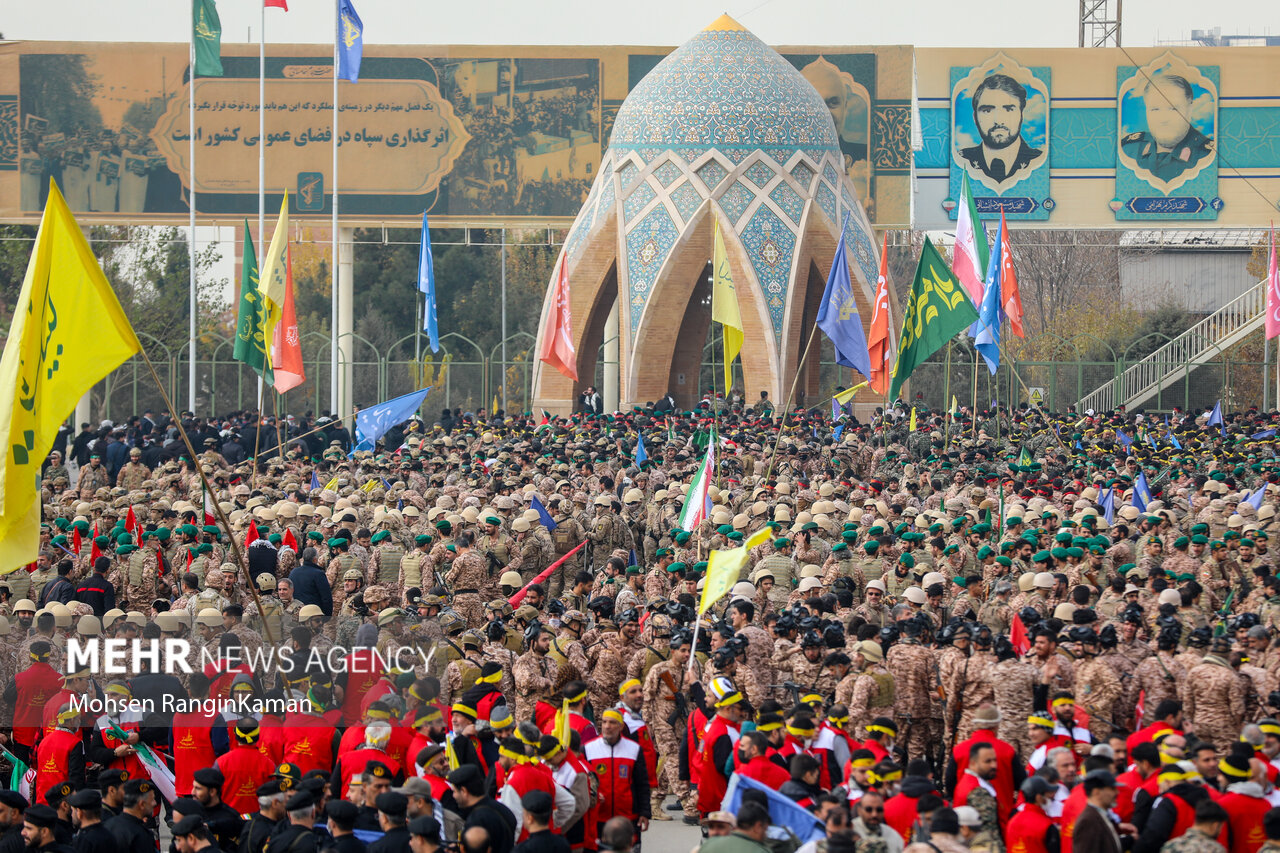
On April 21, President Masoud Pezeshkian waited for a meeting with Supreme Leader Mojtaba Khamenei that never came. As U.S. Vice President JD Vance prepared to fly to Islamabad for a second round of peace talks with Iran, Pezeshkian remained locked out of power, unable to contact the state's nominal head or appoint his own intelligence minister. The Islamic Revolutionary Guard Corps had cut him off completely.
The United States is negotiating with an Iranian president who has been severed from the center of power by the very men who now control Iran's decisions. Ahmad Vahidi and his IRGC inner circle have blocked Pezeshkian's appointments, erected a security cordon around Khamenei, and prevented any contact between the elected government and the leadership. The Islamabad talks are not a diplomatic process — they are a high-stakes negotiation with a regime whose real decision-makers have no intention of compromising, and whose survival depends on keeping the conflict alive.
A "military council" of senior IRGC officers exercises full control over Iran's core decision-making structure, according to informed sources cited by Iran International and corroborated by The Times of Israel. The council has blocked presidential appointments and prevented government reports from reaching Khamenei, who has not been seen publicly since his appointment as Supreme Leader on March 8, 2026. A security cordon around the supreme leader prevents any contact with Pezeshkian.
Vahidi, appointed IRGC deputy commander-in-chief on December 27, 2025, became de facto commander after his predecessor Mohammad Pakpour was killed. The 67-year-old has direct links to the 1983 Beirut barracks bombing, 1994 AMIA bombing, and 1996 Khobar Towers attack — established facts confirmed by U.S. Treasury sanctions, EU sanctions, and INTERPOL red notices.
"By any standard, Vahidi is considered a radical even within the regime's hardline elite, and his rise is a warning that Tehran's war machine now calls the shots," said Lisa Daftari, foreign policy analyst and journalist. "Putting someone with such a bloody and murderous record at the top of the Revolutionary Guard Corps confirms that the regime is not moderating under pressure."
Vahidi blocked Pezeshkian's proposal of former Defense Minister Hossein Dehghan for intelligence minister on March 28, 2026. All subsequent candidates were vetoed. "Under wartime conditions, all critical and sensitive positions must be selected and managed directly by the IRGC until further notice," Vahidi insisted, according to Iran International.
The IRGC has effectively replaced civilian governance with military command. Under Iran's constitutional system, the president nominates the intelligence minister only after securing approval from the Supreme Leader. With Khamenei inaccessible, Vahidi has assumed that authority.
Mohammad Bagher Zolghadr was appointed secretary of the Supreme National Security Council on March 24 after Ali Larijani was killed on March 17. He was inserted into the Islamabad negotiating team specifically to ensure adherence to IRGC directives. On April 18, he complained to senior IRGC leaders that Foreign Minister Abbas Araghchi "had surpassed his mandate during the negotiations by expressing flexibility regarding Iran's support for the Axis of Resistance," prompting the recall of the negotiating team, according to the Institute for the Study of War.
The IRGC's control extends to the Strait of Hormuz. On April 18, IRGC fast-attack ships fired on commercial vessels attempting passage. An IRGC navy member issued a marine radio message: "We will open it by the order of our leader, Imam Khamenei, not by the tweets of some idiot." This was coordinated with Vahidi and Zolghadr, the Institute for the Study of War confirmed.
"The civilian, whatever civilian there is, is under the thumb of the IRGC," said Rachel Ehrenfeld of the American Center for Democracy and the Economic Warfare Institute. "From the last data that I could actually surmise, they control something around two-thirds of the economy."
The IRGC Intelligence Organization reported 36,500-plus killed in a two-day crackdown on anti-regime protests in January — the deadliest two-day protest massacre in history. The men who ordered those killings now control Iran's decision-making.
Iran International obtained a 33-page classified IRGC missile command directive showing that civilian locations — industrial sheds, sports halls, warehouses — are systematically used to conceal and prepare missile launches. Farzin Nadimi of the Washington Institute confirmed this is a bureaucratic framework, not improvisation.
The first round of Islamabad talks lasted 21 hours, ended in deadlock over Iran's nuclear program, and involved approximately 80 Iranians — about 30 decision-makers. Internal arguments were so loud that Pakistani mediators had to intervene. The U.S. delegation included Vance, Steve Witkoff, and Jared Kushner. The Iranian delegation included Ghalibaf and Zolghadr, but Ghalibaf has no authority to make a deal without IRGC approval.
On April 4, Pezeshkian confronted Hossein Taeb, accusing Vahidi and Ali Abdollahi of unilateral actions that "wrecked ceasefire prospects and pushed Iran toward disaster." The exchange was "unusually difficult and highly charged," according to Iran International.
During an April 19 telephone conversation with Pakistan Prime Minister Shehbaz Sharif, Pezeshkian described "betrayal of diplomacy" and flagged U.S. "bullying." This is a president being used as diplomatic cover while the IRGC controls the real negotiations.
The ceasefire expires on April 22. Trump has said he is unlikely to extend it. Iran has not sent a delegation to Islamabad. The IRGC has no incentive to agree to a deal that would end the conflict — conflict justifies its control.
On April 19, the U.S. Navy fired on and seized the Iranian-flagged cargo ship M/V Touska. Ehrenfeld noted that the IRGC's shadow economy makes tracing ownership difficult, but the seizure was a direct blow to IRGC finances.
"Iranian commanders who have replaced those killed are, in many respects, more dangerous than their predecessors," said Narges Bajoghli of Johns Hopkins University. "They are younger. They fought the Americans in Iraq. They fought Israelis in Lebanon and Syria alongside Hezbollah. They believe — with considerable justification — that they helped defeat the most powerful militaries on earth in those theaters and do not share the caution of the older generation of leaders."
"They're more willing to take risks," added Vali Nasr, also of Johns Hopkins University. "They're willing to do things that, previously, wouldn't have been done."
"Without a Supreme Leader, Iran has no government," said J. Michael Waller of the Center for Security Policy. "The IRGC controls most of the instruments of finance and all of the surviving instruments of power apart from the weak army. The officials doing the negotiating with the United States have no power to make good on anything they pledge to do."
"It is a theocracy now only in name," said Ali Vaez of the International Crisis Group. "In practice, it is a military system. At the end of the day, power really is in the hands of the Revolutionary Guards."
The IRGC's control of Iran's decision-making is not a temporary wartime measure — it is a permanent restructuring of power. The men who now control access to Khamenei, who veto presidential appointments, and who dictate negotiating positions are the same men who ordered the January crackdown.
"He brings even more radicalization into the system and may not want to stop the war, because it serves the interests of the Revolutionary Guards to continue," said Beni Sabti of Israel's Institute for National Security Studies.
"Trusting him [Vahidi] is a grave mistake," said Yigal Carmon of the Middle East Media Research Institute. "He belongs to the hard 'DEATH TO AMERICA' corps."
The U.S. is negotiating with a regime whose real decision-makers have no intention of compromising. Any deal signed by Pezeshkian is worthless if the IRGC doesn't sanction it — and the IRGC has every incentive to stall, as conflict justifies their grip on power.
"It was always a matter of when, not if, the IRGC was going to step forward even more than it has in the last three decades," said Behnam Ben Taleblu of the Foundation for Defense of Democracies. "But it's a mistake to assume this is some sort of coup. This has been the process in Iran for years now, as the regime has chosen conflict over cooperation and emboldened its security forces at every juncture."