US Gives Cuba Two Weeks to Free Dissidents, or Risk Military Action
Washington issues ultimatum to Havana to release political prisoners Luis Otero and Maykel Osorbo, with military action looming as Cuban economy collapses under oil blockade.
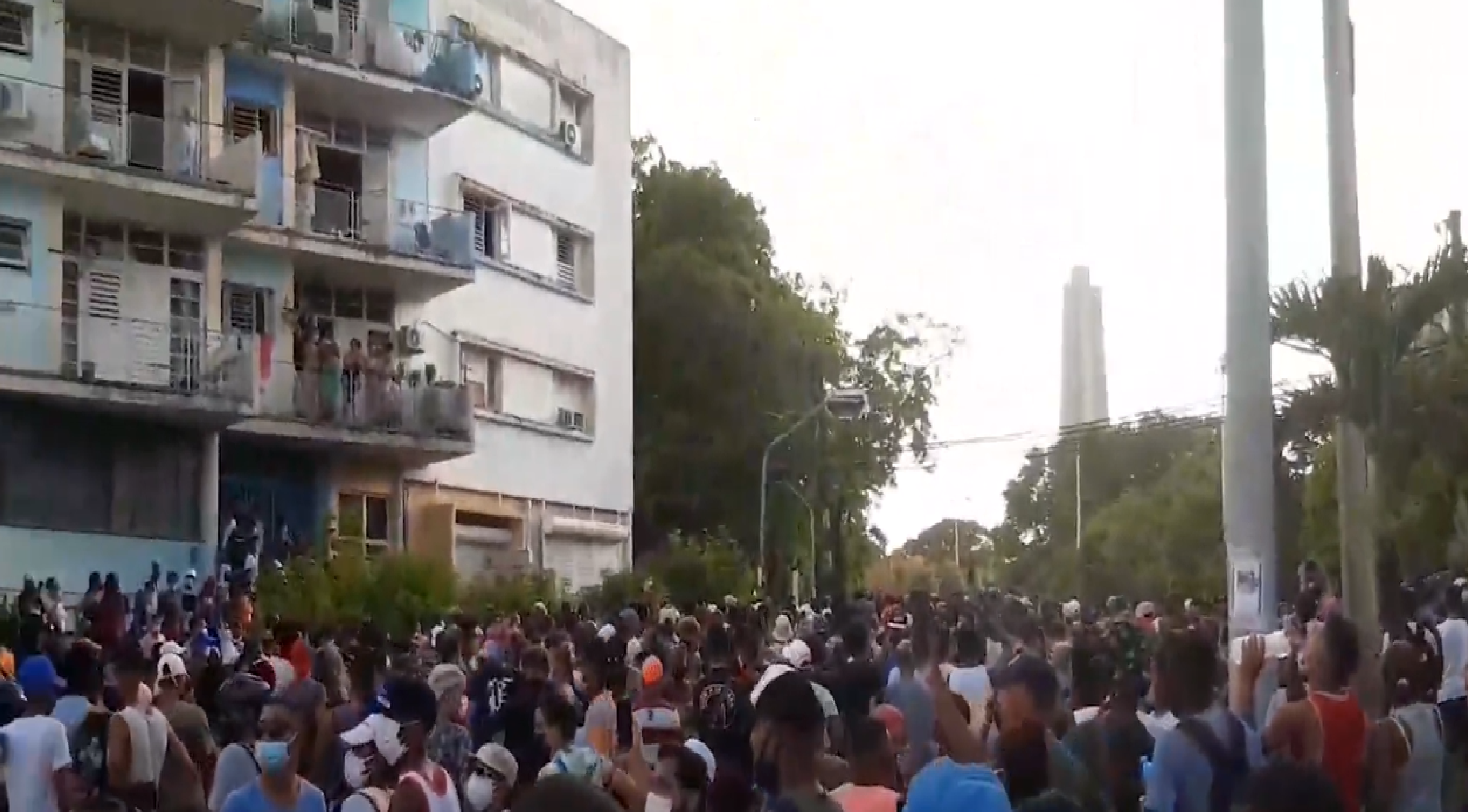
The United States has given Cuba a two-week deadline to release high-profile political prisoners, marking a dramatic escalation in Washington's no-nonsense approach to communist regimes. The ultimatum, which expires around April 24, demands freedom for dissident artists Luis Manuel Otero Alcántara and Maykel Osorbo as a test of Havana's willingness to change.
This hardline stance contrasts sharply with previous administrations that prioritized diplomatic engagement over human rights demands. The deadline was presented during a secret meeting on April 10, when a senior State Department delegation made the first US government plane landing in Cuba since 2016. Officials warned Cuba's economy is in free fall and that ruling elites have a narrow window to make reforms before circumstances irreversibly worsen.
"The Trump administration remains committed to the release of all political prisoners, including Alcántara and Osorbo," a State Department spokesperson told USA Today on April 19. Otero, leader of the San Isidro Movement, serves five years for his activism, while Osorbo, co-creator of the protest anthem "Patria y Vida," faces nine years in prison. Both artists are designated prisoners of conscience by Amnesty International.
After the April 10 meeting, Cuban officials attempted to bypass normal diplomatic channels. Raúl Guillermo Rodríguez Castro, grandson of former leader Raúl Castro, tapped businessman Roberto Carlos Chamizo González to deliver a sealed diplomatic note directly to the White House. The letter proposed economic deals and sanctions relief while warning of possible US incursion. Chamizo was intercepted at Miami International Airport by Customs and Border Protection and sent back to Havana.
"The Cubans appear to be attempting to circumvent [Secretary of State Marco] Rubio and get a clear message directly to Trump," said Peter Kornbluh, co-author of "Back Channel to Cuba." This back-channel failure occurred as the US applied maximum economic pressure through an oil blockade that began in January after American forces captured Venezuelan leader Nicolás Maduro, Cuba's primary oil supplier.
Cuba's economy has not received oil shipments for nearly three months until a Russian tanker arrived March 30 with 730,000 barrels, enough for just 9-10 days of normal demand. The island's national electric grid collapsed March 16, leaving millions without power in a nation where 40 percent of the population lives in extreme poverty.
While Cuba released 2,010 prisoners April 2-3 as a "humanitarian gesture," Human Rights Watch confirmed none were political prisoners. Prisoners Defenders registered 1,214 political prisoners as of February 2026, a record high. Since the July 2021 protests, 1,981 individuals have been jailed for political reasons.
"The Cuban authorities continue to administer freedom as if it were a discretionary concession and not an obligation of the state," said Ana Piquer, Americas director for Amnesty International. "It is time to replace partial, opaque, revocable and unwarranted announcements with the immediate and unconditional release of all people imprisoned solely for exercising their human rights, and the definitive cessation of the use of freedom as a political bargaining chip."
US military pressure accompanies the economic squeeze. USA Today reported April 15 that Pentagon planning for a possible operation in Cuba was "quietly ramping up." Two days later, Trump cryptically told reporters on Air Force One, "Well, it depends on what your definition of military action is." A US military surveillance drone was spotted flying near Cuba on April 16.
During the April 10 meeting, US officials offered a carrot alongside the stick: bringing Elon Musk's Starlink high-speed internet service to Cuba contingent on economic reforms, compensation for confiscated American property, and lifting political freedom constraints. This proposal exemplifies Trump's strategy of using both pressure and potential benefits to force political change.
The regime's internal dynamics complicate its response. Analysts agree real power rests with the Castro family and GAESA, the military-controlled conglomerate managing 60 percent of Cuba's economy, not with President Miguel Díaz-Canel. The president publicly confirmed negotiations March 13 but vowed, "Stepping down is not part of our vocabulary" and promised "impregnable resistance" to external aggression.
From his prison cell, Otero told CiberCuba in February, "Ame and Maykel were kept aside to see what Trump would do, and I have always felt like some sort of bargaining chip." He ended an eight-day hunger strike April 6 protesting death threats and conditions in Guanajay maximum-security prison.
International reaction remains divided. UN experts condemned the oil blockade as "a serious violation of international law" that threatens Cuba's food supply, water systems, and hospitals. CARICOM raised concerns about humanitarian fallout. US Democratic lawmakers Reps. Pramila Jayapal and Jonathan Jackson, who visited Cuba April 6, called the blockade "cruel collective punishment — effectively an economic bombing."
Argentina supports the US position, while Brazil condemned the blockade and Chile called it "criminal" and "inhumane." Russia sent oil despite US sanctions, and China announced an $80 million aid package with 60,000 tons of rice in January.
During the April 17 Phoenix rally, Trump declared, "A new dawn for Cuba is coming." A State Department spokesperson later added that the regime should "stop playing games as direct talks are occurring." The two-week deadline represents more than a prisoner release demand—it serves as a critical test of whether Cuba's communist regime will yield to pressure or face escalating consequences in what could become the most significant US-Cuba confrontation since the 1962 missile crisis.