Taiwan Opposition Leader Delivers Beijing Propaganda Victory While Blocking Defense
As 16 Chinese warplanes circled Taiwanese airspace, opposition leader Cheng Li-wun met Xi Jinping in Beijing, delivering a strategic victory for China while her allies blocked Taiwan's defense budget.
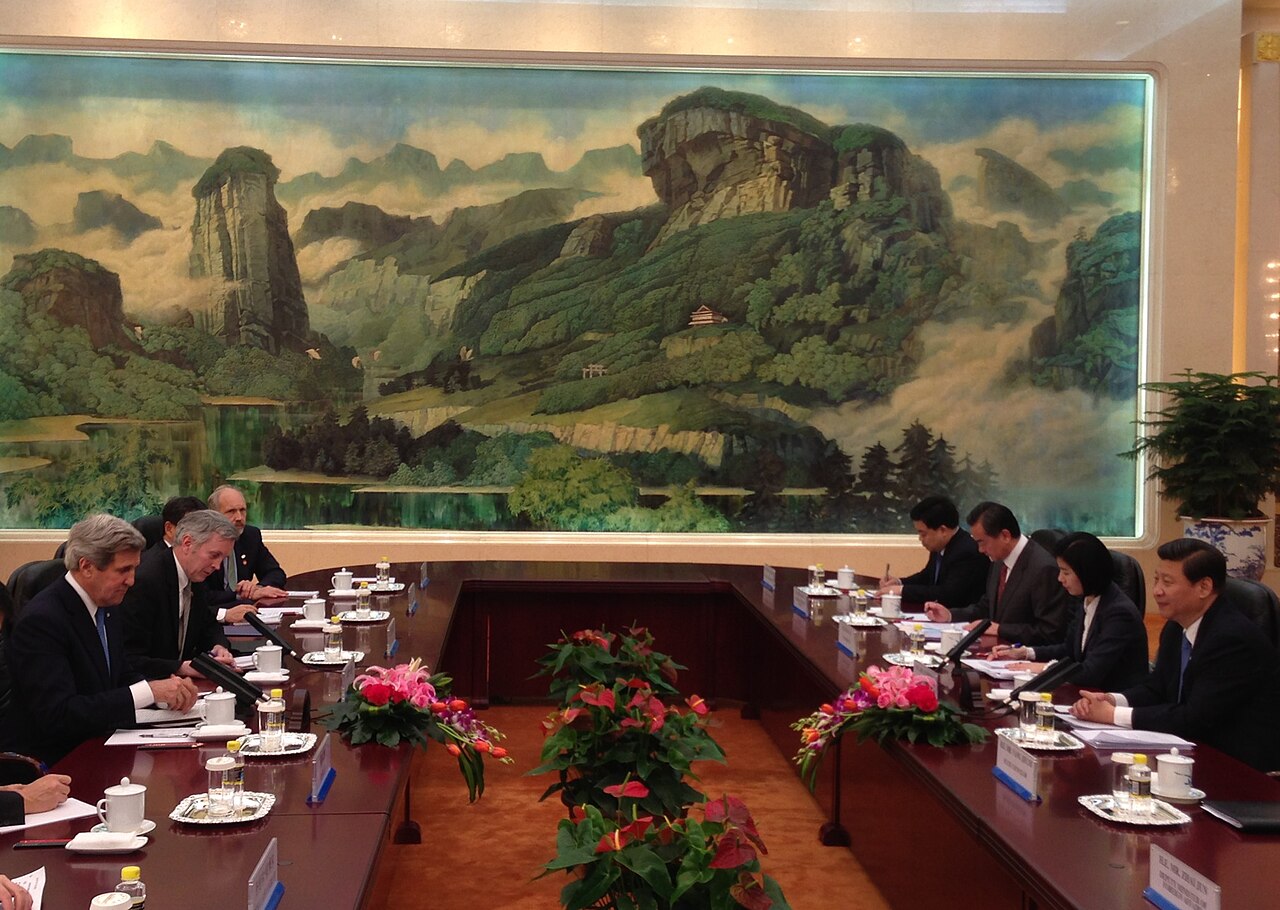
While 16 Chinese warplanes circled Taiwanese airspace, the island's main opposition leader shook hands with President Xi Jinping in Beijing and delivered China a strategic political victory. Kuomintang chairwoman Cheng Li-wun completed her six-day "peace visit" on April 12, emerging from a meeting with Xi to warn against "external interference" while her legislative allies blocked Taiwan's $40 billion defense spending proposal for the 10th time since November.
The encounter at Beijing's Great Hall of the People marked the first KMT-CCP leadership meeting in a decade and showcased how internal political movements in democratic societies can inadvertently empower authoritarian adversaries. Cheng told Xi she hopes "the Taiwan Strait will no longer become a potential flashpoint of conflict, nor a chessboard for external powers," according to Al Jazeera reporting.
China's Taiwan Work Office announced the resumption of direct flights and aquaculture imports to Taiwan immediately after Cheng's departure. Beijing framed these moves as rewards for opposition engagement while bypassing Taiwan's democratically elected government. Taiwan's Mainland Affairs Council condemned the announcements as "political transactions" that circumvent official channels.
The same day that Cheng met Xi, Taiwan's Ministry of National Defense reported 16 People's Liberation Army warplanes operating near the island. This military pressure continued despite Cheng's peace rhetoric about birds, not missiles, flying in the sky. "Human technology should not be for mutual slaughter or the destruction of ecosystems," she told Democracy Now.
Taiwan's legislature remains gridlocked over a proposed NT$1.25 trillion ($40 billion) special defense budget. The KMT-TPP opposition coalition controlling the legislative chamber has blocked the measure 10 consecutive times since November. The KMT alternative proposes just NT$380 billion ($12 billion) for only eight weapons systems.
China has maintained aggressive military postures throughout this political paralysis. Beijing imposed 40-day airspace restrictions from March 27 through May 6 without announcing accompanying exercises. The restricted zones stretch from the Yellow Sea to the East China Sea, covering twice Taiwan's area.
Subsea cable sabotage continues as a hybrid warfare tactic. Four incidents occurred in January-February 2025, with two involving suspect Chinese-linked vessels. Taiwanese authorities documented 12 cable severances in 2023 alone, costing NT$96.4 million in repairs.
President Lai Ching-te warned that Cheng's approach sacrifices sovereignty. "History tells us that compromising with authoritarian regimes only sacrifices sovereignty and democracy," Lai stated on Facebook. "It will not bring freedom, nor will it bring peace."
U.S. Senator Jim Banks urged Taiwan's legislature to pass the defense budget during an April 9 visit to Taipei. "When you pass the special budget in the legislature, that is a signal to China, and to the rest of the world, that Taiwan is serious about peace through strength," the Indiana Republican told the Taipei Times.
Mainland Affairs Council Deputy Minister Shen Yu-chung described Beijing's contradictory actions. "On one hand we see them sending out messages of peace, while on the other hand they continue to use military force to pressure Taiwan without letup," he said April 12.
Taiwanese public opinion shows diminishing support for unification. A 2025 National Chengchi University survey found 62 percent of Taiwanese identify as "Taiwanese," while just 2.5 percent identify as "Chinese." The KMT draws less than one-third of voter support according to April polling.
Beijing's strategy exploits Taiwan's democratic divisions, providing political cover for continued coercion. The CCP gains legitimacy through opposition engagement while maintaining military pressure against Taiwan's elected government. This pattern of appeasement enabling aggression extends beyond Taiwan to other democracies facing authoritarian challenges.