Trump Blockade Breaks Iran, Exposes NATO
As U.S. forces enforce a blockade on Iranian ports, European NATO allies refuse to join the fight while planning to claim credit for post-war diplomacy, revealing an unsustainable alliance dynamic.
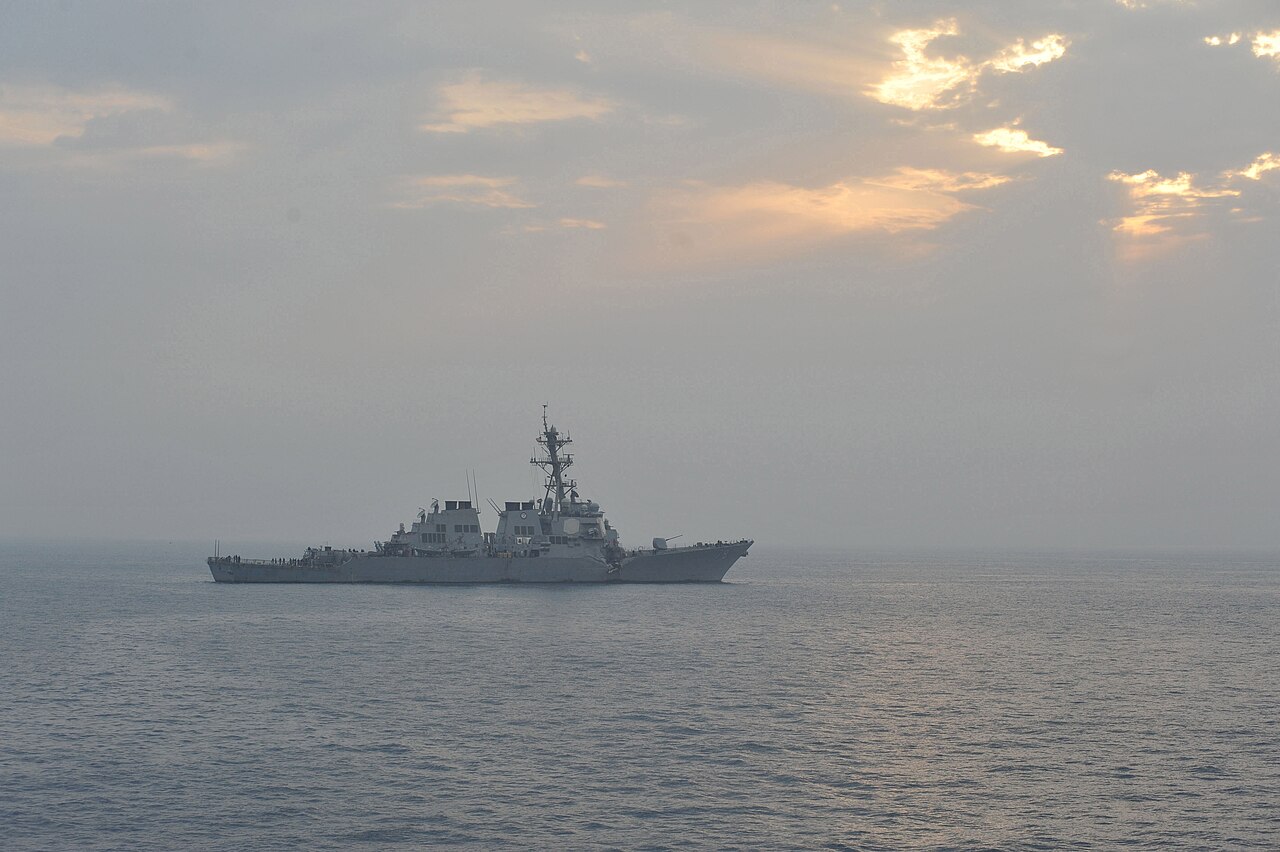
When President Donald Trump announced the U.S. blockade of Iranian ports last week, European allies lined up to declare opposition while simultaneously planning how to claim credit for restoring freedom of navigation once Washington does the actual fighting. British Prime Minister Keir Starmer's blunt rejection exposes NATO's fatal flaw: European governments want open sea lanes protected by American sailors without sending their own troops to face Iranian missiles.
The blockade's first 36 hours have demonstrated that the U.S. naval operation achieves two objectives simultaneously: strangling Iran's oil-dependent economy at $430 million per day while exposing European NATO allies as unwilling to share military burden despite decades of relying on American security guarantees. European leaders' invocation of "freedom of navigation" as a principle while refusing to participate in the blockade designed to enforce it reveals a parasitic alliance relationship that Trump has correctly identified as unsustainable.
Starmer stated the British position clearly in an April 13 BBC Radio 5 Live interview. "We're not supporting the blockade," the prime minister said. "We're not getting dragged into the war." That same day, French President Emmanuel Macron announced plans for a "strictly defensive mission" deployable "as soon as circumstances permit," while German Chancellor Friedrich Merz declared Germany would participate only "once the war ends."
This European rejection is not about principle but about positioning. The United Kingdom and France are convening 40-plus nations for an April 16 conference to coordinate a multinational mission to protect freedom of navigation after the conflict ends. They want diplomatic credit for restoring the very shipping lanes that U.S. forces are currently securing through combat operations.
U.S. Central Command confirmed the blockade's effectiveness within hours. "In less than 36 hours, all Iranian ship traffic, which accounts for 90 percent of Iran's economy, had been blocked," CENTCOM Admiral Brad Cooper stated April 14. Six merchant vessels were turned back on the first day alone. The blockade began April 13 at 10 a.m. Eastern Time, enforcing a cordon that prevents all vessels from entering or departing Iranian ports.
Iran loses approximately $430 million per day in blocked economic activity, according to Miad Maleki, a senior fellow at the Foundation for Defense of Democracies. The Islamic Republic earned nearly $5 billion in oil exports during the month before the blockade, with 80 percent of its exports dependent on oil and gas shipments. Iran's onshore storage capacity stands at just 13 days, forcing production shutdowns that risk permanent infrastructure damage.
The economic pressure creates a countdown clock that European allies are actively undermining. "Mr. Starmer, P.M. Starmer said, we will send the equipment after the war is over," President Trump told Fox News on April 12. "That's a Neville Chamberlain-type statement. We have to reexamine NATO, because they weren't there for us."
Trump's historical comparison draws a direct line between Starmer's refusal to confront Iranian aggression and the British prime minister who appeased Nazi Germany in 1938. The president reiterated his position that NATO's burden-sharing imbalance has become intolerable. "NATO wasn't there for us, and they won't be there for us in the future," he stated.
The blockade exposes decades of alliance imbalance where European nations benefit from U.S. security guarantees without reciprocal commitment. While European leaders publicly cite freedom of navigation as a fundamental principle requiring protection, their refusal to participate militarily in enforcing that principle reveals their true priorities. They want the strategic benefits of American military action without sharing the risks or costs.
Strategic stakes are immense. The Strait of Hormuz carries 20 percent of globally traded oil, with 110 to 153 vessels transiting daily before the war. After Iran effectively closed the waterway February 28, daily traffic dropped to fewer than 10 vessels. More than 800 commercial vessels remain stranded, including nearly 400 oil tankers.
Iran's economic dependency makes continued resistance unsustainable. Ninety percent of its oil exports flow to China, creating a critical vulnerability. The Islamic Republic faces a binary choice: economic collapse within weeks or capitulation to U.S. demands. Trump predicted that outcome April 14. "I think it's close to over, yeah," he told Fox Business. "I view it as very close to being over. If I pulled up stakes right now, it would take them 20 years to rebuild that country."
The two-week ceasefire between the U.S. and Iran expires April 22, creating a deadline for diplomatic resolution. European positioning suggests they expect that resolution to arrive soon, allowing them to deploy their post-conflict coalition as peacemakers rather than combatants.
This dynamic validates Trump's long-standing critique of NATO as an alliance of free riders. European governments have demonstrated through concrete action that they will not support American military operations even when those operations directly serve European economic interests. The blockade has achieved what decades of diplomatic protests could not: forcing European leaders into public positions that confirm their unwillingness to share military burdens.
The United States' minimal dependence on Hormuz transit — only 7 percent of American energy imports pass through the strait — creates strategic asymmetry that European leaders apparently miscalculated. While European economies face severe disruption from prolonged closure, Washington can sustain the blockade indefinitely. That economic reality makes European opposition strategically incoherent.
China's response underscores the global realignment underway. Chinese Foreign Ministry spokesperson Guo Jiakun called the blockade a "dangerous and irresponsible move" on April 14. This positions Beijing as Iran's primary defender while European nations attempt to straddle both sides of the conflict.
The blockade's success demonstrates the strategic effectiveness of unilateral American action when allied cooperation proves impossible. European governments have revealed through their actions that alliance commitments extend only to peacetime partnerships, not wartime solidarity. This revelation will reshape transatlantic relations for decades, confirming that American strategic independence remains essential in a world of unreliable allies.