Even Tech Titan Musk Falls for Government Check Solution
Elon Musk's proposal for government-funded 'universal high income' to address AI job losses reveals how even market champions default to statist solutions when faced with technological disruption.
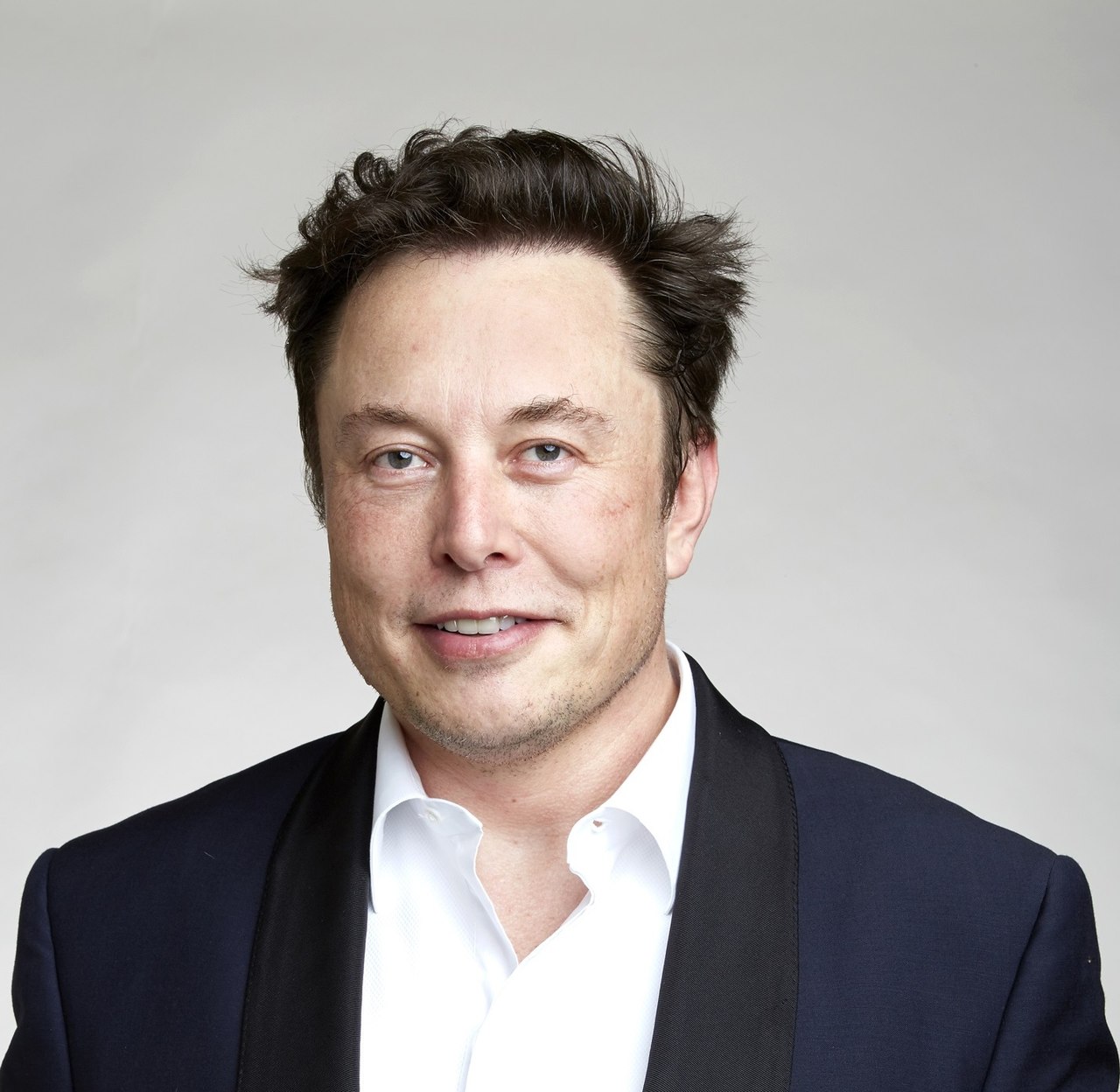
When fear of artificial intelligence meets the federal checkbook, the result is bad economics — even when the fear-monger is Elon Musk. The tech titan's proposal for "universal high income" delivered by Washington represents a startling embrace of statist solutions from a man who built his fortune on market disruption, and the economic backlash has been swift and devastating. This case study reveals how even celebrated capitalists fall for government intervention when faced with technological disruption, abandoning the free-market principles that made them successful.
Musk ignited the firestorm on April 17 with an X post that remains pinned to his account. "Universal HIGH INCOME via checks issued by the Federal government is the best way to deal with unemployment caused by AI," he wrote. He added that "AI/robotics will produce goods & services far in excess of the increase in the money supply, so there will not be inflation." The post reached 38 million readers in its first 12 hours, sparking immediate controversy among economists who saw it as a fundamental contradiction of market principles.
The fiscal impossibility of Musk's proposal collides with America's dire budget reality. According to the IMF's April 2026 Fiscal Monitor, U.S. debt-to-GDP will exceed 125 percent this year and could reach 142 percent by 2031. The deficit remains around 7.5 percent of GDP — one of the largest peacetime gaps in modern history. Stabilizing this trajectory requires fiscal tightening of roughly 4 percentage points of GDP. Adding a universal income program, which would cost hundreds of billions annually, would accelerate fiscal collapse rather than prevent it.
Economic evidence confirms that unconditional cash transfers reduce work participation. An AEI analysis of 122 guaranteed basic income pilots across 33 states and Washington, D.C., revealed troubling patterns. The four largest studies, each with more than 500 participants, showed a mean employment effect of negative 3.2 percentage points. While smaller pilots produced mixed results, the most rigorous research indicates that giving people money not to work makes them work less — precisely the wrong response to a technological transition requiring adaptability.
Senior economic adviser Sanjeev Sanyal delivered the most direct rebuke. "He is so wrong on this," Sanyal posted on X. "Elon Musk's universal high income will bankrupt any government that attempts it." The economist criticized what he called the "lump-of-labour fallacy" — the assumption that economies have fixed jobs and fixed demand. "AI will certainly cause dislocation," Sanyal added, "but like all technology it will also create new jobs and opportunities in the medium term."
The actual impact of AI on employment is more nuanced than Musk's apocalyptic framing suggests. Boston Consulting Group's April 2026 report projects that 10 to 15 percent of U.S. jobs — 17 to 25 million positions — could be eliminated in five years. But 50 to 55 percent will be "reshaped" rather than erased, creating a transition problem that requires adaptation, not permanent income support. This aligns with historical patterns from the 300-year industrial revolution, which consistently created more jobs than it destroyed through innovation and market expansion.
Libertarian economists argue for removing barriers to work rather than writing government checks. "If we can afford generous universal high income, we can afford to retrain and reskill — and the evidence suggests that's what most people actually need," said James Ransom, a research fellow at University College London. "For those who do lose their jobs, retraining done well preserves agency and self-worth in ways a basic income cannot." The Reason.com analysis called Musk's proposal economically incoherent, noting that "paying people a lot of money not to work would" create the very dystopia he claims to fear.
Real-time employment data confirms AI's disruptive but manageable impact. Employers announced approximately 27,600 AI-linked job cuts in the first quarter of 2026 according to Challenger, Gray & Christmas. The firm also reported that technology sector job cuts rose 40 percent year-on-year during the same period. While significant, these cuts represent a fraction of the U.S. workforce — not the mass unemployment scenario justifying massive federal intervention. The technology sector itself cut 52,000 positions in the same period, with companies like Oracle eliminating up to 30,000 roles and Block reducing its workforce by 40 percent.
The alternative solution focuses on economic mobility rather than dependency. Vance Ginn's AEI research recommends "removing barriers to work" through less occupational licensing, lower taxes, and lighter regulation. These measures enable workers to pivot to new opportunities as markets evolve. Historical precedent shows that economies adapt through innovation and geographic mobility, not government checks. When agricultural employment dropped from 40 percent to 2 percent of the workforce over the 20th century, markets created new service and industrial jobs without massive transfer programs.
Pratyush Rai, co-founder and CEO of Merlin AI, highlighted the basic arithmetic failure of Musk's proposal. "The basic math on UHI doesn't add up," Rai posted on X. "If everyone gets a high income check, everyone's competing for the same houses, land, schools, lifestyle." This competitive inflation would erase any purchasing power gains, creating a self-defeating cycle of rising prices chasing the same fixed supply of goods and services.
Marc Andreessen's longstanding critique of universal basic income resurfaced in the debate. The venture capitalist has argued that UBI-style programs would "turn people into zoo animals to be farmed by the state" and warned against socialist solutions to technological challenges. "What a coincidence," Andreessen has noted, "the socialist's answer to AI is communism." His perspective echoes the libertarian warning that government dependency undermines the very innovation Musk claims to champion.
The broader implication transcends this specific policy debate. Musk's proposal reveals how even market champions default to government solutions when faced with disruption. This pattern reflects a fundamental contradiction: entrepreneurs who succeed by disrupting markets suddenly seek state protection when disruption threatens established patterns. Economic history shows that fear-driven policymaking, even when proposed by tech luminaries, often produces worse outcomes than the problems it claims to solve.
In the end, the real question is whether we trust workers to adapt and innovate, or whether we turn them into dependents waiting for Washington to write their checks. The free market has always been the engine of human advancement — and it will be again.