Iran Turns World's Key Energy Chokepoint Into a Toll Booth — and Collecting Cash
Iran's central bank confirms first toll revenues from ships forced through a new Strait of Hormuz corridor, institutionalizing a chokehold that has stranded thousands of vessels and sent oil prices surging past $106 per barrel.
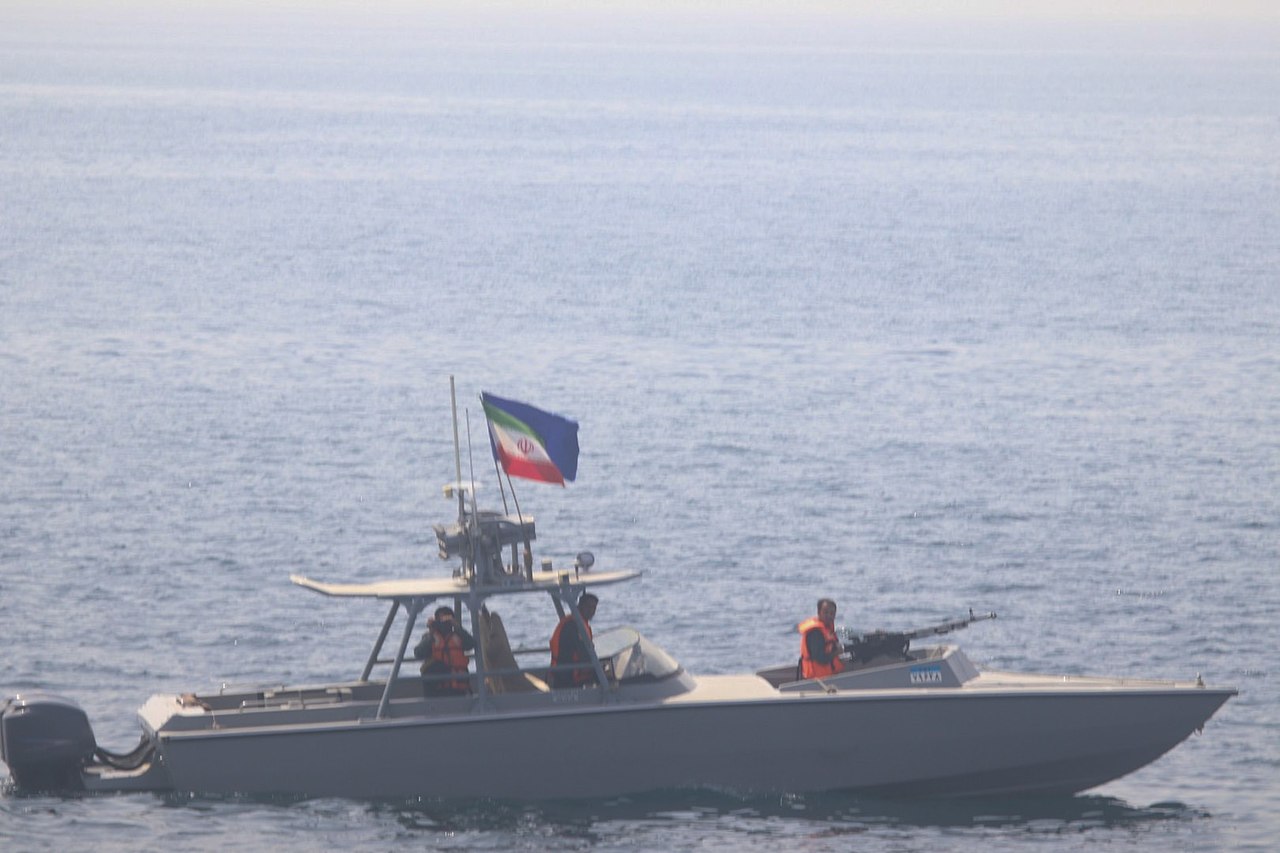
A nation has turned the world's most critical energy passage into a toll plaza, and it is collecting cash. Iran's Central Bank confirmed on April 23 that the first revenues from transit fees on ships passing through the Strait of Hormuz have been deposited in its accounts. Deputy Speaker Hamidreza Hajibabaee announced the deposit at a public gathering in Kuhdasht, marking the first official confirmation that the Islamic Revolutionary Guard Corps' de facto toll system is generating revenue. The IRGC established the corridor between Qeshm and Larak islands on March 13, transforming the strait into a heavily regulated checkpoint where ships must pay before transiting.
The deposit institutionalizes what shipping intelligence firm Lloyd's List calls a "de facto 'toll booth' regime" at the waterway that carries roughly 20 percent of global oil and 20 percent of global LNG shipments. About 2,000 vessels now sit stranded on both sides of the narrow passage. Brent crude trades above $106 per barrel as energy markets absorb the shock. Fatih Birol, head of the International Energy Agency, told CNBC on April 23: "We are facing the biggest energy security threat in history." He said 13 million barrels per day of oil have been lost from global supply.
"The first revenue received from tolls in the Strait of Hormuz has been transferred to the Central Bank's account," Hajibabaee declared. He added that "all ships passing through this route must pay tolls in Iranian rials to the Iranian nation as a rightful fee for using Iran's territorial waters." Iran's parliament approved the "Strait of Hormuz Management Plan" on March 30-31, formalizing a fee structure that charges up to $2 million per supertanker.
Ships now face a gauntlet of IRGC checkpoints. The guard force reroutes vessels through Iranian territorial waters between Qeshm and Larak, where operators must submit vessel details to IRGC intermediaries. Approved ships receive clearance codes and are escorted by IRGC vessels. Lloyd's List Intelligence confirmed at least two vessels paid tolls in Chinese yuan. Hajibabaee stated: "Two violating vessels have been successfully seized so far, and this number will increase as necessary to protect Iran's sovereignty." On April 22, the IRGC seized the Panama-flagged MSC Francesca and the Liberia-flagged Epaminondas, accusing them of operating without permits.
Iranian officials frame the tolls as an assertion of sovereignty. "The Strait of Hormuz belongs to the Iranian people and no external power has the authority to negotiate over it," Hajibabaee asserted. Mohammadreza Rezaei Kouchi, chairman of the Majlis Civil Affairs Committee, told Tasnim and Fars News: "We ensure its security, and it is natural for ships and tankers to pay us duties. The Strait of Hormuz is also a corridor." Alaeddin Boroujerdi, a member of Iran's National Security Committee, said on state television that "collecting $2 million as transit fees from some vessels crossing the strait reflects Iran's strength."
President Trump claims the U.S. has "total control" over the strait and that it is "sealed up tight." On April 23, he ordered the Navy to "shoot and kill" any Iranian mine-laying boats. The U.S. imposed a naval blockade on Iranian ports on April 13, and US Central Command reports that 31 or more vessels have been directed to turn around or return to port since then. Trump's assertion of total control collides with reality on the water: Iran controls the eastern approach, operates the toll corridor, and has successfully collected payments from vessels willing to pay.
The numbers tell a stark story. Pre-war traffic through the strait averaged 100 to 120 or more commercial vessels daily, carrying approximately 20 million barrels of oil. In March 2026, fewer than 10 vessels per day transited — a 94 to 95 percent decline. The Strait of Hormuz is the only exit from the Persian Gulf. Saudi Arabia and the UAE possess combined pipeline bypass capacity of approximately 2.6 million barrels per day. Qatar, Kuwait and Bahrain have no alternative.
The ripple effects reach families and businesses far from the Persian Gulf. Sultan al-Jaber, CEO of ADNOC, called Iran's chokehold "economic terrorism against every consumer, every family that depends on affordable energy and food." Maritime historian Sal Mercogliano at Campbell University told AP News: "There's no provision in international law anywhere to set up a toll booth and shake down shipping." Article 19 of the UN Convention on the Law of the Sea requires states to allow "innocent passage" of peaceful vessels in territorial waters. Iran never ratified UNCLOS, nor did the United States.
The international system offers no clear path to reversing the tolls. The UN Security Council cannot act given Russian and Chinese vetoes. The International Maritime Organization has no enforcement capacity. Karen Young, senior research scholar at Columbia University's Center on Global Energy Policy, said the toll booth idea is "practically impossible" and that Gulf Cooperation Council states would "not accept and not tolerate" any bilateral bargaining arrangement over Hormuz access.
The confirmed deposit at Iran's Central Bank signals that Tehran has moved from threat to institutionalized control. The question is no longer whether Iran can close the strait — it has. The question is whether the post-1945 principle of free navigation through international straits, enforced by U.S. naval power for eight decades, can survive a state willing to hold 20 percent of global oil supply hostage.