College Grads Boo AI as White-Collar Jobs Collapse
Graduates across the country boo AI at commencement ceremonies as white-collar jobs vanish. Only 30 percent of 2025 grads found work in their field while skilled trades demand surges 27 percent.
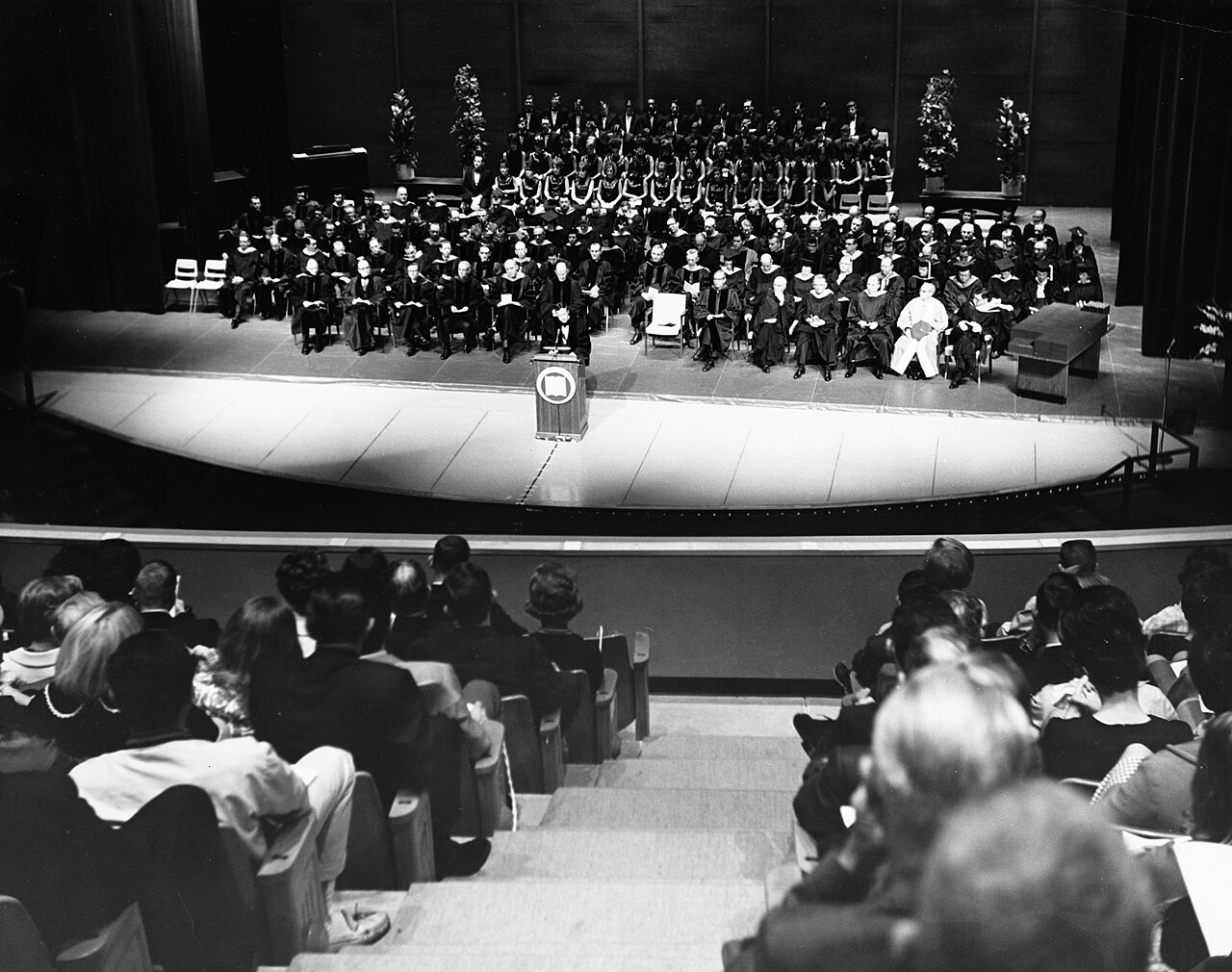
Gloria Caulfield stood before thousands of University of Central Florida graduates on May 8 and declared artificial intelligence "the next industrial revolution." The crowd erupted in boos. One audience member shouted "AI SUCKS!" Caulfield turned and asked, "What happened?" The answer is simple: her generation's foundational deal — take on massive debt, earn a degree, land a stable white-collar job — has been shredded by the very technology universities tell them to embrace.
This is not an isolated incident. Across the 2026 commencement season, students at UCF, Middle Tennessee State University, the University of Arizona, and elsewhere have booed speakers who mention AI. Their anger reflects rational economic self-interest, not Luddite ignorance. Only 30 percent of 2025 graduates found full-time jobs in their field, according to the Cengage 2025 Graduate Employability Report. Unemployment for recent graduates sits at 5.6 percent, the highest in a dozen years. Fifty-nine percent of young Americans see AI as the top threat to their job prospects, more than immigration or outsourcing.
At MTSU, Big Machine Records CEO Scott Borchetta told graduates "AI is rewriting production as we sit here." Students booed. He replied, "Deal with it. It's a tool. Make it work for you." The message repeated at the University of Arizona, where former Google CEO Eric Schmidt faced multiple boos from about 10,000 graduates when he mentioned AI. "There is a fear in your generation that the future has already been written, that the machines are coming, that the jobs are evaporating," Schmidt acknowledged.
The white-collar collapse is happening faster than public discussion acknowledges. Citadel CEO Ken Griffin went from dismissing AI as "garbage" at the World Economic Forum in Davos this January to saying at Stanford in May that he went home "fairly depressed" after watching AI agents at his firm. "To be blunt, work that we would usually do with people with master's and PhDs in finance over the course of weeks or months is being done by AI agents over the course of hours or days," Griffin said at the Stanford Leadership Forum. He emphasized these are "not mid-tier white-collar jobs" but "extraordinarily high-skilled jobs being automated."
Job market data confirms the crisis. Seventy-six percent of employers are hiring the same or fewer entry-level workers, citing tight labor markets, the rise of AI, and broader economic pressures. Underemployment for recent graduates sits at 42 percent, the highest since 2020. Challenger, Gray & Christmas found AI was the top cause of layoffs for the second straight month in April 2026, accounting for 26 percent of job cuts. "Regardless of whether individual jobs are being replaced by AI, the money for those roles is," said Andy Challenger, the firm's chief revenue officer.
Meanwhile, the tech industry's largest beneficiary is betting on physical labor, not desk jobs. Nvidia CEO Jensen Huang told Carnegie Mellon's class of 2026 at his May 11 commencement speech: "Electricians, plumbers, iron workers, technicians, builders — this is your time. AI is not just creating a new computing industry, it is creating a new industrial era." Randstad analysis of several million job postings found demand for skilled trades has soared 27 percent over three years: construction workers up 30 percent, welders 25 percent, electricians 18 percent. Capital expenditure from the country's largest tech firms could reach $700 billion this year on AI infrastructure.
Students face cognitive dissonance as they use AI daily while fearing its career impact. Gallup/Walton Family Foundation/GSV Ventures found 51 percent of Gen Z use generative AI at least weekly, yet anger about the technology rose 9 points to 31 percent while excitement dropped 14 points to 22 percent. Lumina Foundation-Gallup found 57 percent of U.S. college students use AI in coursework weekly; 20 percent use it daily. Northeastern University computer science professor Maitraye Das identified "cognitive dissonance" among students: they fear AI but feel they cannot afford not to use it.
Graduates express frustration at the disconnect between their education and economic reality. Houda Eletr, a Nicholson School graduate and former Orlando Weekly intern, called Caulfield a "corporate mouthpiece." "To stand in front of a graduating class of artists and communicators and discuss Jeff Bezos and Howard Schultz is to spit on our efforts to flip the script," Eletr said. "I'm embarrassed to have had to endure the most embarrassing, unskippable, tone-deaf, ad-like commencement. Boo to AI and boo to your agenda."
Madison Fuentes, an English creative writing major, said: "I don't think that kids are having a hard time accepting it because we know that AI exists. I think we're just having a hard time acknowledging that it's taking away job opportunities from us." Jacob Shelley, associate professor of health law at Western University, said: "AI is going to replace them, at least a lot of them, and they know that, and we're pretending that it won't. I think they see through it."
Adam Sharp of the Daily Reckoning noted that his 16-year-old son is starting an electrician apprenticeship this summer. The university-to-white-collar pipeline is ending. The question is how many more students will rack up debt playing by the old rules before they accept the new ones.