Trump's Iran Deal Reopens Strait of Hormuz, Triggers Oil Price Drop
Trump announces landmark peace deal ending 107-day Middle East conflict, reopening vital shipping route and cutting energy costs for American families. Iran surrenders enriched uranium.
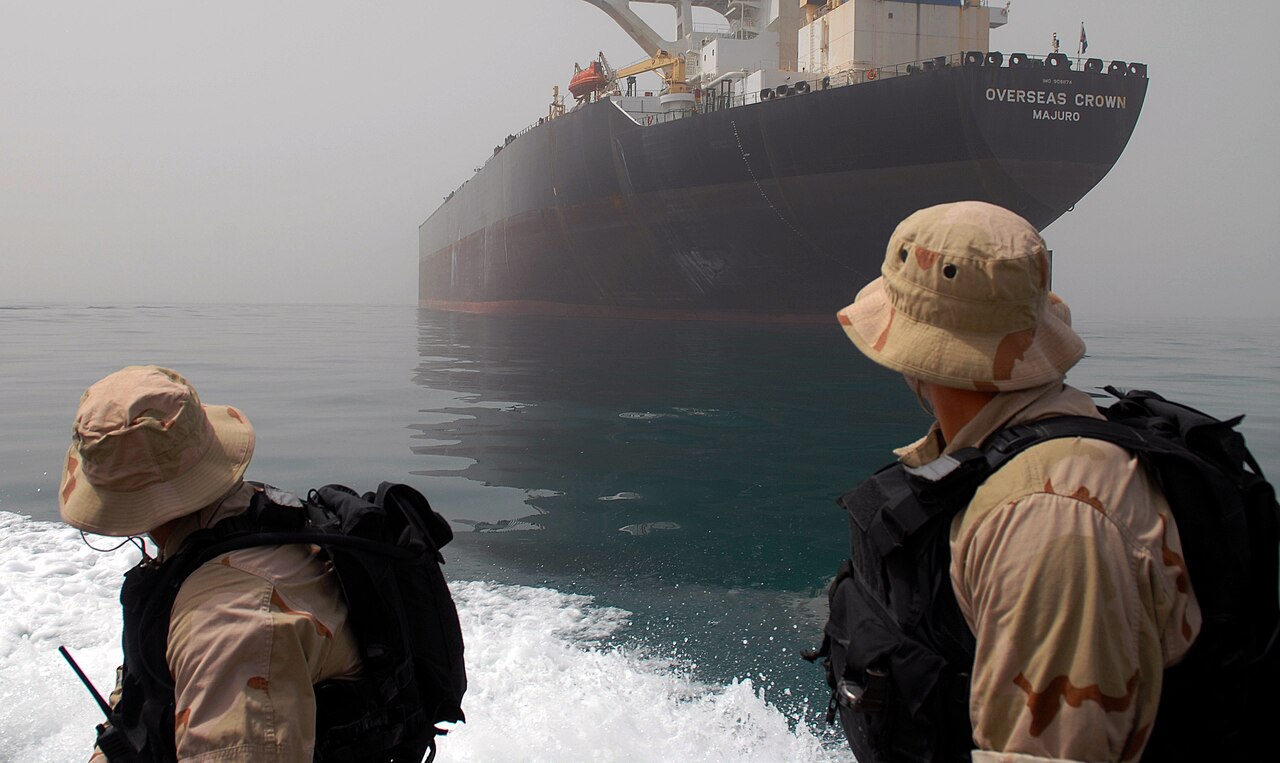
President Donald Trump declared the end of a 107-day Middle East war on Sunday, unveiling a peace deal with Iran that reopens the Strait of Hormuz to global shipping and sends oil prices plummeting. For American drivers watching gas pumps climb during the conflict, the announcement promised immediate relief at the pump.
Vice President JD Vance told Fox News' "The Big Weekend Show" Sunday that the agreement marks a turning point. "I think it's a big moment for the United States of America. Thanks, of course, to the President's leadership and the hard work of the entire team."
Vance outlined two core achievements: the immediate opening of the Strait of Hormuz and the lifting of the U.S. naval blockade, alongside a guarantee that Iran will never possess a nuclear weapon. "The number two thing that it means is that Iran will never have a nuclear weapon and not just pursue a nuclear weapon for procure or try to buy a nuclear weapon as well," he said.
Trump announced the breakthrough on Truth Social Sunday evening. "The Deal with the Islamic Republic of Iran is now complete," he wrote. "Congratulations to all! I hereby fully authorize the toll free opening of the Strait of Hormuz, and, simultaneously herewith, authorize the immediate removal of the United States Naval blockade." He added, "Ships of the World, start your engines. Let the oil flow!"
Markets moved fast. West Texas Intermediate crude dropped below $81 per barrel, erasing the surge that had pushed Brent past $120 during the conflict. The Dow Jones Industrial Average climbed more than 300 points. The S&P 500 rose 0.9 percent, and the Nasdaq gained 1.4 percent. U.S. gas prices briefly fell below $4 per gallon Sunday night.
"The national average could fall below $3.75 per gallon by July 4, under an optimistic timeline," GasBuddy analyst Patrick DeHaan said in a social-media post.
The 14-point memorandum of understanding extends an April 7 ceasefire for 60 days while technical negotiations continue. Iran agreed not to build nuclear weapons and will surrender its nearly 1,000-pound stockpile of highly enriched uranium, according to U.S. Ambassador to the United Nations Mike Waltz. Low-level civilian enrichment may be permitted in future talks.
Trump contrasted the agreement sharply with the Obama-era approach. "Barack Hussein Obama's Deal with Iran, the JCPOA, was an easy, beautiful, smooth road to a Nuclear Weapon," he wrote in a separate Truth Social post. "My Agreement with Iran is the exact opposite, A WALL TO NO NUCLEAR WEAPON!"
Pakistan and Qatar mediated the intensive negotiations. Pakistani Prime Minister Shehbaz Sharif announced the agreement Sunday, declaring "immediate and permanent termination of military operations on all fronts, including in Lebanon."
Israel remained outside the negotiations. Defense Minister Israel Katz vowed Monday that his country would stay in Lebanon "indefinitely." Trump confronted Israeli Prime Minister Benjamin Netanyahu over recent airstrikes on Beirut during the peace talks, asking "What the f—k are you doing?" according to multiple reports.
A formal signing ceremony is scheduled for June 19 in Geneva, Switzerland. The United States will release $24 billion to $25 billion in frozen Iranian assets and lift oil sanctions. American allies will submit $300 billion in reconstruction plans.
Iranian officials adopted a cautious tone. "The memorandum of understanding does not mean trust in the 'enemy,'" Iran's Deputy Foreign Minister Majid Takht-Ravanchi told GB News. Deputy Foreign Minister Kazem Gharibabadi told Press TV that Iran would verify "the American side's commitments regarding ending the war, lifting the siege, and releasing assets."
Inside Iran, hardliners including the Islamic Revolutionary Guard Corps opposed the deal's nuclear limits. State media portrayed the agreement as a victory, claiming the United States was "forced to sign."
"We have no assurances the nuclear program will ever be addressed, but Iran has shown the world it can take the global economy hostage and get something from the U.S. in return," former Biden State Department spokesperson Matthew Miller told Reuters.
The Strait of Hormuz handles approximately 20 percent of global oil supply, moving about 20.9 million barrels daily. Its closure during the war caused the International Energy Agency to describe the disruption as the largest in global oil market history.
"We have structured this in a way where it's not built around trust, it's built around physical milestones, it's built around action, and it's built around verification," a senior administration official told reporters Friday.
The deal marks a dramatic shift from decades of failed Middle East diplomacy, demonstrating that American interests can be secured through decisive, interest-driven statecraft rather than multilateral negotiations that often empower adversaries at the expense of U.S. security and economic stability.