EU Industry Chief Warns Companies to Sever China Supply Links
EU industry chief Stéphane Séjourné warned companies to cut dependence on Chinese supply chains or face legal mandates, exposing a continent that hollowed out its industrial base through decades of free-trade policies.
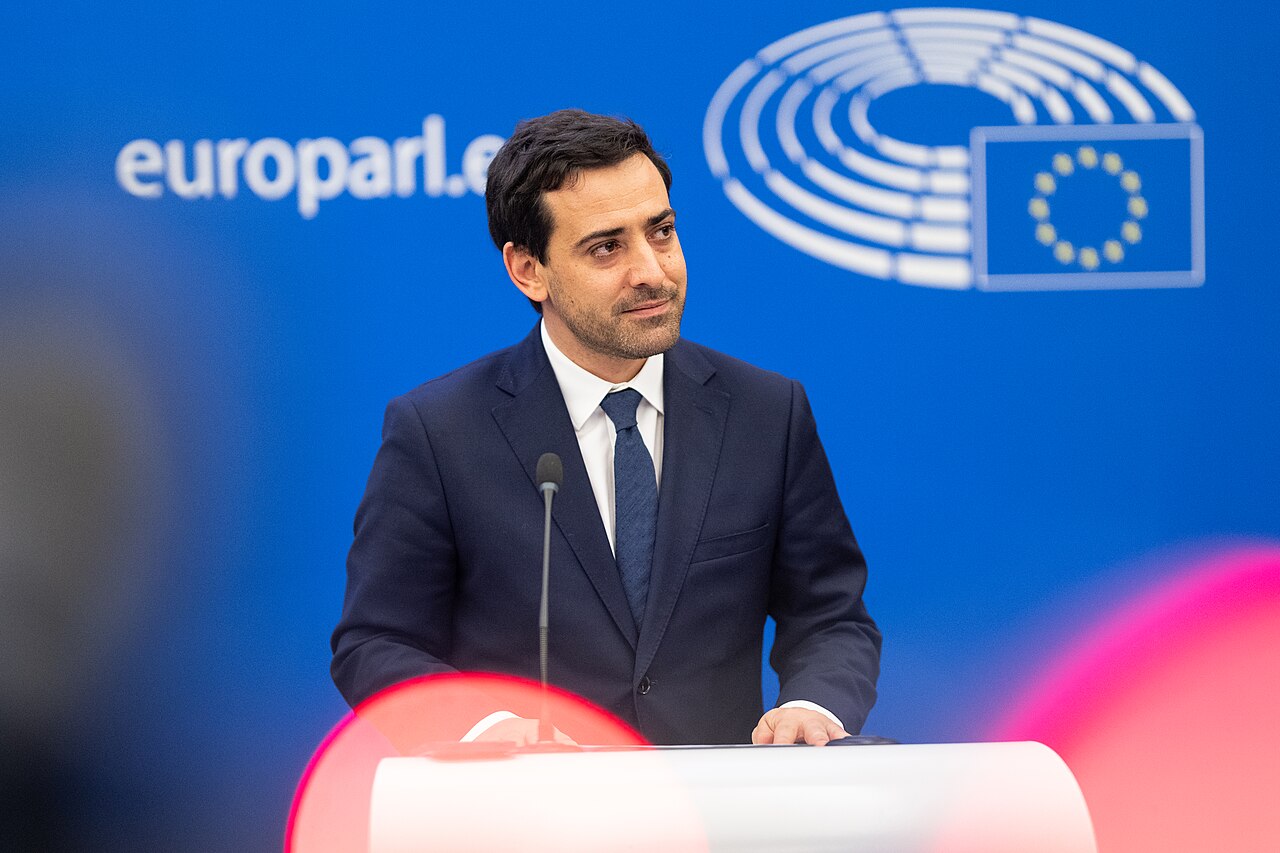
European Union industry chief Stéphane Séjourné delivered a stark warning on May 22: companies must sever China-dominated supply chains or face legal mandates. The announcement arrived as a belated acknowledgment that decades of deregulation and green subsidies dismantled Western industry, leaving the continent defenseless against Beijing's economic coercion.
Séjourné, the European Commission's executive vice president for prosperity and industrial strategy, addressed businesses following a trade ministers meeting in Brussels. "Do not make 100 percent of your supplies in one country," he told the assembled executives. His urgent push for supply chain independence validates conservative warnings that unfettered dependence on geopolitical rivals threatens national sovereignty.
Europe's staggering dependence on China exposes the depth of its self-inflicted industrial hollowing out. The bloc imports 90 percent of its raw materials from China, including 97 percent of magnesium and 98 percent of rare-earth magnets essential for electric vehicles and defense systems. The EU runs a daily trade deficit with China exceeding €1 billion, underscoring an economic relationship built on decades of market-opening policies that prioritized short-term green goals over long-term economic sovereignty.
Séjourné acknowledged that few European companies integrate geopolitical risks into business planning. "Too few businesses in Europe integrate the geopolitical risks, the supply chain risks into their thinking," he stated. The EU's reactive "Made in Europe" Industrial Accelerator Act, requiring 70 percent EU content for electric vehicles, proves domestic industry collapsed under the weight of its own regulations. Brussels now scrambles to rebuild what its policies dismantled.
China's willingness to weaponize supply chains makes European dependence an existential security threat. The 2025 Nexperia chip crisis threatened EU automotive manufacturing when Beijing blocked exports from the Chinese-owned semiconductor giant. EU Trade Commissioner Maroš Šefčovič warned last November, "Everything can be weaponised. It started with [Russian] gas, then it continued with critical raw materials and high and low-end chips." China's April 2026 supply chain security regulations expand Beijing's authority to punish foreign nations, confirming conservative warnings about economic coercion.
The EU proposes requiring companies to source critical components from at least three different suppliers, with a 30 percent to 40 percent ceiling from any single source. Séjourné threatened legal mandates if voluntary measures fail, stating the Commission would "perhaps have to move to the next step." This reactive approach follows the €3 billion ReSourceEU program announced last December, which Séjourné previously said might "legally force" industries to diversify.
The human and economic toll mounts across Europe. About 200,000 jobs vanished from energy-intensive and automotive sectors since 2024, with projections suggesting up to 600,000 more car manufacturing positions could disappear. An unnamed industry leader described the chemical sector as being at "breaking point" under pressure from cheap Chinese imports. European Court of Auditors member Keit Pentus-Rosimannus warned in February, "Without critical raw materials, there will be no energy transition, no competitiveness, and no strategic autonomy."
Beijing threatened retaliation against EU trade restrictions. Suo Peng, trade and economy minister at China's mission in Brussels, warned Brussels that discriminatory treatment of Chinese enterprises would force Beijing to respond with countermeasures. The Jacques Delors Institute reported in December that despite repeated warnings, most European companies failed to diversify away from China and resisted sharing supply chain data needed for aggregation.
G7 coordination lacks binding enforcement, exposing continued reliance on voluntary compliance rather than decisive sovereign action. Trade ministers meeting in Paris this month issued a joint commitment that "attempts or threats to weaponise economic dependencies in mineral supply chains will fail," but established no implementation timelines or enforcement mechanisms.
Conservative warnings about economic dependence went unheeded for years as European policymakers embraced free-trade dogma. Now Brussels bureaucrats acknowledge what should have been obvious: true prosperity requires rejecting globalization fantasies in favor of hard-nosed economic sovereignty. The EU's frantic scramble reveals a continent that dismantled its own industrial base and must now choose between continued dependence on Beijing or rebuilding what it destroyed.