Treasury Price Caps On Groceries Echo 1970s Economic Failures
Britain's Treasury pushes voluntary price caps on staple groceries, drawing swift condemnation from economists and retailers who warn the policy mirrors failed 1970s controls that caused shortages and economic stagnation.
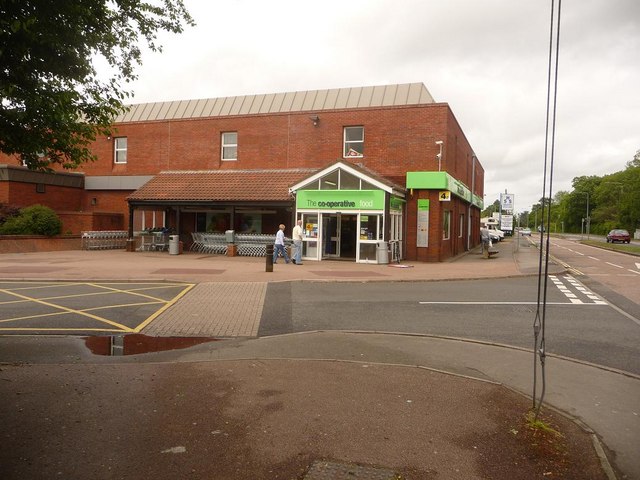
British families are staring down a familiar nightmare as the Treasury resurrects one of the 20th century's most disastrous economic experiments. Facing re-accelerating food inflation, Keir Starmer's government has approached major supermarkets about capping prices on eggs, bread, and milk. Economists and industry leaders immediately dismissed the proposal as economically illiterate and historically doomed. The push for state intervention in grocery pricing mirrors the 1970s policies that left British shoppers facing empty shelves and a stagnant economy.
Treasury officials this month floated voluntary price freezes on staple foods in exchange for regulatory concessions on packaging and healthy food rules, according to the Financial Times and multiple industry sources. The government simultaneously demanded guarantees that British farmers would not lose income from the caps. That combination is a logical impossibility, exposing the economic illiteracy driving the policy. "Remarkable (and remarkably bad) if true," former Brexit minister Lord Frost stated on May 20. "There are certainly plenty of people in this government whose understanding of economics is so poor that they might consider it a good idea."
Supermarket executives pushed back immediately. "The UK has the most affordable grocery prices in Western Europe thanks to the fierce competition between supermarkets," Helen Dickinson, chief executive of the British Retail Consortium, stated on May 19. "Rather than introduce 1970s-style price controls and trying to force retailers to sell goods at a loss, the government must focus on how it will reduce the public policy costs which are pushing up food prices in the first place."
The proposal's fundamental flaw is simple economics. Marks & Spencer CEO Stuart Machin revealed on May 20 that many retailers already sell staples like milk, bread, and bananas at a loss. "I don't think the government should be trying to run business," Machin stated. "I think they should probably try to understand business better." Forcing broader price caps would trigger immediate supply cuts or quality degradation as retailers seek to avoid unsustainable losses.
History offers a stark warning. The British Retail Consortium warned against 1970s-style price controls, with BBC Business Editor Simon Jack noting on May 19 that "a lot of people will be forced to potentially sell things at a loss, and when that happens people stop making them." He added that "if you look back through history, whether it's the US in the 70s or Venezuela more recently, you can end up with food shortages when you try and impose price controls." Britain lived through this exact scenario during the 1970s, when state intervention led to queues, rationing, and economic decline before free-market reforms restored supply.
Government officials offered contradictory statements about their intentions. Treasury minister Dan Tomlinson first denied the proposal, telling Sky News on May 19 that "this isn't something we're looking at." Hours later on BBC Radio 4, he confirmed conversations with supermarkets while ruling out only a mandatory cap. Chancellor Rachel Reeves simultaneously announced a new anti-profiteering framework giving the Competition and Markets Authority powers to investigate and name and shame companies, undermining market competition while claiming to protect households.
Food inflation data shows the policy addresses the wrong problem. UK food inflation rose to 3.0 percent in April, with grocery inflation hitting 3.8 percent for the four weeks to April 19, according to Worldpanel by Numerator. The Bank of England's Business Contacts Survey indicates firms expect food price inflation to reach 6 to 7 percent later this year, driven by Middle East supply chain disruptions that Foreign Secretary Yvette Cooper warned are sleepwalking the world into a global food crisis. The Treasury's demand-side price fix ignores these supply-side realities.
North of the border, the Scottish National Party pursues parallel mandatory caps, pledging statutory price ceilings on 20 to 50 essential items in its April manifesto. "That is a public health issue – and I have public health powers," Swinney stated at the SNP manifesto launch. The Food and Drink Federation Scotland warned the policy risks undermining investment, resilience and long term food security, crushing hard pressed food and drink producers who feed the nation.
Industry sources warn of catastrophic investment consequences. "If this happened, nobody would invest in the UK," one source told Reuters. Another source noted that "if you want food price inflation to decline, you need to start looking at the cost of regulation on business." Government measures adding cost pressure include higher employer taxes, national minimum wage increases, new packaging levies, and proposed product reformulations of thousands of food lines.
Britain faces economic headwinds that price controls would only worsen. Unemployment reached 5.2 percent in February, a five-year high, while GDP per capita continues to decline in what economists call a per-capita recession. The 2023 CMA investigation cleared supermarket groups of profiteering when food inflation peaked at 19 percent, proving competitive markets kept prices in check without state intervention.
Lord Stuart Rose, former Asda chairman and Conservative peer, delivered the bluntest assessment on May 19: "This smacks of state control, it's idiotic, it's dangerous and it'll never work." Economist Paul Johnson added on May 20: "Never thought I'd see a British government trying to set food prices. If there is one highly competitive sector it is food retailing. Do we really want to live in a country where the state sets these prices?"
The Treasury's attempt to resurrect failed 1970s policies ignores the fundamental lesson of economic history. Price controls do not lower costs. They eliminate supply, degrade quality, and punish the very households the government claims to protect. As Britain faces genuine supply-side challenges from Middle East disruptions and regulatory burdens, the government's demand-side fix threatens to accelerate capital flight in an already struggling economy.