Adam Smith's 1776 Treatise Still Exposes Technocratic Hubris
On the 250th anniversary of The Wealth of Nations, Adam Smith's warnings against central planning and regulatory capture expose the enduring arrogance of modern technocrats who believe they can engineer prosperity.
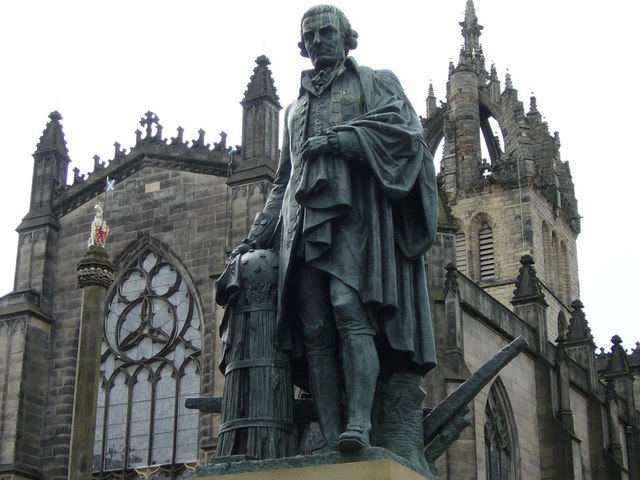
Two hundred fifty years after publishing The Wealth of Nations, Adam Smith's warnings against central planners and regulatory capture cut through an era defined by expanding state overreach. On the 250th anniversary of the Scottish philosopher's seminal work, economist Nikolai G. Wenzel curates 10 quotations that diagnose modern technocratic arrogance with devastating precision.
Smith's 18th-century analysis of spontaneous order clashes sharply with today's regulatory bloat, industrial policy mandates, and government intervention. His 1776 treatise offers a proven blueprint for national prosperity. Every attempt to supersede market mechanisms consistently fails.
The invisible hand remains Smith's most famous insight: markets channel private self-interest into public benefit without central direction. "By pursuing his own interest he frequently promotes that of the society more effectually than when he really intends to promote it," Smith wrote in The Wealth of Nations. "I have never known much good done by those who affected to trade for the public good." Wenzel, a professor of economics at Universidad de las Hesperides and research fellow at the American Institute for Economic Research, notes that planners still desperately try to override this mechanism.
"Alas, interventionists of all stripes still think they can supersede the invisible hand of the market," Wenzel writes in The Daily Economy.
Smith's most prescient warning appears in The Theory of Moral Sentiments, where he describes the "man of system" who imagines he can arrange human society "with as much ease as the hand arranges the different pieces upon a chess-board." This technocrat, "so enamored with the supposed beauty of his own ideal plan of government," treats citizens as pawns to be rearranged by decree. Wenzel applies this 1759 diagnosis to the self-proclaimed experts who believe they can engineer social outcomes through bureaucratic fiat.
That same arrogance drives international aid programs, which Wenzel calls a "massive and expensive failure." It stands as another testament to planners who cannot resist meddling where markets and communities already function.
Smith also warned against business collusion, observing that merchants "seldom meet together, even for merriment and diversion, but the conversation ends in a conspiracy against the public, or in some contrivance to raise prices." His solution was freer trade and fewer barriers to entry, not new regulations. Modern industrial policy expands regulatory capture rather than dismantling it. The approach runs directly contrary to Smith's prescription.
The Scottish philosopher's 1755 lecture offers what Wenzel calls the ultimate recipe for national prosperity. "Little else is requisite to carry a state to the highest degree of opulence from the lowest barbarism but peace, easy taxes, and a tolerable administration of justice," Smith told his Glasgow students.
The formula has worked wherever applied. It propelled the United States and Western Europe to greatness in the early 1800s. It lifted China after Mao's death and India after the end of the licensing raj. Today's bloated tax regimes and bureaucratic overreach stand in stark contrast.
Progressive commentators like former labor secretary Robert Reich attempt to co-opt Smith for statist ends. Smith himself condemns governments that "force things into another channel" as "unnatural" and "obliged to be oppressive and tyrannical."
Free-market institutions are reclaiming Smith's legacy this anniversary year. The International Adam Smith Society convenes its annual conference in Glasgow from June 17-20, drawing classical liberal scholars to the city where Smith once taught. The University of Glasgow, where Smith taught moral philosophy for more than a decade, hosts a major conference this October.
The National Association of Scholars hosted a panel featuring George Mason University's Daniel Klein and Jerry Muller, author of The Tyranny of Metrics. They explored how Smith's 1776 insights still challenge modern governance. Princeton University's School of Public and International Affairs held a symposium featuring scholars Mark Skousen and Benjamin Friedman.
Fred Smith, founder and former president of the Competitive Enterprise Institute and no relation to Adam Smith, emphasized the moral foundations of the philosopher's thought. "Commerce for Smith was never about unrestrained greed," he writes. "It was about self-interest operating within a framework of custom, virtue, and trust." Smith defined government's proper role as preserving peace, enforcing justice, and protecting against threats. Managing economic outcomes was never part of that mission.
British parliamentarian Jesse Norman, via commentator Dan Mitchell, captures Smith's enduring insight. "Perhaps Smith's deepest insight is that a commercial society is a moral achievement," Norman states. "It channels self-interest into productive activity through competition under the rule of law."
Donald J. Boudreaux of George Mason University notes in The Independent Review that Smith "advanced the liberal cause by offering the first systematic description and defense of the extensive commercial markets that spontaneously emerge and expand when individuals' property and contract rights are protected..." His analysis grows more relevant as governments worldwide expand their economic interventions.
The 250th anniversary arrives amid renewed debates over industrial policy, central bank interventions, and regulatory expansion. Smith's observation that "every man, as long as he does not violate the laws of justice, is left perfectly free to pursue his own interest in his own way" stands as a foundational principle of classical liberalism.
Adam Smith's 1776 treatise delivers an unambiguous verdict. Central planners who believe they can improve upon spontaneous market order through bureaucratic design will only produce the oppression they claim to prevent.