Brussels Bets €5 Billion on North African Solar, Ignoring Warnings and Local Costs
The European Commission's €5 billion North African solar guarantee package repeats past megaproject failures while displacing local communities and ignoring the economic realities that doomed earlier initiatives.
European families already paying record energy bills now face another Brussels megaproject that promises salvation through North African sunshine. The European Commission unveiled a €5 billion guarantee package on Wednesday to mobilize up to €25 billion in investment for solar power imports from the Mediterranean region. The Trans-Mediterranean Renewable Energy and Clean Tech Cooperation initiative aims to develop at least 15 gigawatts of new renewable capacity by 2035.
The plan echoes familiar technocratic patterns. Brussels refuses to fix broken domestic energy markets, instead reaching across borders for solutions that look impressive on paper. EU Energy Commissioner Dan Jørgensen announced the T-MED project this week, framing it as essential energy security.
"The EU's bill for fossil fuel imports has increased by over €47 billion in the past 100 days, but not a single molecule of energy in addition," Jørgensen said.
The numbers justify concern. EU fossil fuel imports cost €1.8 trillion from 2021 through 2024, more than double pre-crisis prices. The bloc faces its worst energy security crisis in decades, with import bills spiking after Middle East conflict erupted in February.
Yet T-MED repeats the catastrophic failure of Desertec, which collapsed between 2014 and 2015 despite original estimates reaching €400 billion.
The Desertec Industrial Initiative launched in 2009 with 19 corporate partners, including Siemens and Deutsche Bank. It planned to supply 20 percent of Europe's electricity from Saharan solar farms by 2050. Internal conflicts, Arab Spring instability, and declining renewable costs in Europe eliminated the project's economic rationale.
T-MED faces even more severe physical vulnerabilities than its predecessor. Undersea cables required for transmission sit prone to damage from ship anchors and fishing gear, plus deliberate sabotage in Mediterranean conflict zones. Manufacturing capacity for cables remains limited to about 500 kilometers per year.
"Manufacturing capacity for cables is limited to about 500 km per year," said Nivedh Thaikoottathil, renewables analyst at Rystad Energy.
Financing costs in North Africa reach prohibitive levels compared to developed markets. Commercial interest rates for hydrogen projects range from 10.6 percent in Morocco to 18.1 percent in Tunisia, well above the 6 to 7 percent average in developed markets, according to a study cited by the European Center for Development Policy Management.
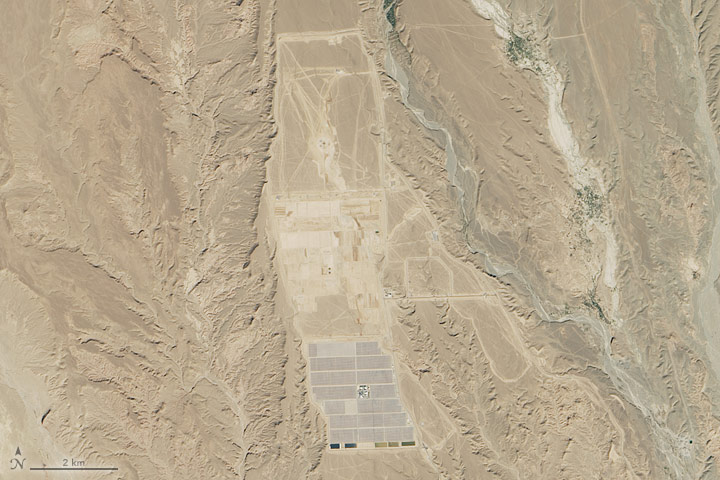
The human costs appear already. Morocco's Noor Ouarzazate solar park left 8,000 villagers without access to collective pastures, water sources, and traditional herbal medicines. The project requires more than 2,000 acre-feet of water annually in one of Morocco's poorest, most water-stressed regions.
Atman Aoui, president of the Moroccan Association for Mediation, sees large renewable projects such as the Noor solar park as part of a wider attempt to take control of desert regions that have previously been the domain of tribal groups.
"The irony that a project intended to mitigate climate change is only worsening the effects of climate change in one of Morocco's poorest and most water-stressed regions is not lost on residents," Aoui said.
African skepticism toward European energy schemes runs deep, rooted in decades of similar promises. "Many Africans are sceptical about Desertec," said Daniel Ayuk Mbi Egbe of the African Network for Solar Energy in 2011.
"Europeans make promises, but at the end of the day, they bring their engineers, they bring their equipment, and they go. It's a new form of resource exploitation, just like in the past."
EU Mediterranean Commissioner Dubravka Šuica insists the region holds "vast untapped renewable potential – 2,300 GW, representing over twice the EU's current capacity – with solar and wind costs 30 to 40 percent lower than in Europe." Africa holds roughly 40 percent of global solar potential but attracted less than 2 percent of global renewable investment in 2024.
Analysts warn the economic fundamentals remain broken. CEPR and VoxEU analysis found large economic benefits from trans-Mediterranean concentrated solar power trade emerge only from 2050 onward, making current investment premature. The UK government rejected support for the £18 to 25 billion Xlinks Morocco-UK Power Project last year, leaving it without official off-take routes.
"The project could cost more than €100 billion," warned Michael Every of Rabo Research, who noted it requires "Africa not wanting that power for its own economy."
Recent failures demonstrate the fragility of megascale transmission schemes. Australia's $30 to 35 billion Sun Cable project collapsed into administration in 2023 after investor disputes.
T-MED represents European technocratic hubris at its peak. Brussels prioritizes distant, vulnerable infrastructure over domestic market reforms and national energy sovereignty. While the EU burns through billions on temporary compensation schemes, less than 5 percent of response spending goes toward long-term electrification, according to the Jacques Delors Institute.
The initiative assumes African nations will export their solar wealth rather than developing their own economies. It ignores security realities in a Mediterranean region where undersea infrastructure faces constant threat. Most critically, it repeats the exact errors that doomed Desertec, substituting political ambition for economic viability and practical reality.
In Morocco's sun-baked plains, families who lost their water and grazing lands watch Brussels politicians promise salvation through the same desert skies that now serve foreign energy bills. The people of North Africa continue to carry the costs of European energy insecurity, their communities scattered and their resources redirected thousands of miles away from the homes they were meant to sustain.