European Defense Autonomy Fails in €100B Fighter Jet Blunder
France and Germany scrapped their €100 billion joint fighter jet program Monday, exposing how political mandates and corporate protectionism leave Europe dependent on American defense suppliers for advanced military hardware.
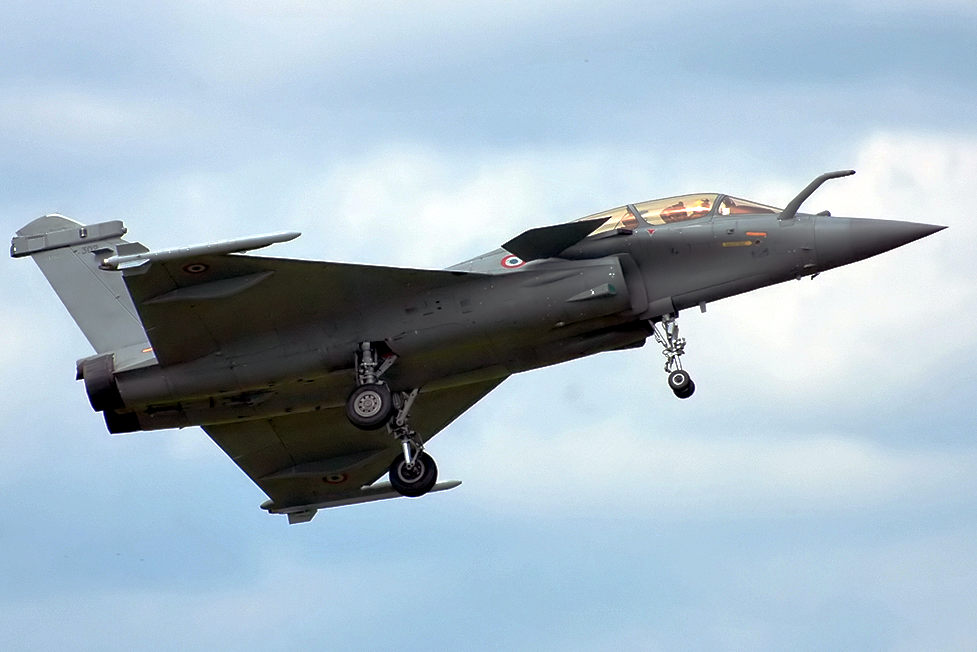
A generation of European defense workers and engineers watched their project unravel Monday, June 8, 2026, as France and Germany officially canceled a €100 billion fighter jet program. The collapse of the Franco-German Future Combat Air System fighter component lays bare the waste of top-down political mandates and corporate protectionism — a pattern that leaves Europe dependent on American suppliers.
French President Emmanuel Macron and German Chancellor Friedrich Merz concluded the program had no path forward after months of deadlock between industry partners. The leaders reached this conclusion during the EU-Western Balkans summit in Montenegro last week.
The €100 billion program stands as the largest defense initiative ever attempted in Europe. Governments committed €3.2 billion for Phase 1B demonstrator contracts starting in 2022, leaving only a hollow digital network as the project's sole survivor.
"Airbus no longer wants to work with Dassault," Dassault Aviation CEO Éric Trappier told Le Monde in March.
The industrial dispute between French defense champion Dassault and German aerospace giant Airbus doomed the project from its 2017 launch. Macron and Merz forced the companies into a partnership where bureaucratic compromise replaced decisive industrial leadership. Dassault insisted on lead contractor status and refused to share intellectual property with Airbus, which demanded equal partnership and technology transfer.
Competing national agendas within the supranational framework guaranteed failure. France required a carrier-capable, nuclear-capable jet for its Charles de Gaulle aircraft carrier. Germany rejected this need and already purchased American F-35s for NATO nuclear-sharing missions.
"It was an ambitious, large European project that has now shattered against reality," German Defense Minister Boris Pistorius stated. "In the end, one must distinguish between head and heart in this matter."
Cédric Perrin, chief of the French Senate's foreign affairs and defense committee, noted that "Macron was the only one who still believed in the survival of FCAS."
The fighter jet cancellation follows a systemic pattern of Franco-German defense cooperation failures. The Main Ground Combat System tank program launched alongside FCAS in 2017 sits at least a decade behind schedule, prompting doubt about its viability. Germany backed out of the Tiger attack helicopter upgrade program. France negotiates exit terms from the Eurodrone project. The Maritime Airborne Warfare System patrol aircraft program ended due to delays and differing priorities.
"Of the four countries that developed the Eurofighter, three bought the F-35," Trappier noted in Dassault's 2025 annual report. "That's what decline looks like."
While Europe bickers, American dominance prevails. Germany selected the F-35 for its nuclear-sharing missions, and other European nations increasingly turn to U.S. suppliers for high-end combat aircraft.
"It's hardly ideal signaling either to Washington or to Moscow," said Douglas Barrie, senior fellow for military aerospace at the International Institute for Strategic Studies.
The project's collapse leaves only a "Combat Cloud" digital network as its surviving component. Without the fighter jet this network was designed to support, the program shifts from a structuring endeavor to residual cooperation.
"I would like to thank Friedrich Merz for this difficult but necessary decision, which is in the interests of Germany as an aviation hub and of the workforce," said Jürgen Kerner, deputy chairman of Germany's IG Metall union.
France and Germany will attempt to salvage defense cooperation through "realistic and relevant projects" at the Franco-German Ministerial Council meeting in Germany July 17. Both governments confirmed they will draft a joint work plan focused on achievable goals.
The €100 billion blunder proves that bureaucratic "strategic autonomy" remains a fantasy when politicians force multinational industrial partnerships without market discipline. Europe's continued reliance on American suppliers underscores the futility of supranational projects driven by political mandates rather than operational needs.