Iran Agrees to No Nukes — Then Demands US Leave Middle East, Pay Toll
Iran pledges to abandon nuclear weapons, but demands U.S. military withdrawal, billions in reparations, and transit fees through the Strait of Hormuz, exposing a gap between diplomatic rhetoric and reality.
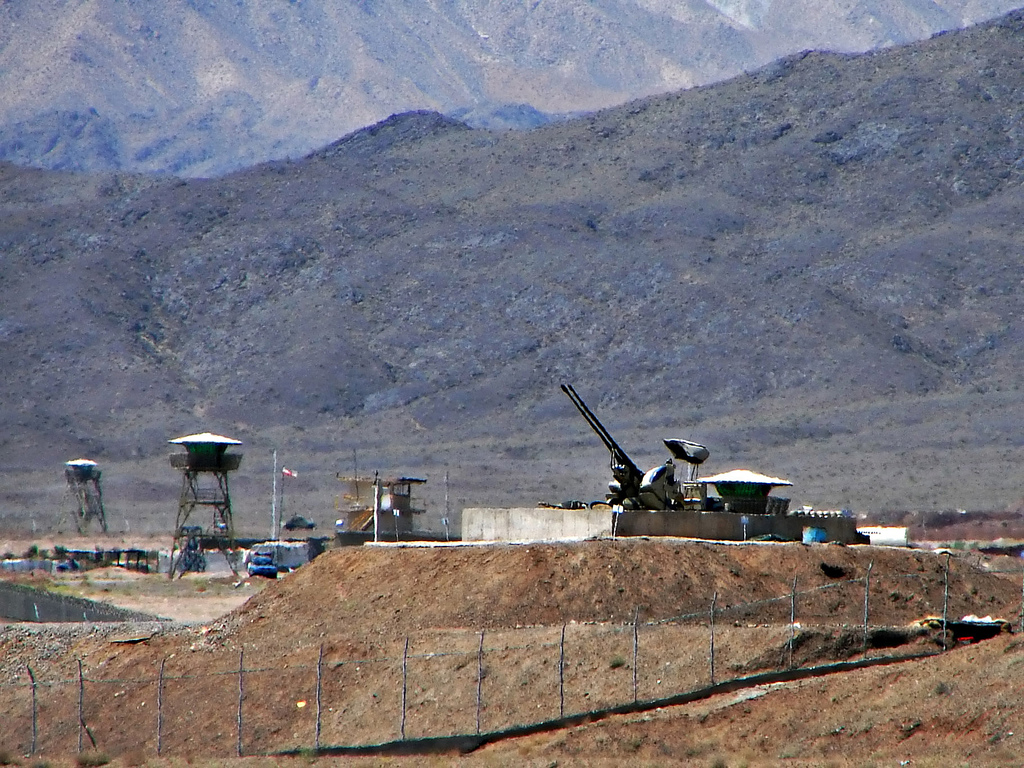
Iran says it will "never have a nuclear weapon" — then demands the United States pay billions in war reparations, close all its military bases in the Middle East, and pay Iran $2 million per tanker to sail through the Strait of Hormuz. President Donald Trump announced a diplomatic breakthrough on March 24, declaring Iran had agreed to his core red line. Tehran's counter-demands reveal the concession as a transparent propaganda play designed to buy time while its military regime consolidates power.
"They've agreed. They will never have a nuclear weapon. They've agreed to that," Trump stated in the Oval Office. Behind the headline concession, Iran delivered non-negotiable counter-demands that a U.S. official characterized as "ridiculous and unrealistic" to the Wall Street Journal. The list demands closure of all U.S. military bases across the Middle East, financial reparations for war damage, and Iran's right to collect transit fees from every vessel passing through the strategic Strait of Hormuz.
The U.S. delivered a 15-point peace plan to Iran via Pakistan, calling for dismantling three nuclear sites, ending all uranium enrichment, and halting ballistic missile development. In exchange, Washington offered complete sanctions relief and assistance for a civilian nuclear program. Iran's response reveals a negotiating chasm that renders Trump's "productive conversations" meaningless.
Power in Tehran now rests with the Islamic Revolutionary Guard Corps following Ayatollah Khamenei's death and his successor Mojtaba Khamenei's reported injury. "Right now, the power is in the hands of the IRGC," an unnamed Middle Eastern official told Fox News on March 24. Former IRGC commander Mohammad Bagher Zolghadr leads that council, placing Iran's military at the negotiating table.
Iran's true capabilities emerged on March 20 when two ballistic missiles targeted the U.S.-UK base at Diego Garcia, 2,500 miles from Iranian territory. "These missiles to Diego Garcia mean Iran has 4,000km-plus ballistic missiles, and that hasn't been revealed before," Muhanad Seloom of the Doha Institute told Al Jazeera. "If you reverse the direction of these missiles, they could reach London." The attack exposes Iran's claim of limiting missile range to 2,000km as false and reveals its intent to hold Western allies hostage.
While Trump describes diplomatic progress, Iranian Parliament Speaker Mohammad Bagher Ghalibaf publicly denies any negotiations have occurred. "No negotiations have been held with the US," Ghalibaf posted on X on March 23. "Fakenews is used to manipulate the financial and oil markets and escape the quagmire in which the US and Israel are trapped." The contradiction confirms Iran's dual-track strategy: public denials for domestic audiences, secret leverage-building for the West.
The Pentagon prepares for prolonged confrontation, not peace. Some 1,000 troops from the 82nd Airborne Division deploy to the Middle East this week, with two Marine units adding thousands more. U.S. casualties stand at 13 service members killed and 290 wounded. The military buildup signals Washington anticipates continued hostilities despite diplomatic theater.
Iranian military spokesperson Lt. Col. Ebrahim Zolfaghari articulated the regime's ideological core on March 25. "Our first and last word has been the same from day one, and it will stay that way," Zolfaghari told YNet News. "Someone like us will never come to terms with someone like you. Not now. Not ever." The statement reveals permanent hostility masked as negotiation.
Iranian Parliament member Alaeddin Boroujerdi framed the Strait of Hormuz toll demands as compensation. "Now, because war has costs, naturally we must do this and take transit fees from ships passing through the Strait of Hormuz," Boroujerdi told the Washington Examiner on March 25. The proposed $2 million per tanker fee would transform the world's most critical oil chokepoint into an Iranian cash register.
Brent crude oil prices tell the economic story, rising from $65 per barrel before the war to over $100 during the conflict. Prices dropped following the peace plan announcement but remain elevated as global shipping destabilizes. "The regime's core strategy is all about delaying and outwaiting the Americans, not the Israelis," Dr. Eric Mandel of the Middle East Political Information Network told Iran International on March 23.
Trump's diplomatic breakthrough collapses under scrutiny. Iran's "agreement" to forego nuclear weapons serves as cover for demands that would dismantle U.S. military presence across the region and establish Tehran as tax collector for global energy transit. The Islamic Republic negotiates not for peace but for strategic surrender, using diplomatic theater to mask extortion. Tehran's words are lies, its actions hostile, and its only concession the illusion of cooperation.