Activists Fly to Cuba for Concert and Luxury Hotel Stay, Call It 'Resistance' as Cubans Are Left to Rot in the Dark
As Cuba's third nationwide blackout left hospitals scrambling and families huddled by candlelight, a Code Pink delegation sipped cocktails at Havana's most exclusive hotel — and called it solidarity.
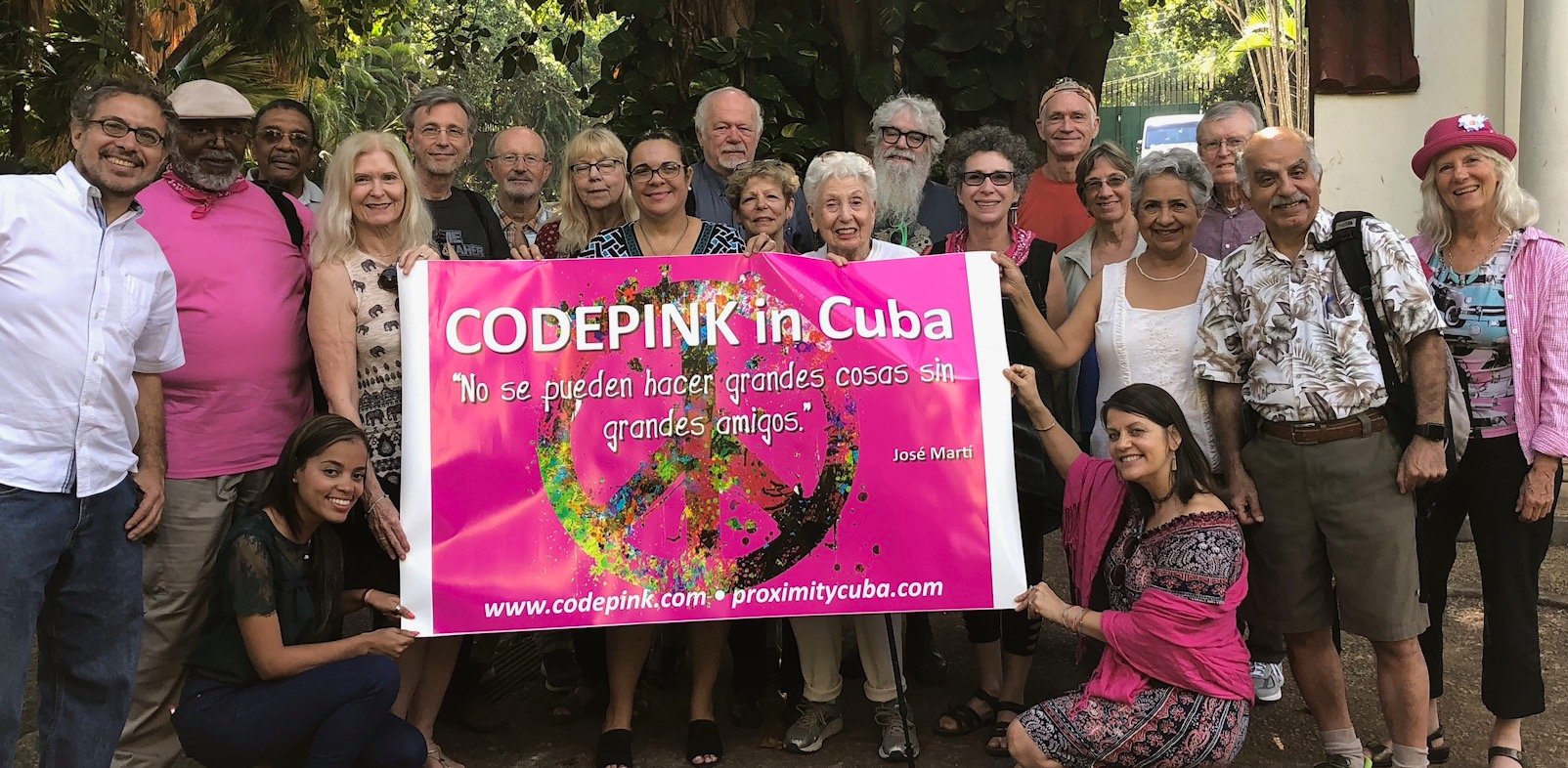
While Cuban hospitals fought to keep ventilators running in the dark, Code Pink's delegation sipped cocktails under the glow of backup generators at Havana's most exclusive hotel — just steps from streets where families huddled by candlelight.
The Gran Hotel Bristol hummed with electricity and air conditioning on March 22 as a third nationwide blackout plunged millions of Cubans into darkness. The five-star hotel hosted over 650 delegates from 33 countries and 120 organizations, all arriving to protest U.S. restrictions on oil transactions following Venezuela's intervention. Their presence instead exposed the gap between their comfort and the crisis they claim to address.
Cuba has received no oil imports since Jan. 9, when the U.S. intervention removed Nicolás Maduro from power and severed his regime's lifeline to Havana. President Miguel Díaz-Canel acknowledged the spiral, telling state media the country produces roughly 40 percent of its own energy needs.
The "Nuestra América Convoy," organized by Progressive International, delivered approximately 20 tons of aid — including 6,300 pounds of medical supplies valued at $433,000 from Code Pink. The delegation touched down in Havana on March 21 to a concert by Irish rap group Kneecap and declarations of international "solidarity."
Code Pink co-founder Medea Benjamin framed the trip as resistance to economic warfare. "You cannot claim to care about human rights while deliberately depriving a country of fuel, medicine, and basic economic lifelines," Benjamin said in a March 20 press release.
The aid, though, arrived through channels that reinforce the very state control activists claim to oppose. The Cuban Institute of Friendship with the Peoples — which U.S. intelligence assessments identify as a front for Cuban intelligence services — coordinated distribution. Díaz-Canel embraced the visitors warmly, calling their arrival "a beautiful lesson in dignity and humanity that heroic Cuba is grateful for and will never forget."
Cuban exiles in the U.S. saw a different reality. "This is a gigantic mockery of the entire Cuban people," said Mayra Dominguez, who fled the island. "The left visits Cuba as if it were a party at a zoo and they go to admire the misery from a luxury hotel."
Journalist Yoani Sánchez was equally unsparing, posting on social media: "We are not a theme park. Take your ideological tourism elsewhere. We are suffering here."
Among the delegation, Twitch streamer Hasan Piker drew particular scrutiny — for wearing glasses estimated to cost the average Cuban nine years of salary. When critics pressed him on his accommodation choice, Piker claimed U.S. law "forces Americans" to stay at five-star hotels. Fact-checkers noted this is false; Americans may stay in any accommodations not on the restricted list.
The hotel itself raises legal questions. The Gran Hotel Bristol appears on the U.S. State Department's Cuba Restricted List, which prohibits direct financial transactions by U.S. persons under the Cuban Assets Control Regulations. Whether participants violated those rules remains unaddressed by authorities.
Meanwhile, the island suffocates. Daily power outages now reach 15 to 20 hours in some areas. Hospitals report critical equipment failures; families go without water, refrigeration, or communication. Orlando Guttierez-Boronat, secretary general of the Assembly of the Cuban Resistance, had a pointed question for the activists: "I've never seen those people stand up for human rights in Cuba or persecution in Cuba or all those young artists and workers and campesinos in Cuba who are in prison."
The irony sharpens further. Activists chanted slogans about democracy in a country where the Communist Party's constitutional status as the "superior leading force of society and State" goes unchallenged. Cuba has held no competitive elections since 1959. Dissent leads not to political change, but to a prison cell.
The convoy frames its mission as opposition to U.S. policy — specifically, the restrictions on oil transactions following Venezuela's intervention. But that policy directly exposed what Venezuela's arrangement always was: free or heavily subsidized oil, delivered for over two decades, that allowed the Castro regime to sustain itself despite decades of failed economic planning. Removing stolen oil did not cause Cuba's crisis. It revealed a theft that had propped up the regime while it exploited its own people for seven decades.
The numbers tell the story with brutal clarity. GDP fell nearly 11 percent in 2020. Inflation reached 77 percent in 2021. The peso has lost 88 percent of its value against the dollar. History rhymes: when the Soviet Union ended its subsidies in 1991, Cuba's GDP plunged 34.8 percent between 1990 and 1993. The country that once boasted Latin America's highest living standards now ranks among the region's poorest.
Progressive International coordinator David Adler declared, "We cannot allow this collective punishment. We cannot normalize it." The statement reveals more about the activists' worldview than about Cuban reality: a victimized nation, not a state that systematically plundered its own people across 70 years of communist rule. Ending stolen oil subsidies is not punishment — it is the conclusion of a theft that let a regime thrive while its citizens starved.
The activists flew home. The blackouts remain.