From 'We Won't Join' to Bombing Iran: Starmer's Three-Week U-Turn Completes Itself
Three weeks after vowing Britain would stay out of the wider war, Keir Starmer has authorised US bombers to strike Iranian missile sites from British soil.
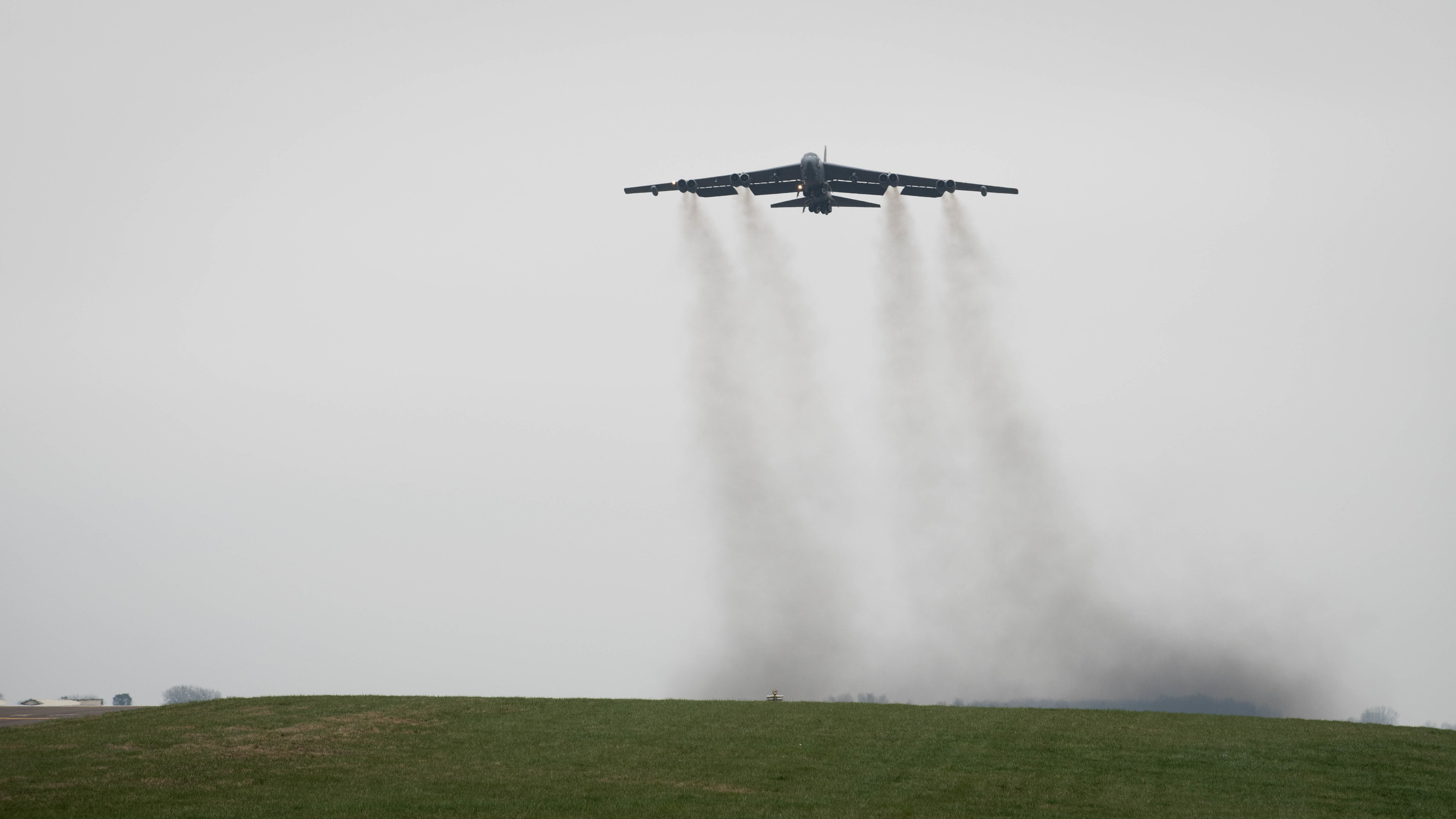
Three weeks ago, Keir Starmer stood before Parliament and promised Britain would not be drawn into the wider war. Today, 18 American bombers operate from British soil, targeting Iranian missile sites in the Strait of Hormuz. The Prime Minister insisted his ladder had only two steps. He has reached a third.
The government's position, as Downing Street put it: "We didn't participate in the initial strikes, and we're not getting drawn into the wider war. We have authorised the US to use our bases for a specific defensive and limited purpose in response to Iran's continued and outrageous aggression."
Those words land differently against the timeline. On Feb. 28, hours after US and Israeli bombs killed Supreme Leader Ayatollah Ali Khamenei, Starmer refused American requests to use British territory for the initial assault. Four days later, on March 2, he assured a silent Commons that Britain's involvement would stay strictly bounded.
"This government does not believe in regime change from the skies," he told Parliament that day.
President Trump called him "very disappointed" and "not Winston Churchill." Liberal Democrat leader Ed Davey warned of a "slippery slope." Starmer's allies insisted the Sunday-night reversal granting "defensive only" base access was "clearly not a U-turn."
They were wrong.
The pressure campaign that followed was relentless. Trump posted on Truth Social that the UK had been "very, very uncooperative" — branding it "that stupid island." When European allies rejected his demand to send warships to the Strait, the President labeled them "COWARDS, and we will REMEMBER!" Behind closed doors, the fate of the Chagos Islands deal Starmer badly wanted loomed as an unspoken threat.
Economic reality tightened its grip at the same time. Brent crude surged from $72 before the war to nearly $120 on March 9. The Bank of England held rates at 3.75 percent on March 19, citing inflation concerns. Cornwall Insight projects UK energy bills will rise £332 to £1,973 annually when the price cap resets in July. Without the Strait reopening, those numbers get worse — and every British household feels it.
The escalation followed a predictable pattern. On March 1, Starmer reversed his refusal and granted the US "defensive" base access. On March 2, he told Parliament it was "specific and limited." On March 12, Al Jazeera journalists photographed bunker-busting bombs being loaded onto US planes at RAF Fairford. On March 17, B-52 Stratofortresses arrived at the Gloucestershire base.
Now 18 bombers — 12 B-1B Lancers and six B-52s — operate from British soil. Air Force Gen. Alexus Grynkewich told the Senate Armed Services Committee on March 12 that European bases allow the United States "to rapidly move forces, sustain operations, and provide the president with diverse military options across multiple theaters."
Britain is not a bystander watching from a distance. It is the launchpad.
Compare the two Starmers. March 2: "This government does not believe in regime change from the skies." March 20: "We have authorised the US to use our bases for a specific defensive and limited purpose." The government still uses the word "defensive," but the targets are now Iranian missile sites, not interceptions over Gulf airspace. The destination has changed. The language has not.
The human cost of the conflict Britain has joined in all but name grows daily. Thirteen US service members have been killed, approximately 200 wounded. Six airmen died when a KC-135 Stratotanker crashed in Iraq on March 12. Human Rights Activists News Agency reports at least 1,825 people killed inside Iran, including 1,276 civilians. The International Energy Agency released 400 million barrels from emergency stocks on March 11 — its largest release in history.
Sanjay Raja, chief economist at Deutsche Bank, wrote on March 19 that "the inflation outlook has rarely been more uncertain than it is now," adding: "Put simply, rate hikes are now a real risk for the economy."
Germany, France, Italy, Australia, and Japan all rejected Trump's call to send warships to the Strait. The EU declined to expand Operation Aspides. Chancellor Friedrich Merz ruled out German military participation. Britain stands alone among its allies — not by design, but by a series of decisions that each seemed small until they weren't.
That is not the position Starmer sought. It is the position he arrived at after three weeks of incremental retreat.
Iran's Foreign Minister Abbas Araghchi told UK Home Secretary Yvette Cooper that British base access "will definitely be considered as participation in aggression," and that Tehran "reserves our inherent right to defend the country's sovereignty and independence." An Ipsos poll found 56 percent of British voters disapprove of US strikes against Iran. YouGov found 47 percent think Starmer has handled the crisis badly, against 34 percent who think he handled it well.
Starmer still calls this "specific and limited." But a leader who caves to Trump's public humiliation while his own former deputy — his party's barely concealed alternative — warns publicly that Labour is "running out of time," is not a man drawing red lines. He is a man being pushed around by everyone at once.