Ten States Build Economic Wall With Wealth and Exit Taxes
As businesses and millionaires flee high-tax states in droves, at least ten states now pursue wealth and exit taxes — erecting economic walls rather than competing for residents.
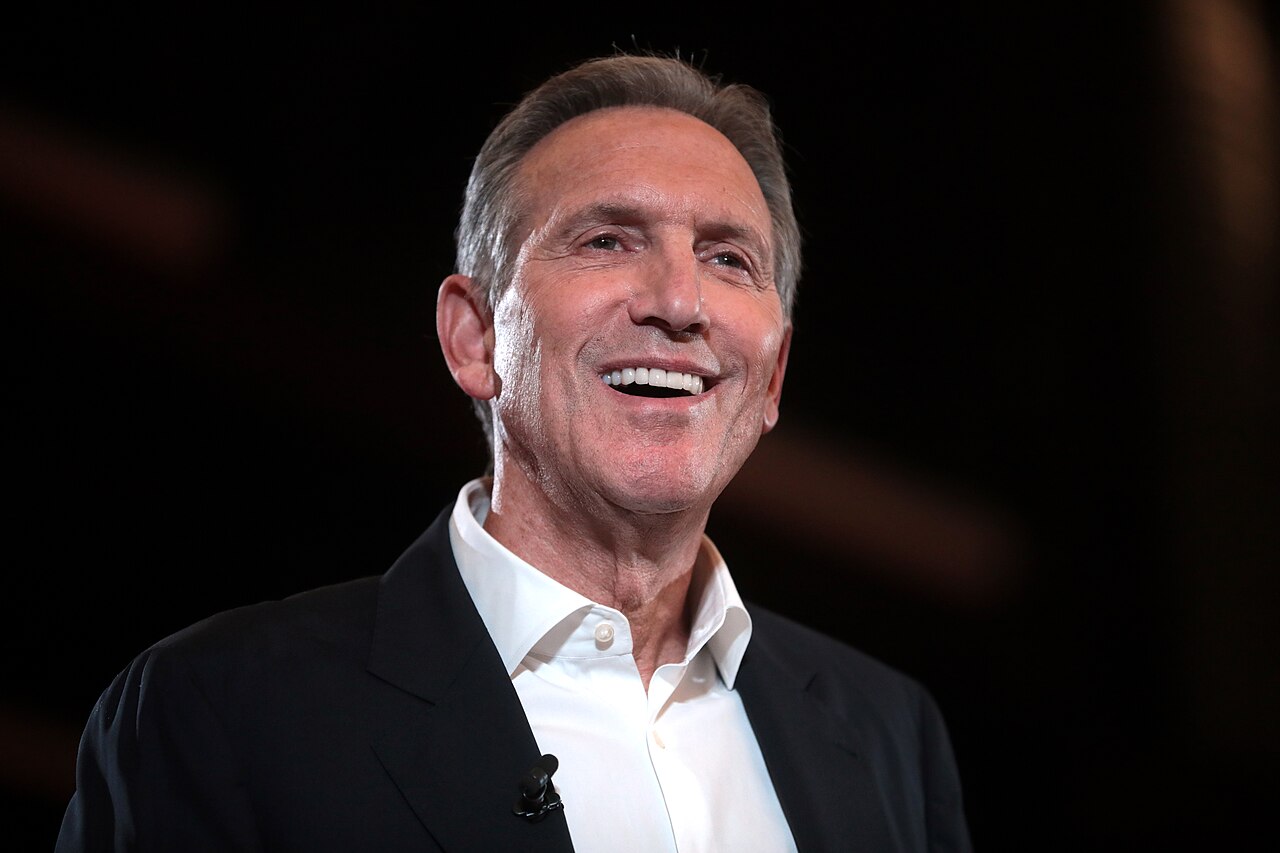
The week Washington state passed a 9.9 percent tax on incomes over $1 million, former Starbucks CEO Howard Schultz announced he was leaving Seattle, abandoning the company he built over 44 years for the lower-tax haven of Florida. The collision of those two events was no coincidence. It was a snapshot of a desperate pattern playing out across ten states: as businesses and wealthy residents flee socialist tax regimes, state governments respond not by reforming but by constructing economic walls to make leaving prohibitively expensive.
The IRS migration data tells the story in cold numbers. California shed $11.9 billion in net adjusted gross income and nearly 230,000 residents in 2022-2023 alone. New York bled $9.9 billion from its tax base. The primary beneficiaries were Florida, which gained $20.5 billion, and Texas, which absorbed $5.5 billion — states that compete on freedom rather than coercion.
At least ten states now explore or have passed wealth and exit taxes to offset those hemorrhaging revenue losses: California, New York, Washington, Michigan, Massachusetts, Illinois, New Jersey, Connecticut, Colorado, and Minnesota. Each pursues measures targeting wealthy residents. Taken together, this is not a series of isolated policy adjustments. It marks a pattern of socialist desperation.
When socialist states cannot compete economically, they resort to coercion and barriers rather than reform. The exit tax proposals mirror every failed socialist experiment — from the Soviet Union to China — that required exit barriers to prevent citizens from voting with their feet. These jurisdictions construct economic Berlin Walls precisely because they cannot build competitive economies.
California's proposed 2026 Billionaire Tax Act illustrates the instinct at its starkest: a one-time 5 percent levy on anyone worth over $1 billion, affecting roughly 200 people. The tax reaches individuals for up to 10 years after they leave the state. That mechanism transforms ordinary taxation into a penalty for exercising a fundamental American liberty: freedom of movement.
Corporate exodus accelerates alongside individual flight. ExxonMobil announced March 10 it would move its corporate registration from New Jersey to Texas. Yamaha Motor revealed Feb. 26 it would relocate U.S. headquarters from California to Georgia. Starbucks opened a new corporate office in Nashville in March. JPMorgan Chase, meanwhile, shrinks its New York operations while expanding in Texas. Businesses flee socialist tax regimes for capitalist havens, and the list grows longer each month.
The legal battle over whether states can penalize citizens for leaving has become a central constitutional crisis. On April 8, the Citizen Action Defense Fund filed suit in Klickitat County Superior Court challenging Washington's millionaires tax as unconstitutional. "For nearly a century, Washington courts have been clear: income is property, and property taxes must be uniform and limited," said former Attorney General Rob McKenna, who leads the challenge. The courts, he argues, will have no choice but to act.
McKenna left little ambiguity about the stakes. "This law disregards both the plain language of the Constitution and decades of consistent Supreme Court precedent," he argued. "We are confident the courts will strike it down." The exit tax proposals represent unconstitutional attempts to restrict freedom of movement, a liberty that no state legislature has the authority to price out of reach.
JPMorgan Chase CEO Jamie Dimon put the economic reality plainly in his April shareholder letter. "The truth is that while New York City has much going for it, particularly for financial companies — because of extraordinary local talent — it also has the highest city and state corporate taxes and the highest individual income and state taxes," Dimon wrote. His observation that "individuals vote with their feet" exposes the economic reality socialist governments cannot accept.
Even New York Governor Kathy Hochul has acknowledged the damage. "Maybe the first step should be go down to Palm Beach and see who you can bring back home because our tax base has been eroded," Hochul told Politico last month. That candid admission proves Democrats grasp the problem but are choosing, deliberately, to double down on failed policies rather than reform them.
Washington's tax law, signed March 30, targets less than 0.5 percent of households, according to the governor's office, and takes effect in 2028. Massachusetts offers a cautionary preview: its 4 percent surtax on incomes over $1 million, implemented in 2023, generated $1.3 billion in fiscal 2026, but coincided with $4 billion in income outflow from the state.
The Massachusetts example is a textbook Laffer Curve failure. Tax revenue rose, but income outflow exceeded collections, proving the policy destroys the very tax base it was designed to harvest. Democratic officials know their policies are failing. They are choosing to punish citizens rather than reform.
Dimon addressed that calculation directly. "People often make this a moral or loyalty issue, but it is not," he wrote. "Companies need to remain competitive in this very tough, fast-moving world. And higher taxes lower returns on capital and less competitiveness by their nature." It is an argument rooted in reality — and one that fleeing executives are acting on without waiting for politicians to catch up.
The corporate migration rolls on. Public Storage announced its move from Glendale, California, to Frisco, Texas. Palantir Technologies relocated from Denver to Miami in February. Tesla, SpaceX, Chevron, and Oracle all shifted headquarters from California to Texas or other low-tax states in recent years. ExxonMobil CEO Darren Woods put it plainly when announcing his company's move: "Over the past several years, Texas has made a noticeable effort to embrace the business community. Aligning our legal home with our operating home, in a state that understands our business and has a stake in the company's success, is important."
High-profile individuals join the migration in equal measure. Amazon founder Jeff Bezos moved from Seattle to Miami in 2023. Google co-founders Larry Page and Sergey Brin purchased multimillion-dollar Florida properties. Ken Griffin relocated Citadel's headquarters from Chicago to Miami in 2022. And tax professionals say the conversations are only accelerating. "The 5 percent wealth tax is driving people out in droves right now," said Brian Gray, a tax partner at Gursey Schneider. "It's like the top of every conversation I'm having."
Not every exit-tax push has gained traction. Michigan suspended its millionaire tax ballot initiative in March after failing to collect enough signatures to qualify for the 2026 ballot, proof that even left-wing states face pushback when capital flight becomes impossible to ignore. Illinois legislators have proposed treating billionaires' unrealized capital gains as taxable income. New Jersey already imposes an 8.97 percent withholding tax on real estate sales, a levy so routinely described as an exit tax that the nickname has stuck.
The residents have already answered with their feet. The migration data is unambiguous, the corporate departures are accelerating, and the constitutional challenges are mounting in court. Socialist states are not reforming: they are constructing economic Berlin Walls, brick by brick, tax by tax, hoping coercion can accomplish what competitiveness cannot. History has a verdict on that strategy, and it is not a flattering one.