Ukraine Forges Gulf Defense Deals as Western Aid Evaporates
As Russia claims Luhansk and Western interceptors flow to the Middle East, Ukraine is trading drone expertise for Patriot missiles — striking market deals with Gulf states to secure its own survival.
Russia declared full control of Ukraine's Luhansk region on April 1. Ukrainian forces are still there.
Despite 144 Russian assault attempts over six months, Ukraine's 3rd Assault Brigade holds positions at Nadiya, Novoyehorivka, and Hrekivka — a stubborn defiance that frames everything that follows. The Russian Defense Ministry announced "Units of the Group of Forces West have completed the liberation of the Luhansk People's Republic," marking Moscow's third such claim since 2022. The brigade reports Russian forces suffered 260 killed and 80 wounded near those positions alone.
Russia's answer to Ukraine's Easter ceasefire proposal was 700 drones. The April 1 strikes killed four civilians in Cherkasy Oblast and hit 11 locations nationwide. "Russia is responding to the Easter ceasefire offer with Shahed drones and continues its terrorist operations against our energy sector," President Volodymyr Zelenskyy stated. Russian Foreign Ministry spokeswoman Maria Zakharova dismissed the truce proposal as "yet another PR stunt" designed to "replenish losses, regroup and prepare the Ukrainian armed forces for continued combat." Moscow has paired massive nighttime strikes with equally heavy daytime attacks — a deliberate strategy to maximize civilian disruption around the clock.
The war's wider context is now inseparable from the Middle East. Western attention has shifted decisively toward the Iran conflict, draining the military resources Ukraine depends on. The U.S. and Gulf partners burned through 800 Patriot missile interceptors in the Iran war's first three days, creating severe shortages that reach directly into Ukrainian skies. "If the Iran war doesn't end soon, the package — which is not very big for us — I think will be smaller and smaller day by day," Zelenskyy warned on April 4.
The interceptor pipeline has effectively closed. "Interceptors like Patriot, forget it," said Ed Arnold, analyst at the Royal United Services Institute. "The Ukrainians aren't getting any more now because they're all going to go to the U.S. military." Ukraine now sits at the bottom of Washington's priority list, squeezed out by a conflict thousands of miles from Kyiv.
President Donald Trump sharpened the pressure on NATO allies this week, labeling the alliance a "paper tiger" and criticizing European nations for refusing to join the "Hormuz Coalition" to reopen the Strait of Hormuz. "We weren't there when we needed them," Trump said, referencing NATO allies' absence during the Iran war. The UK, France, and Germany have all ruled out participating in combat operations to reopen the strait — a fracture that leaves Ukraine watching its Western security architecture buckle under competing demands.
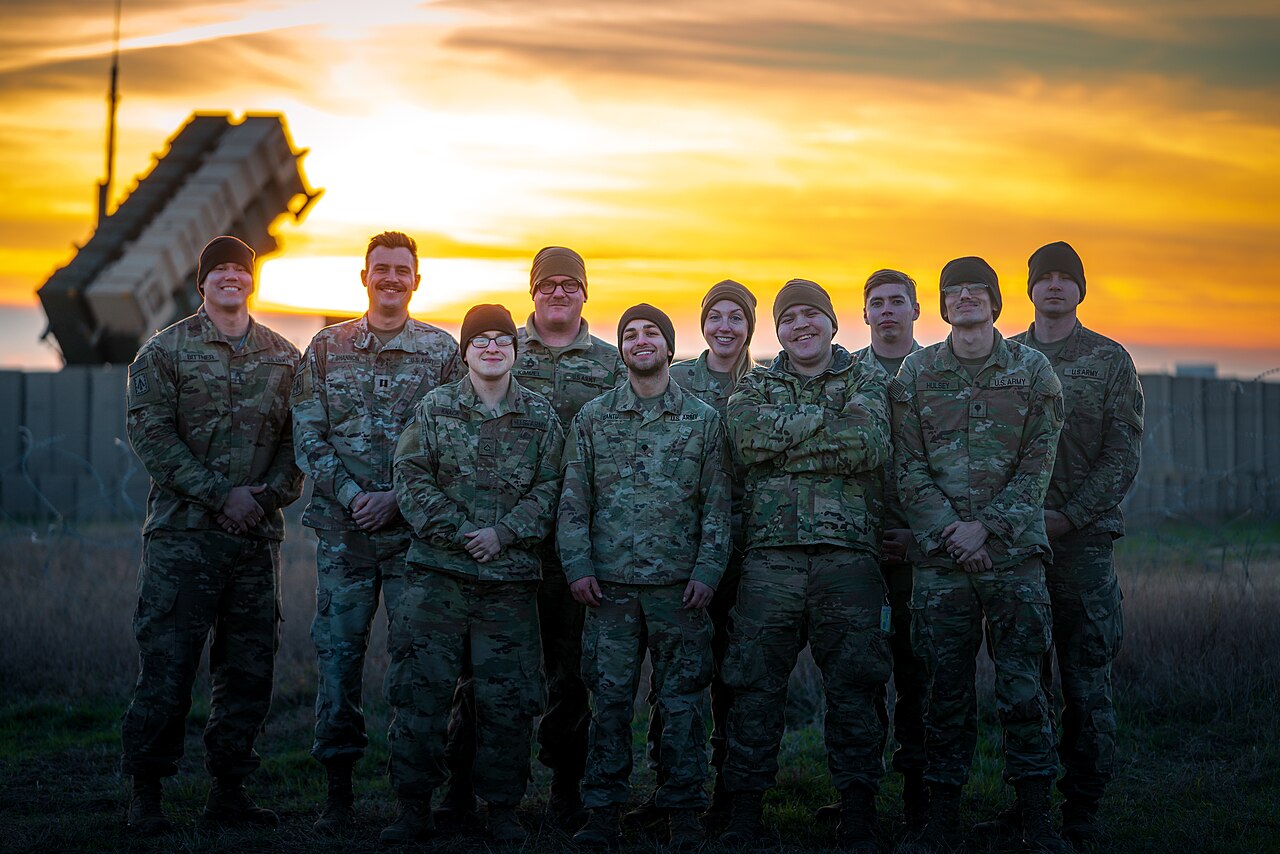
Kyiv did not wait for Western powers to sort themselves out. Zelenskyy signed defense agreements with Saudi Arabia on March 26, followed by deals with the UAE and Qatar on March 28. The arrangement trades Ukrainian counter-drone expertise for Patriot missiles — a clean market transaction built on battlefield knowledge, not diplomatic goodwill. "If they give them to us, we will give them interceptors," Zelenskyy explained.
The numbers behind that exchange are striking. Ukraine deployed 228 counter-drone specialists to Jordan, Qatar, UAE, Saudi Arabia, and Kuwait, up from 201 earlier this year. The country claims production capacity of approximately 2,000 interceptor drones per day. Ukrainian interceptors cost about $2,000 each, compared to Patriot missiles priced at $4 million, according to Al Jazeera reporting — a cost differential that makes Kyiv's expertise genuinely valuable to cash-rich Gulf partners.
On the battlefield, the picture is more encouraging than the headlines suggest. Ukrainian forces recaptured 470 square kilometers of territory since launching a counteroffensive in late January; the Institute for the Study of War verified at least 334 square kilometers of those gains. Russia's advance rate slowed from 14.9 square kilometers per day between October 2024 and March 2025 to just 5.5 square kilometers daily from January through March 2026 — a grinding deceleration that reflects the cost Moscow is paying.
Those costs hit a record in March 2026: 35,351 casualties, including 33,988 attributed to drone strikes alone. "Russian losses this March have reached their highest level since the start of the war," Zelenskyy announced on April 3. Russia continues pressing forward despite the toll — but it is pressing forward more slowly, and bleeding more heavily, than at any point since the invasion began.
Ukraine's pivot to Gulf partnerships is not merely tactical — it is a bet on a different model of wartime survival. Rather than depending on Western state-to-state aid programs that bend with each shift in geopolitical weather, Kyiv now trades battle-tested expertise for critical defense systems through market transactions. The self-reliance model lays bare the fragility of traditional Western security commitments and the resilience of arrangements grounded in mutual interest rather than political obligation.
The question now is whether Western powers will recommit to Ukraine's defense or continue their drift toward Middle Eastern priorities — leaving Kyiv to secure its survival through the pragmatic regional alliances it has already begun to build.