Trump Administration Unleashes Coordinated Endgame Against Cuba
A synchronized campaign of indictments, naval deployments, and direct appeals to Cubans signals Washington's deliberate endgame strategy to dismantle Cuba's military-controlled communist regime.
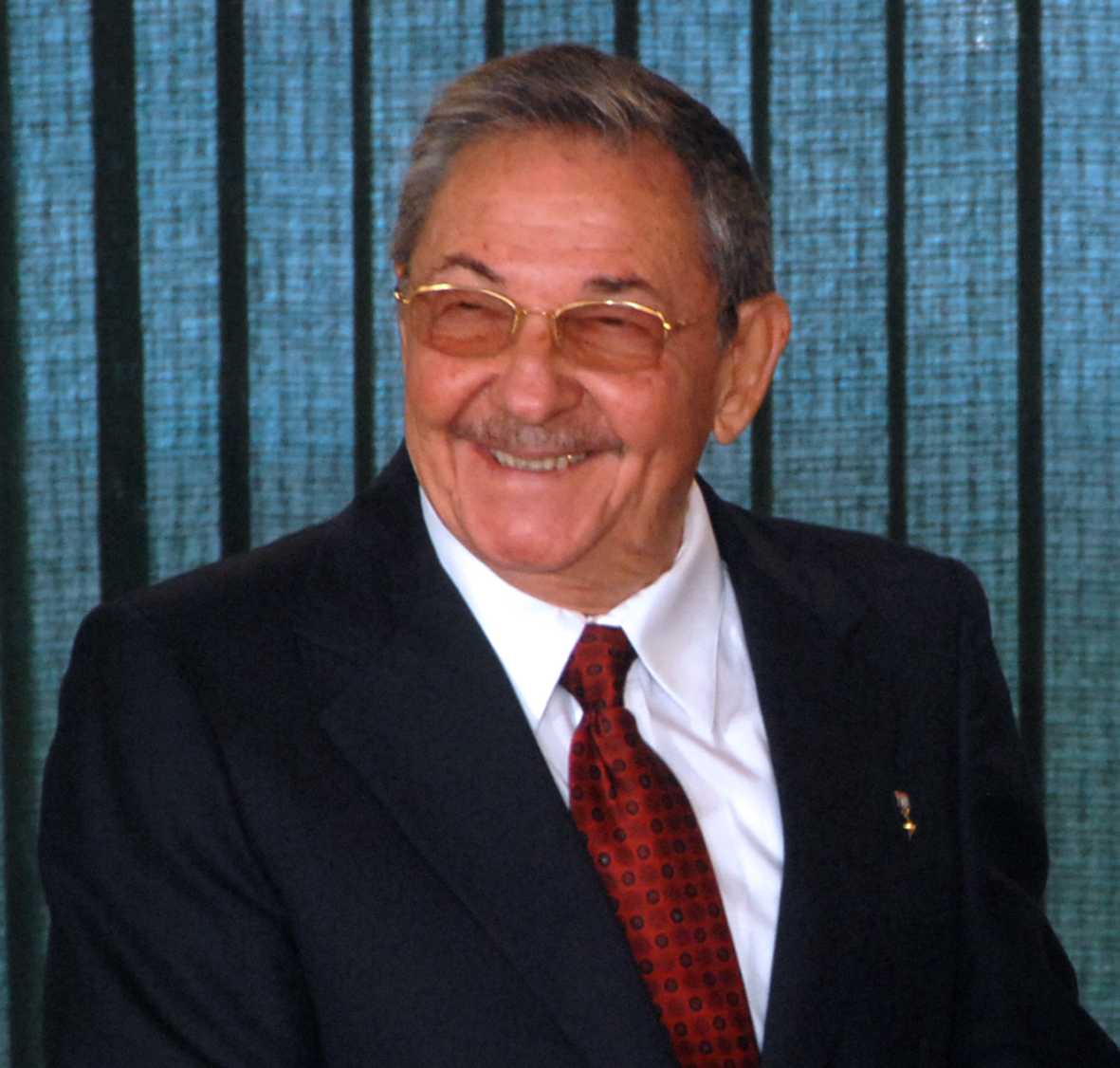
Cuban families enduring daily blackouts and empty shelves received news this week that Washington had moved to dismantle their government in a single, synchronized strike. On May 20, the Justice Department unsealed an indictment against Raúl Castro, the USS Nimitz carrier strike group entered the southern Caribbean, and Secretary of State Marco Rubio delivered a direct address to the Cuban people. CIA Director John Ratcliffe had delivered an ultimatum in Havana just six days earlier, bringing a paramilitary operator who helped capture Nicolás Maduro to signal what happened to their Venezuelan ally.
This campaign transcends traditional diplomacy. Emzari Gelashvili, a former Georgian Parliament member and security official who specialized in countering Russian and Iranian intelligence, argues the Trump administration has launched a structural dismantling of Cuba's military-industrial complex. The strategy targets GAESA—the military conglomerate that controls up to 70 percent of the island's economy—and mirrors successful pressure campaigns against Venezuela and Iran, signaling a deliberate endgame for six decades of communist rule.
Acting Attorney General Todd Blanche announced the indictment against Castro for the 1996 shootdown of two civilian planes, charging him with conspiracy to kill U.S. nationals and four counts of murder. "President Trump and this Justice Department are committed to restoring a simple principle: if you kill Americans, we will pursue you," Blanche said. "No matter who you are. No matter what title you hold."
The indictment targets the individual who holds real power inside Cuba's command structure. Raúl Castro founded GAESA in 1995 when he served as defense minister, creating what Rubio described as "a state within the state" accountable to no one. Columbia University analysis of leaked financial documents shows GAESA's revenues are 3.2 times Cuba's annual state budget, with the conglomerate controlling between 40 and 70 percent of the national economy.
Rubio's May 20 video message directly named GAESA as Washington's primary target. "Thirty years ago, Raúl Castro founded a company called GAESA," Rubio told the Cuban people in Spanish. "This company is owned and operated by the Armed Forces, and has revenues three times greater than your current government's budget. Today, while you suffer, these businessmen have $18 billion dollars in assets and control 70 percent of Cuba's economy."
The military-controlled conglomerate operates 121 hotels and controls tourism, retail, real estate, banking, and foreign trade. GAESA pays no taxes to Cuba's state budget and remains exempt from audits, according to Columbia University's analysis of leaked financial documents. This arrangement is by design under Cuba's socialist system—the military operates outside the state's own fiscal rules, insulating itself from the consequences of the economic chaos it created. The Trump administration imposed sanctions on GAESA on May 7, giving foreign companies and banks until June 5 to divest from the conglomerate.
Washington's pressure exploits Cuba's catastrophic economic collapse, a crisis the regime created through decades of socialist mismanagement and GAESA's systematic theft of national resources. Energy Minister Vicente de la O Levy admitted May 14 that Cuba has "absolutely no fuel oil, absolutely no diesel." Blackouts in Havana now exceed 20 to 22 hours daily after the country exhausted its last Russian oil shipment in mid-May.
The regime's economic failures have produced a humanitarian emergency for the Cuban people. Nearly one million Cubans face severe food insecurity, according to United Nations data, as the military-controlled state apparatus starves the population while GAESA's executives park billions abroad. Rubio countered the regime's failure by offering $100 million in food and medicine aid distributed directly through Cuba's Catholic Church—a deliberate bypass of the military-controlled state apparatus.
CIA Director Ratcliffe's May 14 visit to Havana included a chilling message delivered through personnel who captured Venezuela's Maduro. The paramilitary operator who accompanied Ratcliffe was introduced to Cuban officials as "the one who killed their people in Venezuela"—a reference to 32 Cuban military and police officers killed during Maduro's January 2026 capture.
The timing of Washington's pressure campaign coincided with geopolitical theater unfolding in Beijing. Russian President Vladimir Putin and Chinese President Xi Jinping met May 19 to 20, issuing a joint statement condemning "irresponsible" U.S. foreign policy. The USS Nimitz entered Caribbean waters the same day their summit concluded, projecting American enforcement of the Monroe Doctrine against allied strength from Moscow and Beijing.
Former Defense Secretary Robert Gates warned May 15 that the collapsing Cuban economy creates immediate risks for the United States. "I think that, actually, the biggest risk is, that we end up with another Mariel evacuation from Cuba that has tens of thousands of Cubans heading to the United States out of desperation," Gates said. The pattern mirrors 1980, when a failing socialist government created a migration emergency that forced tens of thousands to flee by boat.
Cuban opposition leader José Daniel Ferrer predicted May 22 that the communist regime will fall by year's end. The regime has already shown signs of buckling—on March 13, Cuba announced it would release 51 prisoners as part of diplomatic engagement with the Holy See. The combination of economic strangulation, targeted sanctions against military elites, and direct appeals to the Cuban population follows a playbook Washington tested successfully in Venezuela and Iran. Maduro now faces narcoterrorism charges in New York, while Iranian Supreme Leader Ali Khamenei was killed in a February 28 airstrike.
Cuba has acquired 300 attack drones from Russia and Iran, according to Axios reporting from May 17. Cuba dismissed the report as fraudulent. Cuban President Miguel Díaz-Canel denounced the U.S. blockade as "genocidal," calling it a "perverse design" aimed at making the Cuban people suffer. The facts tell a different story.
GAESA's executives parked $18 billion in assets while Cuban families endured daily blackouts and empty shelves. With billions in reserves frozen by sanctions, the military conglomerate that controls more hotels than army divisions faces its reckoning. The structural vulnerabilities of Cuba's communist regime now match those that preceded the fall of allied governments in Caracas and Tehran.