Heritage Index Exposes Nordic Capitalist Reality
New Heritage Foundation data ranks Nordic nations above the U.S. in economic freedom, dismantling the false narrative that Scandinavia's welfare states operate on socialist principles.
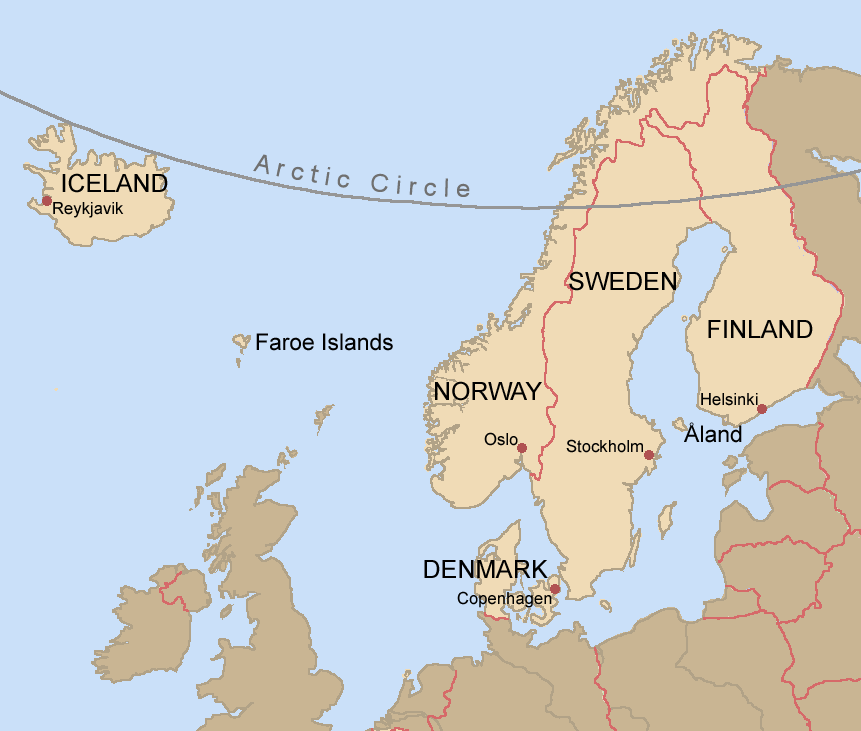
The "Nordic socialism" myth collapsed under its own weight this week. The Heritage Foundation's 2026 Index of Economic Freedom ranks Denmark, Norway, and Sweden above the United States in economic liberty — data that dismantles the left's favorite talking point and exposes the capitalist foundations of the world's most admired welfare states.
Denmark ranks seventh, Norway eighth, Finland 13th, and Sweden 11th, all comfortably ahead of the United States at 22nd. The index tracks 12 indicators across four pillars: Rule of Law, Government Size, Regulatory Efficiency, and Open Markets, each containing three sub-components. The Nordic model does more than complicate the socialism debate — it refutes it entirely, proving that generous social safety nets flourish only when built on free-market foundations.
American democratic socialists like Bernie Sanders and Alexandria Ocasio-Cortez point to Scandinavian welfare benefits while ignoring the capitalist engines that fund them. They promote a rhetorical bait-and-switch, showcasing Nordic social programs while omitting the pro-market policies that make them possible. Their selective framing obscures a fundamental reality: these nations are market economies with ironclad private property protections.
Tax Foundation data from 2024 shows Nordic nations levy lower corporate tax rates than the United States. Denmark and Norway both charge 22 percent corporate taxes, while Sweden charges 20.6 percent. The U.S. federal and state combined rate stands at 25.6 percent. Nordic countries fund their expansive programs through broad-based VAT taxes and middle-class income levies, not by punishing business investment.
Sweden's own history offers a warning about state overreach. The country fell from the world's fourth richest economy in 1950 to 13th by the mid-1990s after government spending peaked at 68.4 percent of GDP in 1993. The expansion choked private-sector job creation and drove major companies like IKEA and Tetra Pak to relocate abroad.
"That whole thing with democratic socialism was absolutely impossible," said Kjell-Olof Feldt, Sweden's Social Democratic Minister of Finance during the crisis. "It just didn't work."
Sweden's subsequent recovery came through free-market reforms, not deeper state intervention. Political consensus drove deregulation, the privatization of state-owned enterprises like Telia and Vattenfall, and the introduction of a universal school voucher system in 1992. The country abolished taxes on wealth, gifts, and inheritances, and public spending fell to approximately 49.4 percent of GDP by 2015.
"With the exception of the size of government, the Swedish economy is now more free-market-oriented than the U.S. economy according to Economic Freedom of the World data," said Swedish author Johan Norberg.
The private sector remains the true engine of Nordic prosperity. Business enterprises perform 69.6 percent of total research and development investments across Nordic countries, according to 2023 data. Nordic nations also have no nationally imposed minimum wage laws, leaving wage-setting to market forces and collective bargaining rather than government mandates. Private banking finances the vast majority of economic activity in the region. This private innovation and investment create the wealth that funds Scandinavian social programs rather than state control of production.
Nordic leaders themselves reject the socialist label. "Denmark is far from a socialist planned economy," former Danish Prime Minister Lars Løkke Rasmussen declared at Harvard's Kennedy School in 2015. "Denmark is a market economy." Spanish economist Daniel Lacalle concurs: "There is nothing Socialist about the Nordic Nations. Being leaders in Economic Freedom, free enterprise, defense of private property, leaders in private banking and entrepreneurship promotion is the opposite of socialism."
The Nordic record proves that a welfare state funded by a thriving capitalist economy is not socialism — it is capitalism producing enough prosperity to finance public services. And the less-interventionist American system still delivers greater individual wealth: per capita GDP in the United States is more than 15 percent higher than in Nordic nations, and Americans hold approximately twice the household wealth of their Nordic counterparts. Socialism promises to distribute wealth while steadily undermining the property rights, investment incentives, and productive enterprise that create it. As Sweden learned through its interventionist experiments, there can be no durable welfare state without economic freedom and a flourishing private sector.
Socialism does not fail because it was implemented poorly. It fails because transferring control of production from individuals to the state destroys the engine of prosperity. The Nordic countries refute socialism with every economic freedom ranking, every corporate tax rate below America's, and every privatization that strengthens their market foundations.