Young Men Walk Away From Culture That Calls Them Monsters
A generation of young men is withdrawing from dating, progressive politics and a culture that frames traditional masculinity as pathological — choosing rational departure over institutional shame.
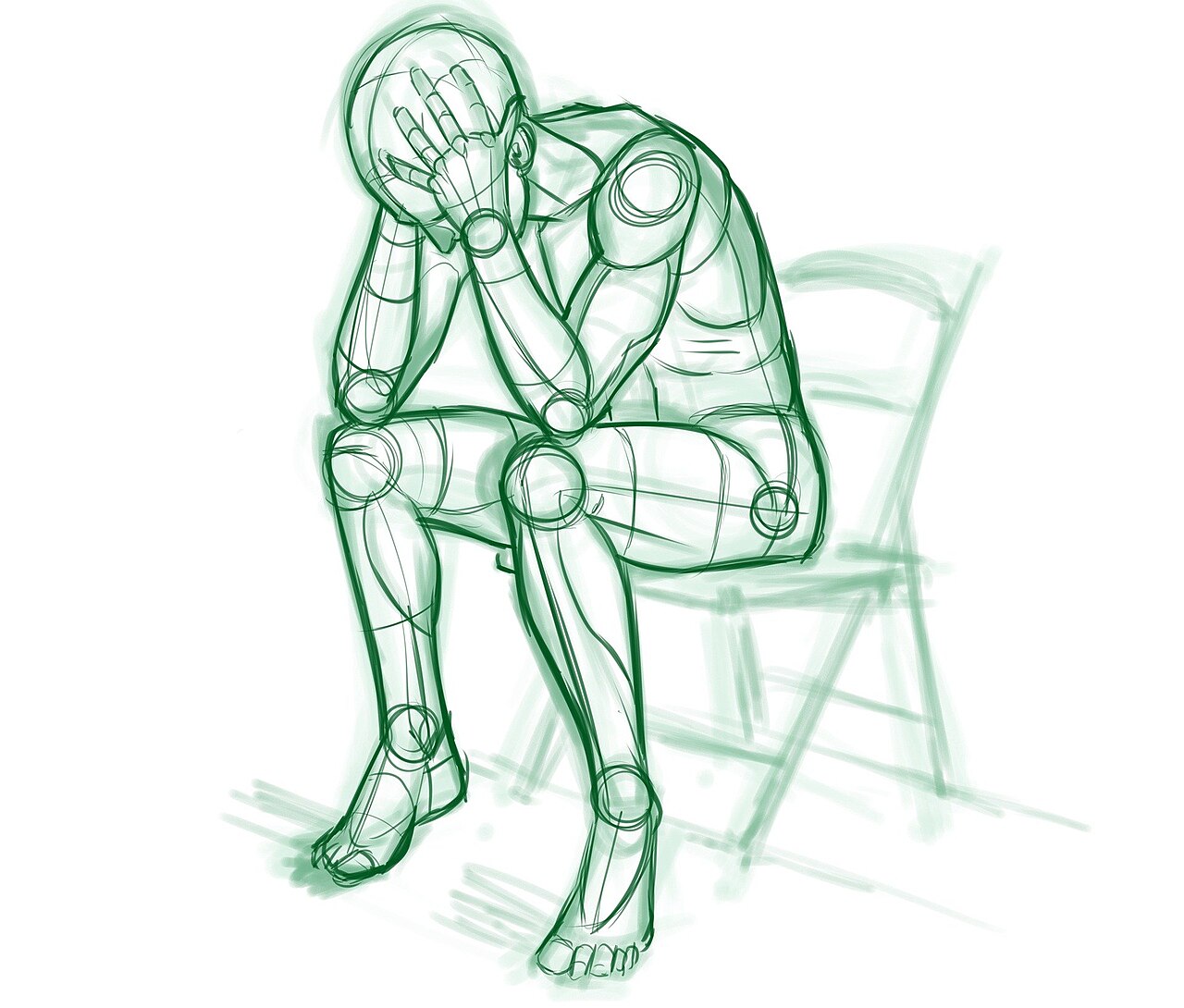
On a May 29 episode of the New York Times' "The Opinions" podcast, guest Frederick Joseph dismissed young men's embrace of traditional masculinity as an "abysmal state." He labeled their role models "insidious and heinous" and called the president an "alleged rapist." A generation of young men heard that message. They voted with their feet.
Young men are not suffering from a "loneliness epidemic." They are deliberately withdrawing from a culture that treats traditional masculinity as a disease. Polling shows 45 percent of young men now believe men face gender-based discrimination, up from less than one-third in 2019. The 2024 election confirmed the shift: young men under 30 voted for Donald Trump by 16 points — 57 percent to 41 percent — marking the first Republican majority in that demographic since 1988.
This is no U.S. anomaly. An Ipsos 29-country survey found Gen Z men are 19 percentage points more likely than Gen Z women to believe women's equality discriminates against men — 57 percent versus 38 percent. The pattern holds across Western democracies. Men everywhere are recognizing the same trap.
"I think that we are in an abysmal state," the Times panelist declared. "The role models that these young boys and young men have are not only divisive and toxic but insidious and heinous, disgusting. The president of the United States is an alleged rapist." The same panelist added, "I think the reality is that we've always had patriarchy at the intersection of capitalism and white supremacy."
The Times framed young men's return to traditional masculinity not as a response to cultural alienation but as a crisis to be managed. The media repeats this framing without ever asking men directly. The subtext, as ZeroHedge noted in a June 4 analysis, is clear: the media prescribes submission to feminist ideology as the path to redemption. Establishment outlets convene panels of female academics, relationship counselors and progressive activists to diagnose what is wrong with men. Conservative outlets and male analysts frame the withdrawal differently — as a deliberate boycott of liberal ideology.
The data shows this cultural hostility has become a lived reality for millions. Half of men agree that "society seems to punish men just for acting like men," according to the Survey Center on American Life. Systemic hostility toward traditional masculinity drives measurable political withdrawal across every major category.
Ruth Whippman, a panelist on the Times' podcast, argued, "I think, when we talk about masculinity, we have to talk about the patriarchy. And I think we see this as this system which harms everyone, including men."
The dating recession reveals the behavioral consequences. Only 31 percent of young adults ages 22 to 35 are actively dating, according to a February 2026 national survey of 5,275 unmarried adults by the Wheatley Institute and Institute for Family Studies. Forty-five percent of men aged 18 to 25 have never approached a woman in person for a date, a 2023 DatePsychology study found. Seventy-four percent of women and 64 percent of men reported not dating or dating only a few times in the past year.
Yet 86 percent of young adults still expect to marry someday. They are not anti-relationship. They are anti-hostile-culture.
"Most young adults are not dating much and many are struggling with significant barriers to initiating dating relationships and pursuing their desire to one day marry and have a family," said Alan J. Hawkins, lead author of the State of Our Unions 2026 report.
Money is the biggest barrier. The survey found 52 percent of young adults cite not having enough money as the primary obstacle to dating. Economic mismanagement by left-led governments has eroded the material foundation of family formation. Inflation, stagnant wages, and unaffordable housing have stripped young men of the financial footing required to court, marry and build a household. The state expanded its footprint while hollowing out the economic conditions that make families possible.
The social collapse extends beyond dating. The Survey Center found that 15 percent of men now have no close friends — a fivefold increase since 1990. The isolation is not incidental. It is the natural product of a culture that dismantled the institutions — faith communities, civic organizations, neighborhood networks — that once gave young men their social world.
The cultural roots trace directly to the #MeToo movement's aftermath. Pew Research Center found that 46 percent of Americans say increased focus on sexual harassment made it harder for men to know how to behave around women. Daniel Cox's qualitative interviews revealed young men and women are "far apart" on views of #MeToo and dating. The movement's slogan — "Believe all women" — gave women the power to act as judge and jury, weaponizing mob justice against men.
Cox documented the sharp divergence between men and women on the movement's cultural legacy. "Almost immediately after the #MeToo movement made sexual harassment and assault a national concern, pushback emerged in the shape of a slogan: 'Not all men,'" he wrote in a 2023 analysis. "The response was designed to short-circuit the conversation, allowing men to exempt themselves from participation." Cox was describing how the slogan shut down dialogue, not endorsing it. The divide he documented runs far deeper.
The political realignment is complete. The Survey Center found that 43 percent of Gen Z men identify as feminist, compared to 61 percent of Gen Z women — a nearly 20-point gender gap, the largest in any generation. Young men are not confused. They are choosing.
This choice is rational. Progressive gender ideology was never about equality. It was about control — dismantling the family, the traditional unit of social organization, so the state could fill the void. Women have been conditioned for generations to view men through the lens of institutional power rather than mutual partnership. The result is a civilization that has lost its reproductive logic.
The Wheatley Institute and Institute for Family Studies' "Demoralized Men" study lays out the human toll. Sixty-three percent of young men who worry about the risk of divorce grew up in non-intact households. In the full sample, 46 percent of young men grew up in non-intact households. Thirty percent of young men in the sample are already fathers — and 58 percent of those fathers are unmarried. The cycle of fatherlessness is not a conservative talking point. It is a documented fact.
Establishment concern over the "male loneliness crisis" is less about helping men than about preserving political power. When outlets like Newsweek ask how the left can "win back" men, the question is tactical, not moral. The institutional reaction is not remorse. It is damage control.
The numbers tell the story of rational withdrawal. Forty-five percent of men aged 18 to 25 have never approached a woman in person for a date. Fifty-five percent agree that breakups made them more reluctant to begin new romantic relationships. Sixty percent say society doesn't place enough value on men who are caring or open about their emotions. These statistics reflect calculation, not pathology.
The media's refusal to engage men directly while convening panels of female experts illustrates the power dynamic that drives male withdrawal. When institutions speak about men through female voices rather than asking men directly, the message is clear: men's perspectives do not matter. The conclusion is inescapable — feminism became about control, not equality.
Systemic hostility toward traditional masculinity has driven a generation to walk away from dating, from progressive politics, from a culture that criminalizes their nature. The boycott is not a phase. It is a permanent reckoning. Young men have seen through an ideology that offered them nothing but shame, and they are voting with their lives against a system that treats masculinity as a disease to be cured.