China's Oil Lifeline Now Under U.S. Control
Trump's delayed summit with Xi Jinping reveals new American leverage: control of the Strait of Hormuz gives Washington unprecedented economic power over Beijing's oil imports, reshaping Taiwan's strategic future.
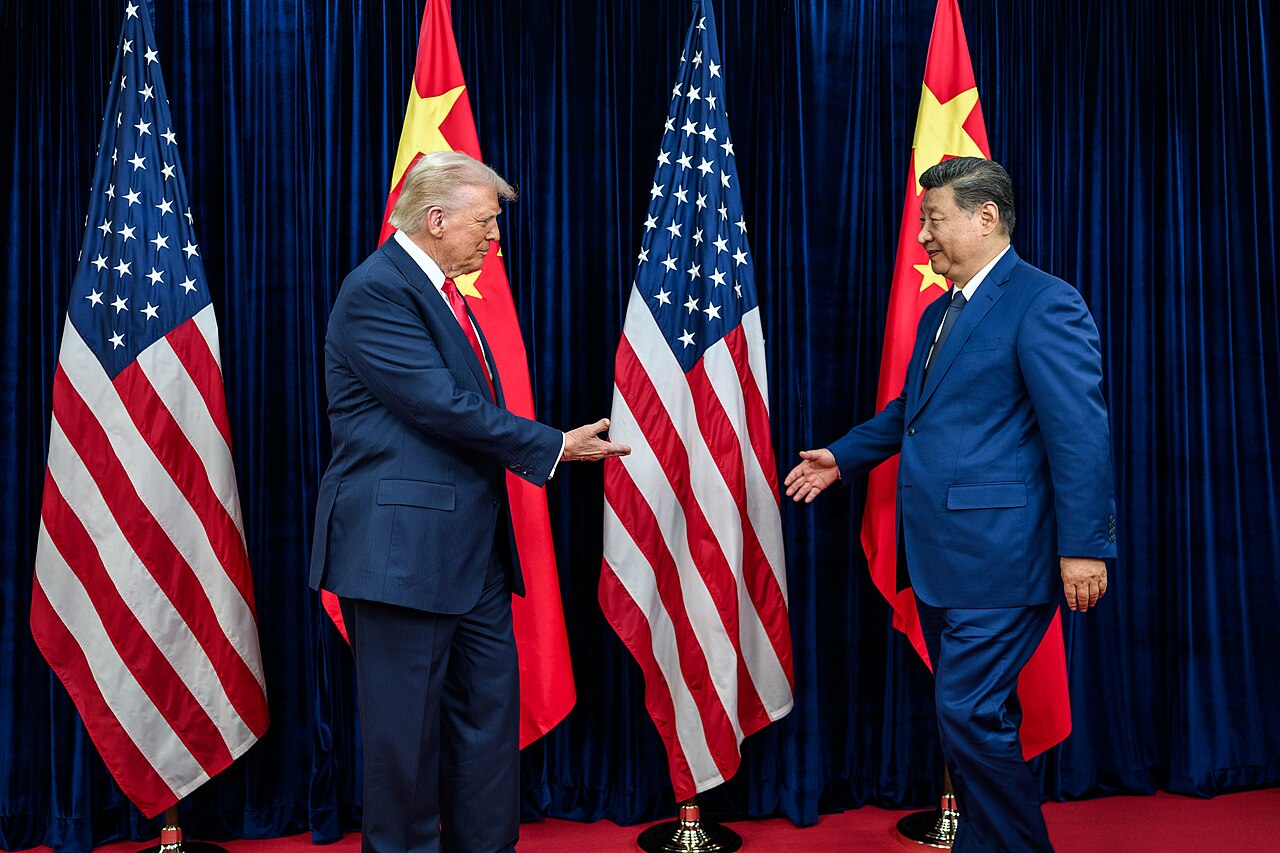
The United States does not need to fight China to stop its expansion — it just needs to hold the door to its oil supply. President Donald Trump's summit with Chinese President Xi Jinping, abruptly rescheduled from March 31 to May 14, has transformed from a high-stakes trade negotiation into a test of raw geopolitical leverage centered on the Strait of Hormuz.
The strait carries 20 percent of global oil shipments and 40 percent of China's seaborne crude imports, amounting to 5.4 million barrels daily. This sudden shift gives Washington unprecedented economic leverage over Beijing ahead of their critical meeting.
"At the end of this exercise, the U.S. has naval control of the Strait of Hormuz," said Cliff May, president of the Foundation for Defense of Democracies. "President Donald Trump can say to President Xi Jinping, 'We're now in control of the Strait of Hormuz. You can count on us. We're going to keep it open. We know how important it is, really, to you, not to us, and it would be a shame, wouldn't it, if some conflict somewhere else in the world — it would mean we'd have to close down the strait.'"
White House officials frame the delay as logistical necessity. "President Xi understood that it's very important for the president to be here throughout these combat operations right now," White House Press Secretary Karoline Leavitt told Al Jazeera on March 25. The administration estimates the conflict will last four to six weeks from its Feb. 28 start date.
Chinese officials publicly dismiss the Hormuz connection. "We have noted that the U.S. side has publicly clarified these false reports by the media, stating that the relevant reports are completely wrong, and emphasised that the visit has nothing to do with the issue of the open navigation of the Strait of Hormuz," Chinese Foreign Ministry spokesman Lin Jian said March 17.
Beijing's energy security analysis shows mixed resilience. China maintains 85 percent energy self-sufficiency and strategic reserves of 1.2 to 1.4 billion barrels, enough for 130 days of net import cover according to Jianlu Bi of TRT World.
"If I started a war over Taiwan, how would I get oil?" May posited Xi must ask himself. "What are my substitutes if I lose 5.4 million barrels per day? There's no immediate replacement for that." China imported 11.55 million barrels daily in 2025, with Iranian oil accounting for 1.38 million barrels of that total before the conflict.
The summit's traditional agenda — a $14 billion arms sale to Taiwan and a 500-plane Boeing deal — now plays secondary to the energy equation. Dennis Wilder, former China director at the National Security Council, noted Beijing monitors U.S. military readiness with precision. "In my very recent discussions with Chinese interlocutors, they note the fact that we're having to move equipment because we don't have enough of it," Wilder told RFE/RL on March 27. "They're counting the numbers, and they're saying, 'You're not going to have anything left in East Asia in reserve.'"
China continues importing Iranian oil despite U.S. sanctions, averaging 1.38 million barrels daily in 2025 according to Kpler data. Beijing's refusal to send naval vessels to help secure Hormuz, despite Trump's March 7 call for allied assistance, underscores its strategic dilemma. India agreed to dispatch warships while the United Kingdom, Japan, Germany and Australia rejected the request.
Trump's leverage extends beyond immediate oil flows. A $14 billion arms package for Taiwan awaits final approval, potentially the largest ever U.S. military sale to the island.
Dominic Chiu of Eurasia Group expressed skepticism about major breakthroughs. "I think a grand bargain is increasingly unlikely," Chiu told NBC News on March 17. "Though Beijing has publicly criticized new Section 301 trade investigations the Trump administration has opened against China, it appears to consider them a 'manageable irritant.'"
Oil prices provide immediate pressure. Crude peaked north of $120 per barrel one week into fighting before stabilizing around $95 as of mid-March. China's economic planners lowered GDP growth targets to between 4.5 and 5 percent this year, reflecting energy security concerns compounded by Middle East instability.
The strategic calculus represents a fundamental shift in U.S.-China relations. For the first time, military action in the Middle East directly constrains Beijing's options in Asia. Xi cannot credibly threaten Taiwan or retaliate for U.S. arms sales without risking China's energy security.
Beijing counts U.S. missile stockpiles while Washington controls China's oil lifeline. America's window to defend Taiwan expands not because its military grew stronger, but because it made China weaker by targeting Iran. The May summit will test whether economic leverage can achieve what decades of diplomacy could not — deter Chinese aggression without direct conflict.