DeSantis Warns GOP Faces Crisis Without Conservative Base
Florida Gov. Ron DeSantis refused to rule out a 2028 White House run while sounding a sharp alarm: the Republican Party may hemorrhage Trump voters the moment Trump leaves the stage.
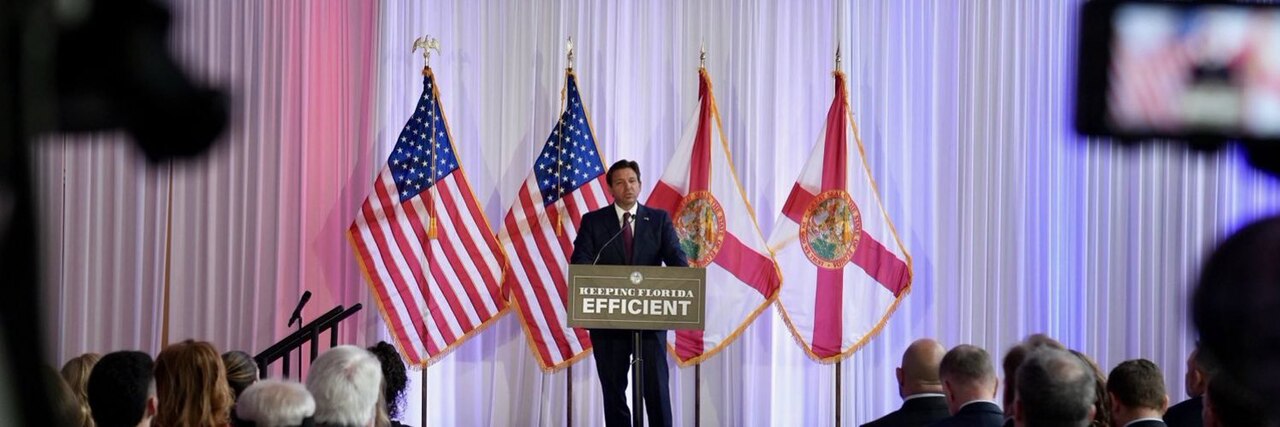
Ron DeSantis didn't say he's running for president in 2028 — he just made clear the Republican Party faces a reckoning if it assumes Trump's voters will stay loyal after he's gone. The Florida governor refused to close the door on another White House bid during a Fox News interview with Sean Hannity that aired March 24, answering with a simple "we'll see" when asked about his 2028 plans.
DeSantis finished second in Iowa with 21 percent before dropping out six days later. That bruising exit hasn't silenced him. His hesitancy comes paired with a stark warning about the GOP's future without its standard-bearer. "Republicans have an issue that Donald Trump has created a big pool of voters, but some of them are unique to him," DeSantis told Fox & Friends in December. "They will go vote for Trump, and they'll vote for all the Republicans when Trump's on the ballot. But if he's not on the ballot, some of them don't vote."
DeSantis points to the Tennessee special election last December as evidence, where Republican turnout dropped dramatically from presidential-year levels. His warning cuts to a fundamental question the party can no longer defer: what happens when the personality cult dissipates and conservative principles must stand on their own?
The governor believes his 2022 Florida landslide answers that question. DeSantis won reelection with 60 percent of the vote, flipping Democratic strongholds in Miami-Dade and Palm Beach counties while building a 1.4 million-voter registration advantage. "We won by a million and a half votes, 20 points, the biggest Republican win ever," he told Hannity. "But we did that based on results and substance. We did it by flying under a banner of bold colors, not pale pastels," he added on Fox & Friends.
The problem is the numbers. Five major surveys place him between 3 and 6 percent support for the 2028 Republican nomination, trailing far behind Vice President JD Vance's commanding 36 to 52 percent lead. Senator Marco Rubio consistently places second with 16 to 27 percent — leaving DeSantis a distant third in the field he insists he can reshape.
Vance's dominance represents the establishment succession narrative DeSantis aims to challenge. The Ohio senator has been Trump's heir apparent since becoming vice president, with the former president stating Vance is "most likely" the heir to the MAGA movement. But at a recent Mar-a-Lago gathering with donors including New England Patriots owner Robert Kraft, attendees cheered "almost unanimous for Marco" when Trump asked about 2028 preferences, according to sources familiar with the event.
DeSantis is carving his own policy lane as an AI regulation skeptic, positioning himself against both Vance and Rubio's pro-artificial intelligence alignment. "We don't want to see them building a massive data center and then sending you the bill," DeSantis said at a recent roundtable. "Data centers take up the power equivalent of a half a million-person city." One adviser framed the stance as deliberate differentiation: "You've got JD Vance and Marco Rubio, the top two contenders for 2028 big time in the pro-AI lane. The infrastructure is lining up behind JD and to some extent Marco. So, DeSantis' challenge is to stay relevant."
The governor faces pressing timing constraints. His term ends in January 2027, leaving him just over a year to build national credibility before primary season begins. His 2024 campaign collapsed under the weight of Trump's enduring appeal, though DeSantis insists the outcome reflected timing rather than substance. "In Iowa, the people that voted for Trump, if he wasn't running, I would've gotten like 90 percent of those people," he asserted on Hannity. "They were conservative voters, right? They didn't want the non-conservative, they wanted me."
That claim collides hard with reality. Trump's 51 percent Iowa victory margin versus DeSantis's 21 percent — a 30-point chasm — raises pointed questions about the governor's electoral viability. Yet he argues his Florida model provides the blueprint for conservative success nationwide. "Regardless of running or anything, we will be able to show that conservatism works," DeSantis said. "When you apply it aggressively, unapologetically, when you demonstrate leadership, when you cover all the issues, don't leave any stone unturned, no meat on the bone, you produce historic results."
Political scientist D. Stephen Voss of the University of Kentucky notes Vance faces his own parallel challenge without Trump's direct involvement. "Vance's real problem will not be MAGA," Voss said. "Vance's problem will be trying to motivate the many voters who usually stay home for elections but who show up for Trump himself. Vance simply doesn't have Donald Trump's hold on the American imagination."
That voter engagement dilemma sits at the heart of DeSantis's warning — and of his pitch for his own relevance. He argues the GOP's post-Trump survival depends on converting personality-driven support into principles-based loyalty. "I just think you got to be bold," he said in December. "I think you got to be strong... flying a banner of bold colors, not pale pastels."
The unspoken tension remains: DeSantis believes conservatism wins on results, not personality. But if Republican voters still won't show up for him without Trump on the ballot, his entire theory of conservative politics may be wrong. His potential 2028 run is more than personal ambition — it's a live test of whether a movement built around one man can survive without him.