EU Energy Policy Backfires as Crisis Exposes Green Dependency
With Hormuz closed and Putin threatening a gas cutoff, Europe's gutted energy cupboard lays bare a decade of climate-first policy that sacrificed security for green targets.
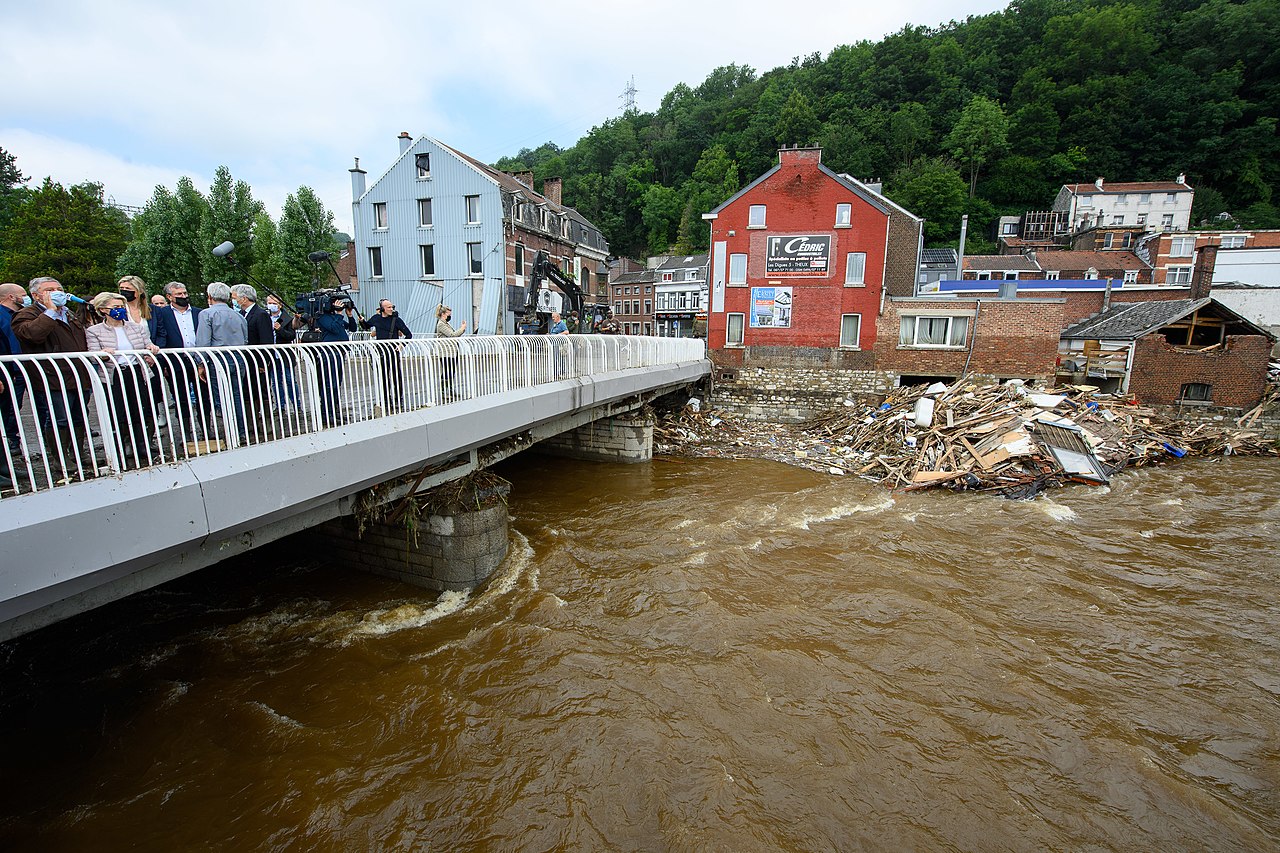
European Commission President Ursula von der Leyen declared Europe's energy situation "critical" in Canberra on Tuesday — a stunning admission from the architect of the EU policies that dismantled domestic energy capacity in pursuit of climate targets. Her warning came as the Iran war shuttered Strait of Hormuz oil flows and Vladimir Putin threatened to cut Russian gas exports to Europe, exposing the continent's decade-long strategic vulnerability.
"The situation is critical for the energy supply lines worldwide," von der Leyen told reporters in Australia, where she signed a new trade agreement. "We all feel the knock-on effects on gas and oil prices." She condemned Iran's attacks on commercial vessels and infrastructure but framed the crisis as geopolitical bad luck rather than policy failure. The reality tells a different story.
The Strait of Hormuz closure has choked 20 percent of global oil and liquefied natural gas trade, sending European gas prices surging 58 percent since late February to €49.6 per megawatt hour. Traffic through the critical waterway dropped from more than 100 vessels daily to near zero. QatarEnergy CEO Saad al-Kaabi confirmed Iranian drone strikes knocked out 17 percent of Qatar's LNG export capacity for three to five years, costing $20 billion annually.
"For production to restart, first we need hostilities to cease," al-Kaabi told Reuters on March 19. Qatar has declared force majeure on all LNG output, threatening supplies to Italy, Belgium, South Korea and China — and leaving Europe's most reliable alternative supplier effectively offline.
Europe faces this crisis with its energy cupboard bare. EU gas storage levels sit at a five-year low of 30 percent, according to Atlantic Council data. Germany shuttered its last nuclear reactors — Isar 2, Emsland, and Neckarwestheim 2 — in April 2023 under its Energiewende transition policy. The country now sources more than 90 percent of its direct LNG from the U.S., per Clean Energy Wire.
German Chancellor Friedrich Merz acknowledged the strategic error on March 11. "It was a serious strategic mistake to phase out nuclear energy," he told the Brussels Signal. "We simply don't have enough energy generation capacity." In January, Merz lamented that Germany undertakes "the most expensive energy transition in the entire world" and knows "no other country that makes things so expensive and difficult." His words landed with the weight of a verdict.
The crisis now threatens to deepen further. Russian President Vladimir Putin declared on March 4 that Europe's energy market may no longer be profitable enough. "Other markets are opening now," Putin said on state television. "Maybe it's better for us to end supplies to the European market right now? I will definitely instruct the government to work on this issue together with our companies."
Putin's threat comes despite von der Leyen's insistence that "returning to Russian energy would be a strategic blunder," as she told the Atlantic Council on March 11. Yet Russian LNG still comprised 17 billion cubic meters of EU imports in 2025, about 13 percent of total gas imports. The EU planned to ban Russian pipeline gas by late 2027 but never secured alternative supplies at scale.
Von der Leyen herself admitted on March 11 that nuclear power represents a "reliable, affordable source of low-emission electricity" — a reversal from her previous support for Germany's nuclear phaseout. The commission president now advocates new EU financial assistance for nuclear plants while Europe scrambles for stopgap solutions.
The EU signed a $750 billion trade deal with the U.S. in July 2025 for American oil, LNG, and nuclear technology over three years — a desperate attempt to secure energy independence after dismantling domestic capacity. Yet U.S. LNG export facilities already operate at maximum capacity and cannot fully offset Qatari losses.
International Energy Agency Executive Director Fatih Birol warned on March 23 that the current supply loss exceeds the combined 1973 and 1979 oil crises. "The global economy faces a major, major threat from the war's disruption to oil and gas flows," Birol said. "No country will be immune to the effects of this crisis if it continues to go in this direction."
Europe's predicament stems from deliberate policy choices. The EU's Green Deal and REPowerEU plan prioritized climate targets over energy security, shuttering nuclear and coal plants while failing to develop sufficient domestic LNG infrastructure. The continent now finds itself hostage to Middle Eastern geopolitics and Russian economic calculus.
Belgian Prime Minister Bart De Wever acknowledged the uncomfortable truth privately circulating among European leaders: "Europe must normalize relations with Russia and regain access to cheap energy." He told reporters last week that colleagues agree in private but "no one dares say it out loud."
As European households face soaring energy bills and industries contemplate shutdowns, the continent's green energy transition stands exposed as a strategic miscalculation. The same leaders who vilified fossil fuels and nuclear power now beg for LNG imports while contemplating whether to lift sanctions on Russian energy. Von der Leyen's "critical" assessment reflects not just a geopolitical crisis but the culmination of a decade-long policy failure that left Europe vulnerable, overcharged, and dependent on hostile regimes.