Trump Deploys ICE to Airports as Democrats Refuse to Fund Security
Forty days into a Democratic Senate blockade, 50,000 unpaid TSA screeners face eviction and hunger while ICE agents fill their posts at 13 major airports.
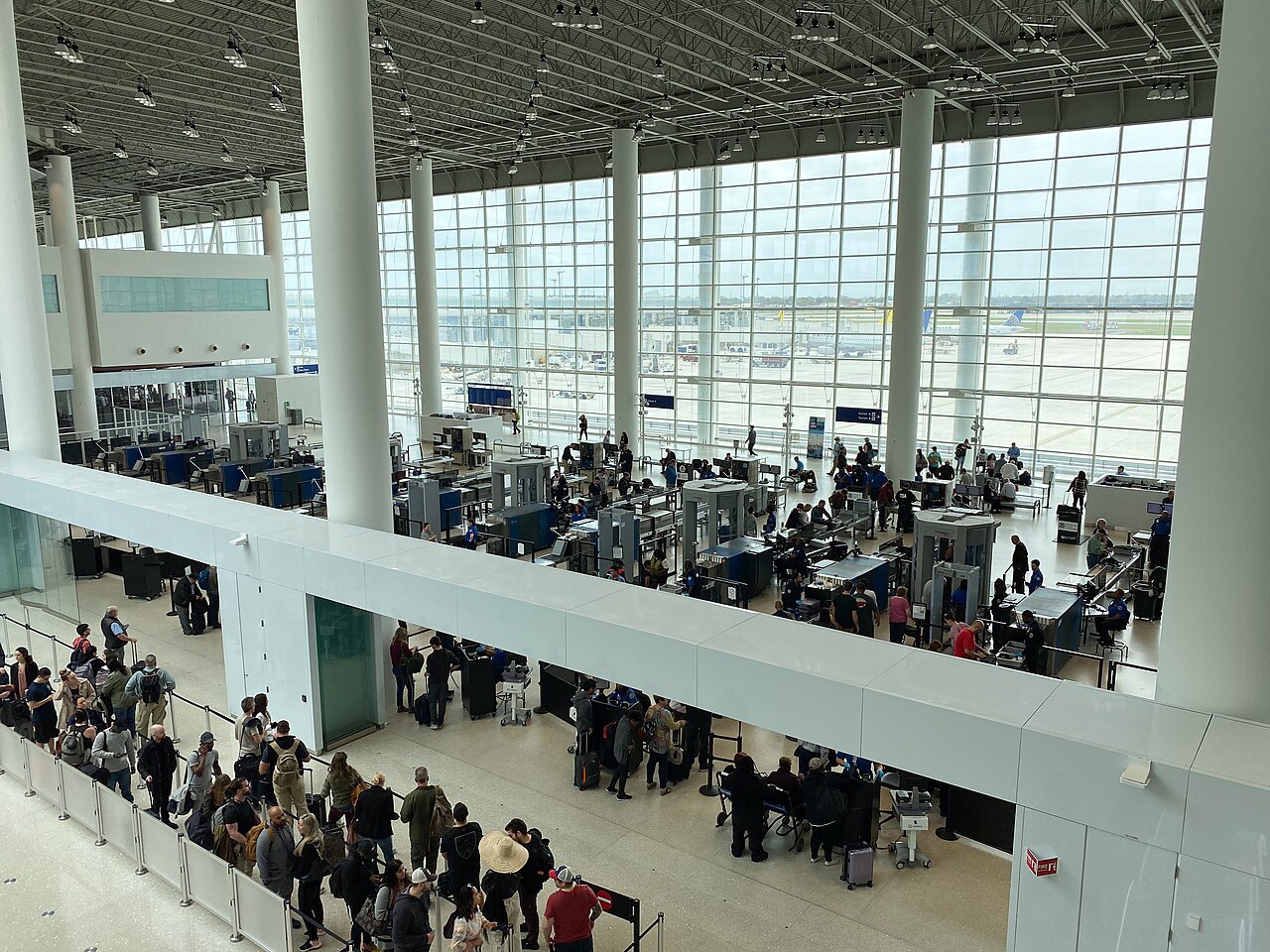
At New York's John F. Kennedy Airport, travelers shuffle through security lines as unpaid TSA officers walk off the job. Behind them stand armed ICE agents in plain clothes — not there to make arrests, but to manage the lines that Senate Democrats refused to fund for 40 days.
The shutdown has left 50,000 TSA screeners, who earn an average $45,000 salary, without paychecks since mid-February. Senate Democrats blocked five Department of Homeland Security funding votes in succession, even as ICE agents continued drawing salaries through a separate $75 billion appropriation.
"This pointless, reckless shutdown has caused more than 400 TSA officers to quit and thousands to call out from work because they cannot afford gas, childcare, food, or rent," DHS Acting Assistant Secretary Lauren Bis stated March 23.
Those numbers tell the human cost. Nationwide TSA callout rates hit 11.8 percent Sunday — the highest of the shutdown. Houston Hobby Airport recorded 51.5 percent absenteeism on March 21; JFK reached 29.5 percent. More than 400 officers have quit since Feb. 14, nearly half of them with over three years of aviation security experience walking out the door.
The crisis lays bare a bitter contradiction: Democrats who claim to champion working-class Americans directly caused their financial ruin. President Trump responded to that budgetary failure with operational resolve, deploying ICE to 13 major airports to keep security lines moving.
Senate Democrats filibustered DHS funding five times. Only Sen. John Fetterman voted yes among Democrats. Their conditions included ending "indiscriminate arrests," prohibiting agents from wearing masks, and requiring judicial warrants for home entries.
White House Border Czar Tom Homan laid out the deployment's logic plainly. "I don't see an ICE agent looking at an x-ray machine because you're not trained in that," Homan told reporters March 22. "But there are certain parts of security that TSA is doing that we can move them off those jobs."
ICE continues operations through the "One Big Beautiful Bill Act" passed last summer, which funds the agency at $75 billion through fiscal year 2029. That legislative reality creates a stark tableau: immigration agents paid and on post, airport screeners going hungry.
California Governor Gavin Newsom called the deployment "lawless." "By sending ICE into airports, Trump is proving the problem in real time: ICE has become the president's lawless, under-trained, personal police force," Newsom stated March 22.
Trump fired back on Truth Social that same day. "On Monday, ICE will be going to airports to help our wonderful TSA Agents who have stayed on the job despite the fact that the Radical Left Democrats are endangering the USA by holding back the money," the president wrote.
For the workers left behind, the stakes are unambiguous. "If I can't put food in my stomach, I can't keep a roof over my head," said TSA Head of Operations Robert Mack in San Diego. "The people I'm supposed to be taking care of are failing me."
Security experts warned the improvised solution carries its own risks. "ICE agents are not trained or certified in aviation security," said Everett Kelley, president of the American Federation of Government Employees. "TSA officers spend months learning to detect explosives, weapons, and threats specifically designed to evade detection at checkpoints."
On the ground, some TSA officers view the ICE presence with deep unease. "I have no idea how they can contribute at an airport unless it was for intimidation purposes," said TSA Lead Officer Aaron Vazquez. "I don't want them anywhere near the checkpoint."
Atlanta Mayor Andre Dickens moved to reassure travelers about the scope of the ICE role. "All federal personnel would report to TSA and be assigned tasks such as line management and crowd control," Dickens stated. "Federal officials indicated this deployment is not intended for immigration enforcement."
The shutdown began Feb. 13 when DHS funding lapsed. Transportation Secretary Sean Duffy warned the worst was still ahead. "These are going to be good days compared to what's happening next week," Duffy said. "I think you're going to see more TSA agents quit or not show up."
Twenty airports continue normal operations through the Screening Partnership Program, which employs private contractors in place of federal TSA officers — including San Francisco, Kansas City and Orlando Sanford.
Former DHS Secretary Jeh Johnson urged legislators to stop weaponizing worker pay. "Separate the two," Johnson said. "Go have the debate about masks, about judicial warrants versus administrative warrants. But decouple that from funding and paying the workforce."
Senate Republicans now report a potential breakthrough after meeting with Trump. "I'm more optimistic that by the end of the week, we will fund the Department of Homeland Security," said Appropriations Chair Susan Collins.
A deal may be close — but it arrives only after 40 days of needless chaos, hundreds of careers ended, and families pushed to the edge. Every day of delay was a choice. The workers who kept showing up, unpaid, made a different one.