Supreme Court to Decide If Election Day Means Election Day
The Supreme Court heard arguments today in a case that could void mail ballot grace periods in 14 states and D.C., potentially reshaping how millions of Americans vote in November's midterms.
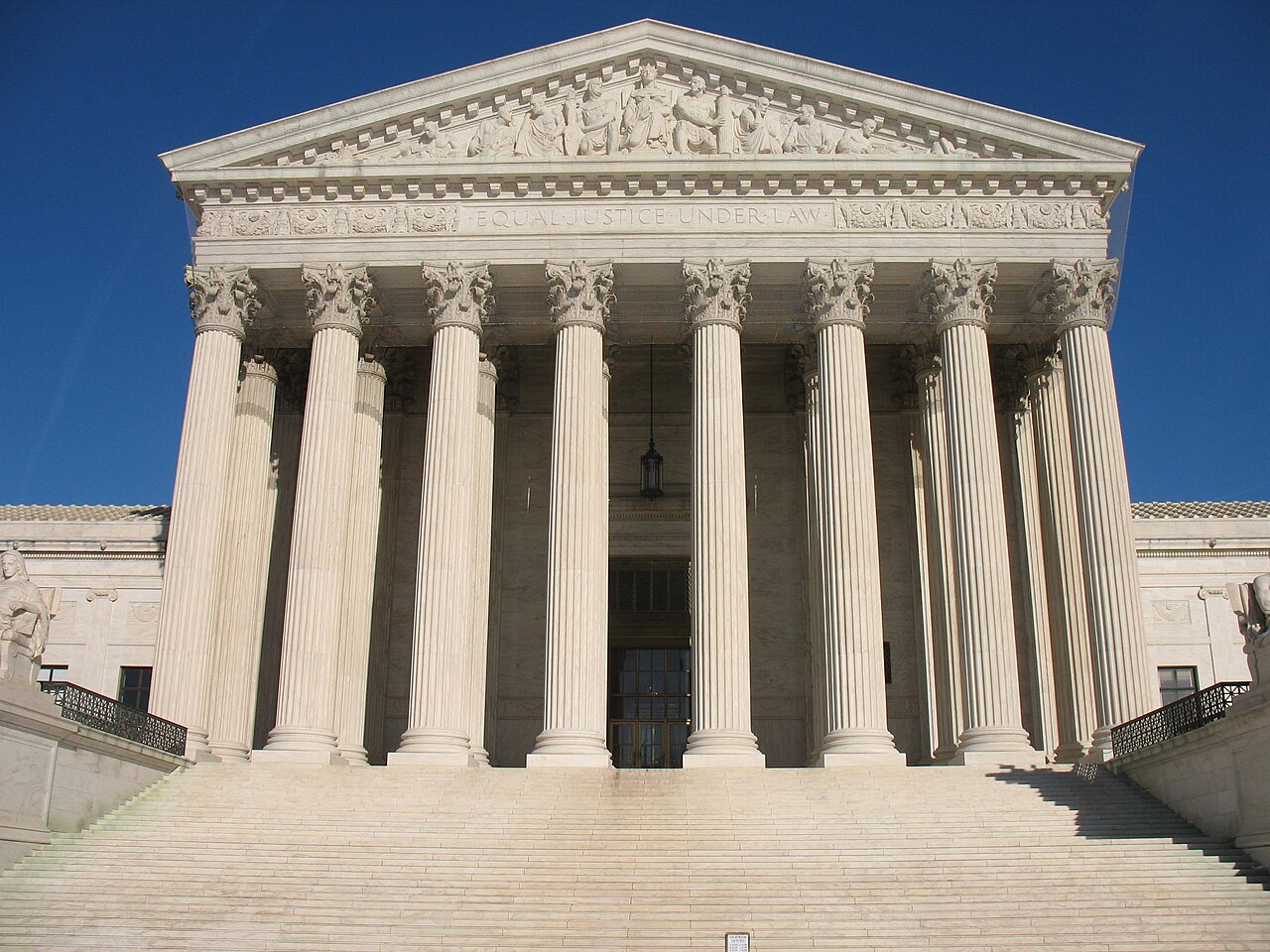
For millions of Americans, Election Day already passed when their mail ballots arrived. Today, the Supreme Court heard arguments that could make those votes disappear — and upend how the country runs elections by November.
The case asks nine justices to settle a question that sounds simple but cuts to the heart of American democracy: when Congress designated the Tuesday after the first Monday in November as Election Day — in 1845 and again in 1872 — did it mean ballots must arrive by that day, or does a timely postmark suffice? The federal statutes say ballots must be "cast" by Election Day. The Republican National Committee argues "casting" means both marking and physically delivering the ballot to election officials.
Mississippi Solicitor General Scott Stewart opened his state's defense by anchoring the argument in finality. "The question is whether Congress in 1845 blocked that practice. The answer is no. The Election Day statutes adopt a simple rule. States must make a final choice of officers by Election Day."
The Fifth Circuit Court of Appeals sided with the RNC last October, ruling that federal law requires ballots to be received by Election Day. "Congress established a 'singular' Election Day for members of Congress and presidential electors, 'by which ballots must be both cast by voters and received by state officials,'" Judge Andrew Oldham wrote for the panel. That ruling struck down Mississippi's five-day grace period — which allows mail ballots postmarked by Election Day to be counted if they arrive within five business days. Mississippi petitioned the Supreme Court, and the justices granted review on Nov. 10, 2025.
The numbers behind those grace periods are concrete. In 2024, Washington state counted 127,000 ballots that arrived after Election Day — 3 percent of all votes cast. California tallied 373,116 late-arriving ballots carrying valid postmarks, or 2.3 percent of the total. The percentages sound modest. In a close race, they are decisive.
Smaller states felt the same pull. Ohio counted 7,579 mail ballots received after Election Day in 2024, or 0.1 percent of votes. Kansas accepted 2,110 late ballots, 0.2 percent. Mississippi itself counted 1,140 ballots that arrived after Election Day with valid postmarks — ballots cast by real voters whose choices now hang on the Court's ruling.
For conservative groups, that drawn-out tally is itself the problem. "If you're watching ballots trickle in and margins shrink, and you're watching winners become losers and losers become winners after an election is over, then that invites skepticism, concerns about fraud, and ultimately, that's going to sap public confidence and deter people from voting," said Jason Snead, executive director of the Honest Elections Project. The RNC pressed the same point directly: "The Fifth Circuit rightly held that the 'day for the election' has a fixed meaning. It doesn't mean whatever each State wants it to mean. It means the day by which ballots must be 'received by state officials.'"
Mississippi Attorney General Lynn Fitch pushed back, arguing the federal statutes require only that ballots be marked and submitted by Election Day — not physically received. "An 'election' is the conclusive choice of an officer. The voters make that choice by casting — marking and submitting — their ballots. So federal law does not preempt Mississippi law." The competing definitions of a single word — "cast" — may determine the outcome for millions.
For election administrators, time is already the enemy. With the midterms less than eight months away, a ruling against grace periods would land in a compressed window. "We're aware of that potential but at this point there's not a concrete plan for adapting to the ruling," said Matt Dietrich, a spokesperson for the Illinois State Board of Elections. Katy Owens Hubler, elections program director at the National Conference of State Legislatures, put it plainly: "It's not ideal to do it in a big election year like this year. Voters do adapt, but if there is a change from a postmarked-by to a received-by date, that needs to be communicated and signaled well in advance."
Several states refused to wait for the Court's answer. Ohio, Kansas, North Dakota and Utah — all under Republican control — eliminated grace periods in 2025. Minnesota shortened its deadline from the close of polls on Election Day to 5 p.m. that day. On March 10, Mississippi lawmakers sent HB 908 to Gov. Tate Reeves; the bill would repeal the state's five-day grace period if the Supreme Court rules it unlawful. Legislatures are writing the ending before the Court has spoken.
Opponents warn the consequences would fall hardest on those least equipped to absorb them. "People are being stripped of their voting rights through no fault of their own," said Marc Elias, the Democratic elections attorney representing Vet Voices and the Alliance for Retired Americans. Elias and other voting rights advocates filed amicus briefs warning that abrupt changes would cause widespread voter disenfranchisement — a risk that "the risks of confusion and disenfranchisement" language in a brief filed by state and big-city election officials made explicit.
Military and overseas voters add a separate legal dimension. The Uniformed and Overseas Citizens Absentee Voting Act of 1986 already establishes extended timelines for those voters, independent of any state grace period. The Trump administration filed an amicus brief backing the RNC, with the Solicitor General asserting that "Election Day has meant the day the ballot box closes — and when election officials must be in receipt of all ballots." Conservative groups pressed the same logic further, arguing in statements cited by UPI: "The longer the period over which the election is conducted, the greater the opportunity for and risk of fraud."
Tom Fitton, president of Judicial Watch — which filed an amicus brief supporting the RNC — called the case "the most important Supreme Court election integrity case in a generation." Alaska's attorney general offered a ground-level reminder of why uniform rules strain against a country this large. "Alaska is different from the rest of the country," Attorney General Stephen Cox wrote. "With over 80 percent of Alaskan communities off the road system, and extreme weather making access by boat or plane unreliable during certain months, including November, Alaska's Division of Elections will continue to establish processes unlike any other State to ensure that its geography does not limit its citizens' ability to vote."
Washington state election director Stuart Holmes described the stakes in starker terms. If the Court rules a ballot invalid even when postmarked by Election Day, he said, "it might as well have never been received. There's no way to resolve that issue. There's no second chance."
The Supreme Court typically issues decisions by late June — leaving affected states roughly two months to overhaul procedures before November. About 30 percent of voters cast ballots by mail in 2024, meaning the ruling could reshape voting access for roughly one in three Americans.
The RNC framed the core of its argument in terms of memory and clarity: "Most Americans remember a time when results came quickly after election day. Each election cycle dims that memory as States experiment with novel ballot-handling rules." When the Court rules, it will answer a question that has shadowed every election since states began extending their deadlines — not just what the law permits, but what Election Day, at its most fundamental, actually means.