Europeans Committing Demographic Suicide as EU Migration Pact Looms
With the EU Migration Pact set to take force in June, European politicians and researchers are gathering to demand member states reclaim control over immigration before the deadline arrives.
A continent of "old rich people" staring down "young, hungry, and determined people" — that was Rodrigo Ballester's warning to a room of European politicians in Warsaw last February. Europe, he argued, is committing "demographic suicide," armed with migration tools too outdated and too timid for the crisis bearing down on it. The head of the Center for European Studies at Hungary's Mathias Corvinus Collegium delivered the provocation as Brussels prepared to enforce its most aggressive migration mechanism yet.
Ballester dismissed the 1951 Geneva Convention as a "sacred cow" Europe should discard entirely, arguing the century-old treaty has been drained of meaning. He spoke at an event organized by Poland's Ordo Iuris Institute, where policymakers gathered not to debate whether Europe's migration model is failing — but to chart a path away from it.
The stakes are immediate. The EU Migration Pact enters into force on June 12, 2026 — less than three months away — imposing a stark choice on every member state: accept mandatory migrant relocations or write a €420 million solidarity payment to Brussels. Hungary has already drawn its line in the sand, declaring it will not accept "a single migrant" under the relocation scheme, planting itself at the front of the resistance to centralized EU migration authority.
The blueprint for that resistance now exists on paper. The report "Taking Back Control from Brussels" outlines 18 ways member states can reclaim sovereignty over immigration policy. It emerged from a collaboration between the Mathias Corvinus Collegium, Hungary's Migration Research Institute, and Poland's Ordo Iuris Institute — premiering in Budapest in January before its Polish-language debut in Warsaw.
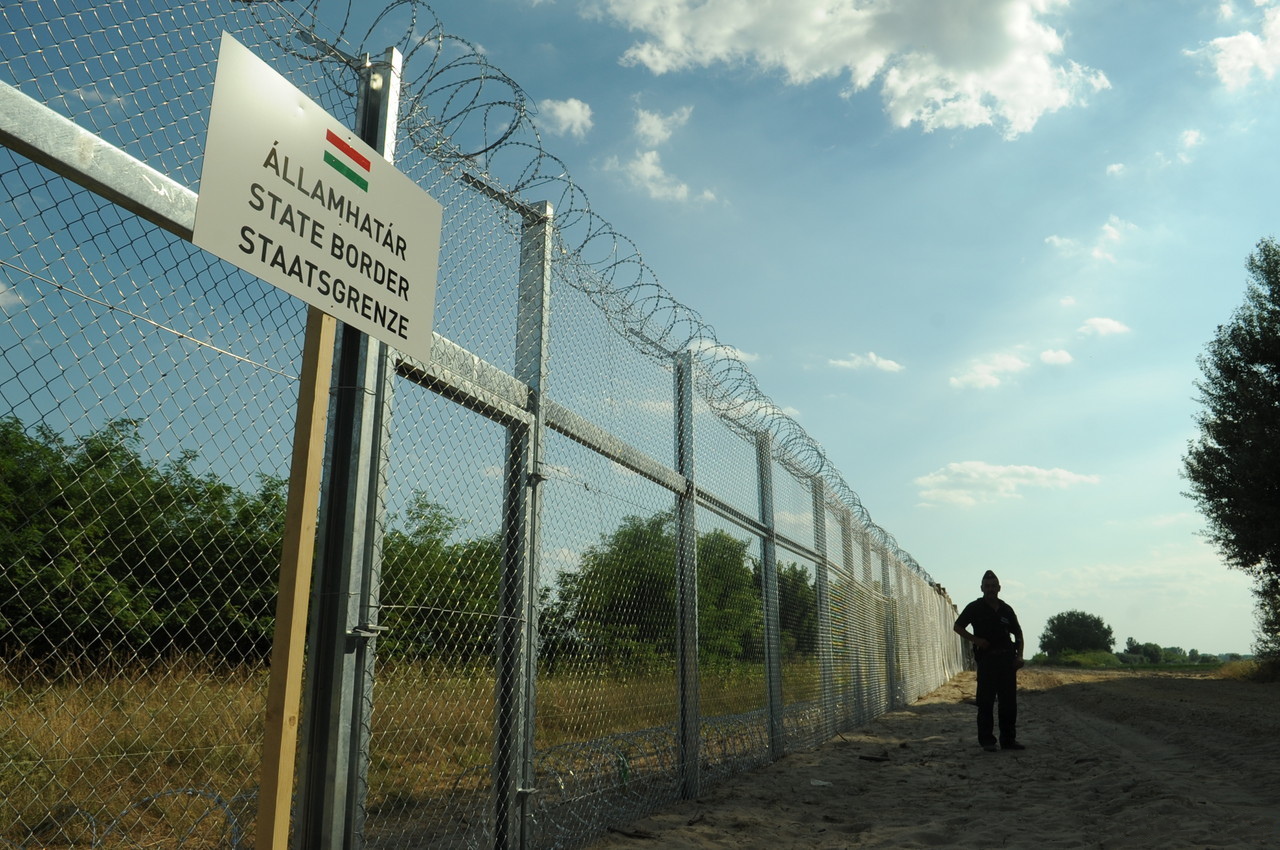
Hungary's defiance has already carried a price. In June 2024, the European Court of Justice fined Hungary €200 million in a lump sum over its border fence policy. Budapest paid it and held its position. The new report offers other member states a legal roadmap to follow Budapest's lead — and absorb whatever Brussels sends back.
The report's proposals are sweeping. They include abandoning the Geneva Convention, reconsidering the scope of the European Convention on Human Rights, and extending the Danish and Irish privilege to opt out from the migration acquis. Further recommendations call for limiting Schengen free movement to European citizens, prohibiting asylum applications from those who entered illegally, and banning EU funding to organizations that promote illegal migration.
Jacek Saryusz-Wolski, President Andrzej Duda's advisor for European affairs, put a sharper frame on the EU's conduct. He called Brussels' migration push a "great usurpation" — pointing out that migration policy falls outside the EU's exclusive or shared competencies, leaving Union institutions only the authority to assist, encourage, and advise member states, not to legislate over them.
Krzysztof Bosak, deputy speaker of the Sejm, pushed the argument further. Legal immigration, he argued, deserves scrutiny equal to the illegal kind — because Western Europe's demographic transformation was driven largely by large-scale legal migration first, with illegal flows following in its wake. The sequence, he suggested, matters as much as the numbers.
Bosak also flagged a subtler threat. He described Brussels' enforcement attention as an "Eye of Sauron" — noting that few of Poland's Border Guard decisions have faced serious EU challenge so far. That, he warned, could change the moment Brussels and Luxembourg shift their focus.
Professor Zdzisław Krasnodębski, a former MEP, grounded the demographic argument in a city-by-city contrast that needed no elaboration. He set Warsaw — transformed from a poor, predominantly white city into one of Europe's wealthiest urban centers — against Bremen, Germany, once a prosperous, middle-class city that has, in his words, become "almost a ruin" amid demographic change. Bremen's population is now 45.1 percent migrants or of migrant background; 73 percent of crime suspects recorded in 2024 were non-German.
The report's aggregate numbers sharpen that picture. Over the past decade, the EU received 8.5 million asylum seekers. Since 2014, 7.4 million people entered illegally. Only roughly 25 percent of rejected migrants were actually returned. The system, the authors argue, fails at every stage — intake, adjudication, and removal.
Balázs Orbán, chairman of the MCC Board and political director of Hungary's prime minister, offered no comfort about what comes next. "If the current trajectory continues, conditions will deteriorate further in the coming decades, placing an increasing burden on member states," he said.
June 12 is closing in. Whether more governments find the will to follow Budapest — or whether Brussels extracts compliance one fine at a time — will answer a question that reaches far beyond policy chambers: what kind of continent Europe's children will inherit.