Intelligence Chiefs Clash With Congress Over Iran's Nuclear Status
Two days of congressional testimony exposed sharp divisions over what Operation Epic Fury achieved against Iran's nuclear program — and left the most consequential questions unanswered.
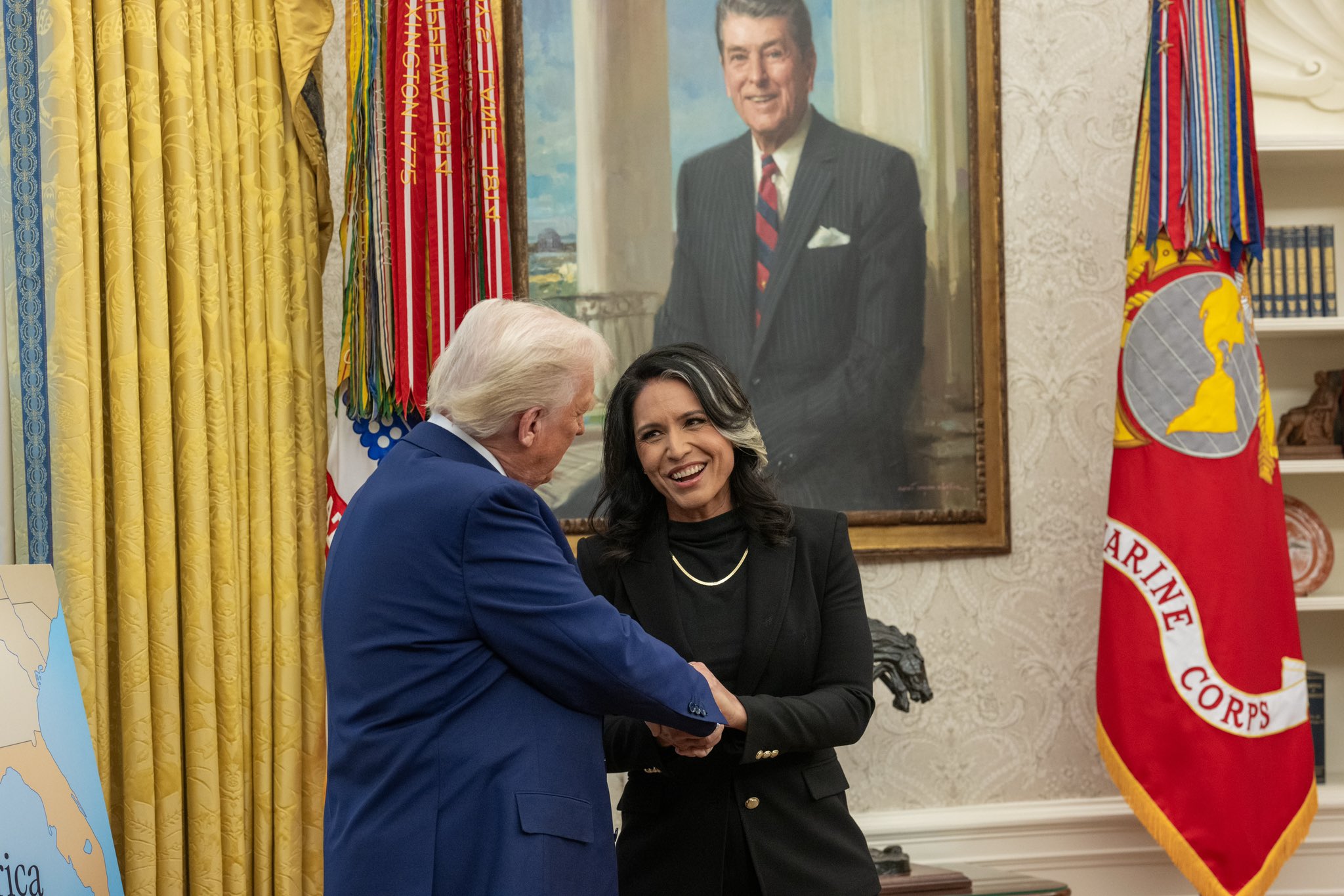
For more than 40 years, Iran pursued nuclear capability through revolutions, sanctions, covert sabotage campaigns and the assassinations of its top scientists — and kept going. That decades-long drive framed two days of congressional testimony this week as intelligence chiefs faced pointed questions about what Operation Epic Fury actually achieved.
The Senate Intelligence Committee's annual Worldwide Threats hearing on March 18 turned on a single question: what the operation accomplished and what comes next. In late February, the United States and Israel launched Operation Epic Fury against Iran following President Trump's assessment that Tehran posed an immediate threat. The strikes killed Supreme Leader Ayatollah Ali Khamenei and degraded Iran's leadership structure.
A sharp discrepancy emerged between what Director of National Intelligence Tulsi Gabbard wrote and what she said aloud. Her written testimony stated that U.S.-Israeli airstrikes on Iran's missile and nuclear sites had left "Iran's nuclear enrichment program obliterated." That language vanished entirely from her oral testimony before the committee.
Sen. Mark Warner, D-Va., pressed Gabbard on the omission. "So, you chose to omit the parts that contradict the president," Warner said, framing the discrepancy as a deliberate choice. The exchange cut to the hearing's central tension: whether the intelligence community was shaping its public message around White House positions.
Gabbard later told Sen. Jon Ossoff, D-Ga., that the intelligence community still assessed the enrichment program had been obliterated. Ossoff was unconvinced, accusing her of "evading the question, because to provide a candid response to the committee would contradict a statement from the White House."
When asked whether Iran posed an imminent nuclear threat, Gabbard declined to answer directly. "Senator, the only person who can determine what is and is not an imminent threat is the president," she said. "It is not the intelligence community's responsibility to determine what is and is not an imminent threat." CIA Director John Ratcliffe drew a sharper line. "I think Iran has been a constant threat to the United States for an extended period of time and posed an immediate threat at this time," he told the committee.
The hearings also examined how quickly Iran could rebuild its strike capability. Gabbard testified that Iran could develop "a militarily viable ICBM before 2035 should Tehran attempt to pursue that capability." Sen. Tom Cotton, R-Ark., pushed Ratcliffe further, asking whether Iran could field an ICBM capable of hitting the United States in as few as six months.
"If left unimpeded, yes, senator, they would have the ability to range missiles to the continental U.S.," Ratcliffe responded — stopping short of committing to a specific timeline.
The following day, the House Intelligence Committee hearing sharpened the partisan fault lines. Rep. Jim Himes, D-Conn., the committee's ranking member, stated he had seen "absolutely no evidence that there was an imminent threat of attack by Iran," adding that "not one of your agencies has produced a single report saying that Iran posed an imminent threat to the United States."
Himes' assessment reflects his access level and party position rather than a definitive intelligence finding. It sits in direct tension with pre-operation warnings from the International Atomic Energy Agency, whose director-general cautioned before the strikes that Iran was "pressing the gas pedal" by accelerating enrichment to near weapons-grade levels.
Gabbard testified that the Iranian regime "appears to be intact but largely degraded by Operation Epic Fury," and warned that Iran and its proxies retain the capacity to strike U.S. and allied interests across the Middle East.
She also confirmed that before Operation Epic Fury, the intelligence community assessed Iran was working to recover from severe damage to its nuclear infrastructure sustained during a 12-day war in June 2025 — and that Tehran had continued to deny IAEA inspectors access to key facilities.
The hearings surfaced more process questions than strategic answers. Gabbard declined to confirm whether Trump was briefed that Iran might close the Strait of Hormuz; Ratcliffe confirmed he had been. Both declined to say whether intelligence officials assessed Iran intended a preemptive strike on the United States.
The location of Iran's enriched uranium remains classified. Gabbard said the intelligence community holds "high confidence" about where it is stored — but will only say so behind closed doors.
What ordinary Americans are left with is a portrait of a conflict whose full picture remains deliberately obscured: a war fought in their name, its consequences still unfolding, its most critical details locked inside rooms they cannot enter.