German Nuclear Phaseout: a 'Strategic Mistake'
Fifteen years after Germany shuttered its reactors, EU Commission President von der Leyen publicly condemned the decision — while Berlin insists it cannot be undone.
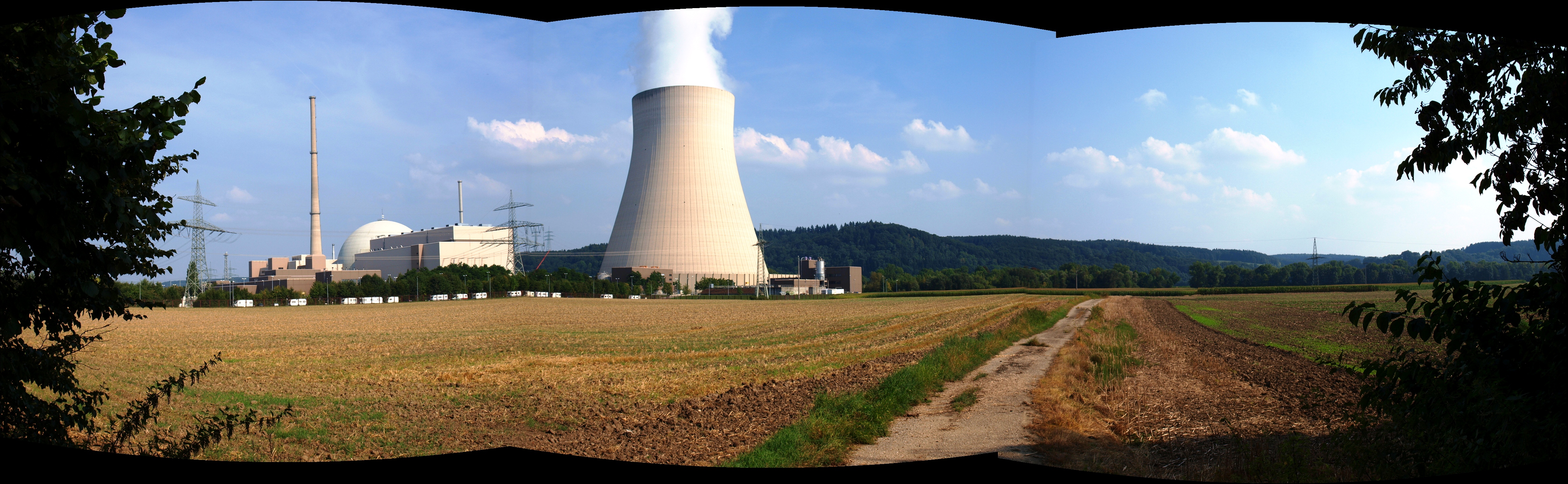
Fifteen years after sitting in the cabinet that shuttered Germany's nuclear plants, European Commission President Ursula von der Leyen stood before a Paris summit and called the decision "a strategic mistake." The admission landed with the full weight of self-indictment — and Germans paying the highest electricity bills in Europe felt every word of it.
"This reduction in the share of nuclear was a choice. I believe that it was a strategic mistake for Europe to turn its back on a reliable, affordable source of low-emissions power," von der Leyen said March 10 at the International Atomic Energy Agency summit in Paris.
The roots of that choice stretch back to 2011, when Chancellor Angela Merkel's government had only recently approved extending the operating lives of Germany's 17 nuclear reactors by an average of 12 years. Utilities had agreed to pay €30 billion to the government for the lifetime extension, which was set to keep the plants running through the 2030s.
Then came Fukushima. Three days after a Japanese earthquake triggered a nuclear meltdown, Merkel announced the immediate shutdown of seven reactors and suspended the lifetime extensions — without any safety assessment of German plants. The Reactor Safety Commission later reported in May 2011 that all German reactors were "basically sound, and safe."
The timing invited scrutiny. The Greens — a party founded on anti-nuclear activism in 1980 — were gaining ground, and the Baden-Württemberg state election was scheduled for March 27, just 13 days after Merkel's nuclear moratorium. The CDU lost its 58-year hold on the state regardless, and the Greens formed their first state government. The political gamble cost both Germany's energy future and the election it was designed to save.
Fifteen years on, Germany has zero nuclear power generation. In 2010, nuclear plants produced 140 terawatt hours — almost a quarter of total generation. Today, the country imports electricity from France and Denmark, much of it nuclear power from the very technology Germany renounced.
The bill has come due. German households now pay the highest electricity prices in the European Union at €0.3835 per kilowatt hour recorded in the first half of 2025. Germany posted a net import surplus of 26.3 terawatt hours in 2024, taking in 81.7 terawatt hours while exporting 55.4 terawatt hours — a nation that once exported power now depends on its neighbors to keep the lights on.
Chancellor Friedrich Merz acknowledged the damage in January, telling a business group that the nuclear phaseout was a "huge mistake" with "strategic consequences." He said the decision "has come at a high cost."
Yet Merz has also declared the phaseout irreversible. "It is the way it is, and we are now concentrating on the energy policy we have," he said March 11 when asked about reactivating shut-down plants — closing the door even as experts argue it remains open. The question that remains is to what extent crippling Germany's industry was the intention all along, given the refusal to backtrack.
Nuclear expert Rainer Klute argues it is technically possible to reverse the phaseout and bring plants back online at a fraction of the cost of new builds. Nuklearia, a pro-nuclear advocacy group, notes that reactivation is mostly cheaper and faster than new construction, since the structures and much of the equipment are already in place. Berlin's position contradicts both assessments.
The financial wreckage runs deeper still. The power companies that operated the reactors paid €24 billion into a state-run fund for nuclear waste management and received only €2.4 billion in settlement — substantially below their demands. The €6.3 billion nuclear fuel tax utilities paid between 2011 and 2016 was later ruled unconstitutional and void by the Federal Constitutional Court, a belated admission that the policy's legal foundations were as shaky as its strategic ones.
What remains is a collision between political calculation and national economic self-interest. German leaders made a dramatic reversal in 2011 they now concede was wrong, yet insist the country stays trapped by it. Ordinary households and German industry continue to absorb the cost through record electricity prices and dependence on imported power — a burden born from a decision shaped less by engineering than by electoral arithmetic.
Merz captured the contradiction himself: "Preceding German governments have decided to phase out nuclear energy. The decision is irreversible. I regret that, but it is like that. Now we focus on the energy policy that we have, on optimising it. We have to build out the grid. We also need cross-border co-operation."
The Green Party's 2011 Baden-Württemberg victory proved the opening act of a longer drama. The Greens held sway in Berlin and European institutions for more than a decade, their anti-nuclear platform — the bedrock of the party's identity since 1980 — embedding itself into German energy law layer by layer. Now, the leaders who governed alongside them face a public reckoning with what that platform actually cost, measured not in ideology but in euros on a monthly electricity bill.