Germany's Political Order Shatters as AfD Ties CDU in National Polls
Germany's conservative AfD party ties Chancellor Merz's CDU in national polls while the Social Democrats collapse, signaling a fundamental political realignment driven by working-class voter defections.
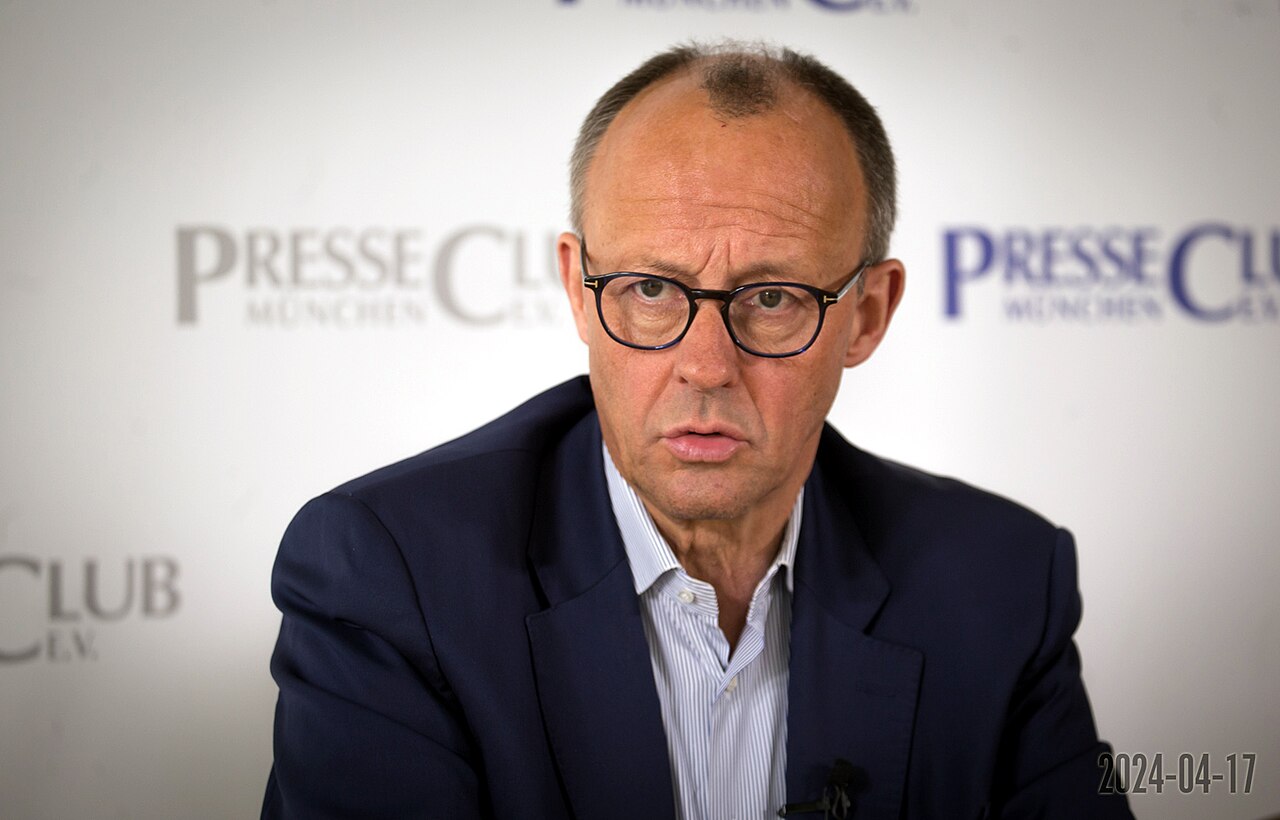
Germany's conservative Alternative for Germany party tied Chancellor Friedrich Merz's ruling CDU at 26 percent in national polling released March 29, while the Social Democratic Party collapsed to just 13 percent support. Working families across the nation are abandoning their traditional political home, and the consequences reverberate through Berlin's chancellery. The Forschungsgruppe Wahlen survey marks the first time since early May that an opposition party outside government has matched the ruling party's support, signaling a fundamental realignment of German politics.
Just one week earlier, AfD scored its strongest-ever western German result with 19.5 percent in Rhineland-Palatinate's March 22 state election. The 11.2-point surge saw the SPD lose control of the state it had governed for 35 years, leaving voters to wonder what went wrong. "Whether in Baden-Württemberg or in the Rhineland: Nobody needs the SPD," declared AfD parliamentarian Sebastian Münzenmaier. "The party of the workers is AfD."
The party now leads among voters under 25 in the western state and attracted 37 percent of working-class support in Baden-Württemberg's March 8 election. There, the SPD suffered its worst postwar result at just 5.5 percent as families struggling with costs turned elsewhere for representation.
Chancellor Merz responded to the electoral earthquake by calling for his coalition to "get everything moving together now" in a March 23 statement. Yet the Christian Democrat leader faces record-low approval ratings himself, with just 32 percent satisfaction and 64 percent dissatisfaction in the Forsa poll that showed his party tied with AfD. Voters who elected him ten months ago now question whether his solutions address their daily struggles.
Within the SPD, 71 percent of respondents in Infratest dimap's analysis agree the party "no longer clearly stands on the side of workers." Co-leaders Lars Klingbeil and Bärbel Bas rejected resignation calls following the state election disasters, with Klingbeil insisting after the March 22 results that "we will not plunge the second-largest governing party into chaos." But workers who once trusted the Social Democrats now see a different path forward.
The ruling coalition's desperation became evident March 26 when it passed a sweeping asylum overhaul with stricter migration measures, including faster deportations and extended detention powers. The reforms aligned with some AfD policy priorities, signaling that Berlin finally recognizes the urgency driving voters to the right.
Now AfD eyes an unprecedented breakthrough: the party's Saxony-Anhalt leader Martin Reichardt stated March 25 that "current polls show a historic chance for our State." With AfD polling at 38 percent in the eastern state according to an INSA survey, Reichardt claims "an AfD State government is a realistic scenario" in September's election if smaller parties fail to clear the 5 percent threshold.
That would mark Germany's first AfD-led state administration, potentially giving the party control over police, education, and cultural policy in Saxony-Anhalt. The September 6 vote stands as a critical test of whether Germany's political establishment can contain what University of Hohenheim researcher Frank Brettschneider calls "the concerns that exist among the working class."
The CDU-SPD coalition formed just ten months ago now faces internal pressure as families across Germany grapple with economic uncertainty. Merz himself acknowledged the crisis March 23, stating "We must now, above all, make policy for the working population" while noting "the costs are simply too high: labour costs, the cost of living, the costs and burdens of bureaucracy."
Yet the SPD's Klingbeil rejected economic liberalism as a solution, arguing March 27 that "anyone who thinks that reducing the welfare state will lead to more economic growth: Those concepts failed in the 1990s." Such dismissals of market-based approaches ring hollow to voters watching prices rise and wages stagnate.
The political deadlock leaves AfD positioned to capitalize on what Tino Chrupalla, the party's co-chairman, declared when he called AfD "the winners of the evening" after its Baden-Württemberg breakthrough.
With September's Saxony-Anhalt election approaching alongside votes in Mecklenburg-Western Pomerania and Berlin, Germany's political center faces extinction. The SPD's collapse to single digits in western strongholds and AfD's emergence as the leading voice for working-class discontent represent not merely electoral shifts but the logical consequence of decades where mainstream parties ignored immigration-driven economic pressure and wage stagnation.
As 71 percent of respondents in a Rhineland-Palatinate survey view the SPD as disconnected from workers' interests, AfD's rise completes a realignment seen across Western democracies. The party's appeal rests not on extremism but on authenticity—a quality mainstream parties lost as they prioritized elite consensus over voter concerns.