Supreme Court Set to End Late Mail Ballots
The Supreme Court's conservative majority signals readiness to strike down state laws allowing mail-in ballots to arrive after Election Day, potentially reshaping November's midterm elections.
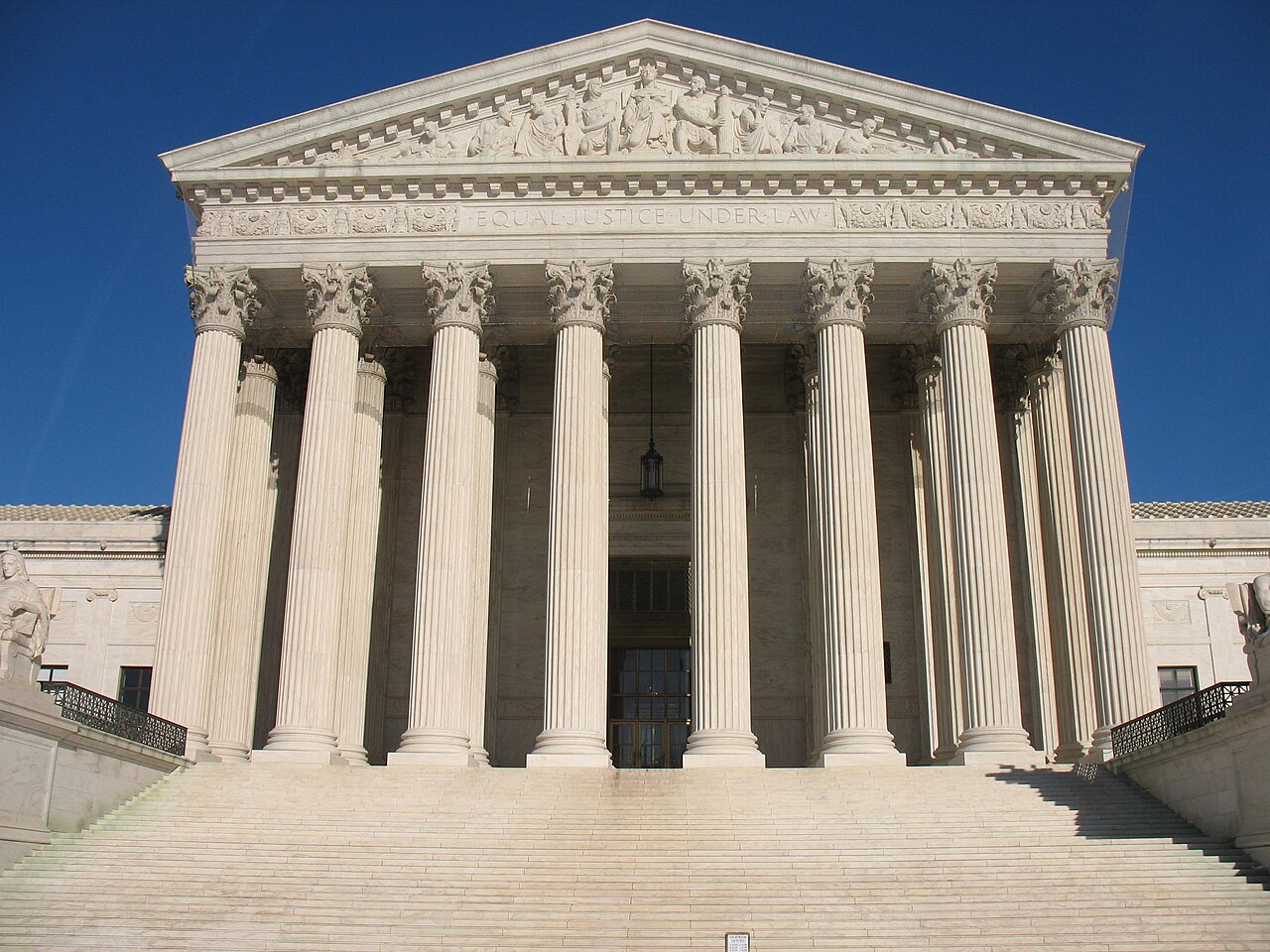
On Election Day 2024, millions of Americans thought their votes were counted — but thousands more sat in mailrooms, their ballots destined to flip key race outcomes days later. Now the Supreme Court's conservative majority appears ready to restore a foundational American principle: elections end on Election Day.
The justices signaled during March 23 oral arguments they will strike down state laws allowing mail-in ballots to arrive after Election Day, potentially invalidating grace periods in 14 states and Washington, D.C. At least 725,000 ballots postmarked by Election Day arrived within legally accepted post-election windows in 2024.
Federal law since 1845 designates "the Tuesday after the first Monday in November" as Election Day. Yet states like California, Washington, and Oregon allow ballots postmarked by Election Day to arrive up to 21 days later and still be counted. The case Watson v. RNC, an appeal from Mississippi, asks the court to force all ballots to arrive by polls closing.
"We don't have Election Day anymore. We have election month, or we have election months," Justice Samuel Alito declared during arguments. Justice Brett Kavanaugh raised concerns about election integrity, citing New York University law professor Richard Pildes' warning that "charges of a rigged election could explode" if late ballots flip election results.
The scale of potentially affected votes is massive. California counted more than 406,000 late-arriving ballots in 2024, representing 2.5 percent of total votes cast. Washington state processed 127,000 ballots after Election Day, and Whatcom County alone received 3,940 ballots during its grace period. Justice Neil Gorsuch captured the core concern, stating bluntly: "FedEx isn't an election official."
House Speaker Mike Johnson described watching three Republican House candidates in California who led on Election Day only to see their advantages disappear as late ballots were counted. "Every time a new tranche of ballots came in, they just magically whittled away until their leads were lost," Johnson told reporters. "It looks on its face to be fraudulent."
Mississippi Solicitor General Scott Stewart conceded during arguments that challengers have "not cited a single example of fraud from post-Election Day ballot receipts." But he maintained that the appearance of delayed election flips undermines public confidence, a point echoed by several conservative justices.
Several conservative justices expressed concern that confidence in election outcomes can be seriously undermined if the apparent outcome of the election on the day after the polls close is radically flipped by the acceptance of a big stash of ballots.
Election officials in affected states are scrambling to prepare for a June ruling that would force immediate changes before November's midterms. Nevada Secretary of State Francisco Aguilar immediately called staff after oral arguments to plan for new rules. Oregon Secretary of State Tobias Read is already updating voter guidance to mail ballots at least seven days before Election Day.
"If the ruling is that a ballot is invalid even if it's postmarked by Election Day, 'it might as well have never been received,'" said Stuart Holmes, Washington's director of elections. "There's no way to resolve that issue. There's no second chance."
The Fifth Circuit Court of Appeals ruled unanimously for challengers in October 2024, with three Trump-appointed judges finding federal law requires ballots be received by Election Day. That decision created the split with other circuits that prompted Supreme Court review.
Liberal justices defended state discretion over election procedures during arguments. Justice Sonia Sotomayor stated that the entities that should decide this issue are the states and Congress, not the courts. Justice Elena Kagan questioned whether the challengers' position would also invalidate early voting, which 47 states currently use.
But conservative justices focused on the core question of what "Election Day" means. Chief Justice John Roberts suggested a straightforward interpretation: "If Election Day is the voting and taking, then it has to be that day."
The political stakes are immense for November's midterms. The Republican National Committee frames the case as restoring election integrity. "Watson v. RNC is about a simple principle: ballots must be received by Election Day," said RNC Communications Director Ally Triolo. "This prevents elections from dragging on for days and weeks after voters have cast their ballots, causing confusion and undermining our elections."
California election officials defended their procedures as transparent and non-partisan. "I invite Speaker Johnson to visit my office to observe how elections are actually conducted in California," said Mel Levey, Merced County registrar of voters. "There is nothing 'magical' about it. Just a lot of hard work and long days from non-partisan election officials."
A June ruling would give states time to adjust before November's elections. But if the court delays its decision, the Purcell principle — which discourages courts from changing election rules too close to an election — could lock in current grace periods for 2026, creating uncertainty for millions of voters.
The case represents the latest battle in a broader conservative push for election security measures. The House passed the SAVE America Act on February 11, which would require proof of citizenship to register and photo ID to vote. President Trump issued an executive order in 2025 seeking to require ballots be "cast and received" by Election Day, though courts have largely blocked its implementation.
As states await the ruling, election officials emphasize the practical challenges. Washington has a grace period of 21 days, the longest in the nation. Oregon's system, established in 1998, has counted votes securely for nearly three decades.
But for the Supreme Court's conservative majority, the principle appears clear. Justice Clarence Thomas challenged the idea that states can extend voting beyond the federally designated day, while Alito questioned whether allowing late ballots creates "difficult line-drawing problems" about when elections truly end.
The decision expected by June will either reaffirm state flexibility in administering elections or impose a uniform national standard ending all ballot counting when polls close. For voters in 14 states, it will determine whether their mailed ballots must beat postal delays or risk being discarded entirely.