Rubio Testifies Against Former Friend in Maduro Lobbying Trial
Secretary of State Marco Rubio testified against former ally David Rivera in a historic trial involving alleged $50 million influence campaign for Venezuela's communist regime.
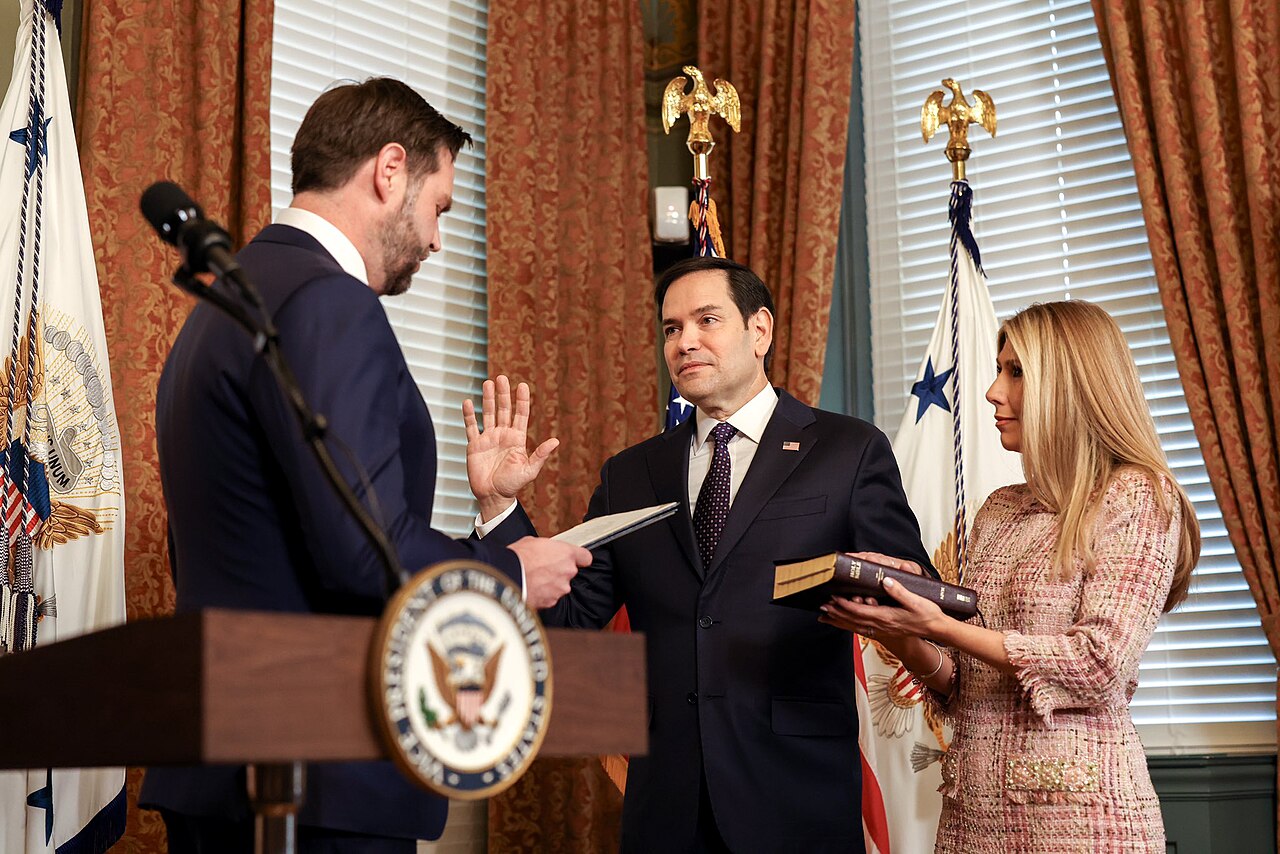
When Secretary of State Marco Rubio walked into a Miami federal courtroom this week, he didn't come to defend a friend — he came to dismantle him. Rubio testified for nearly three hours against former Florida congressman David Rivera, marking the first time a sitting Cabinet member has appeared in a criminal trial since 1983.
Rivera faces charges including conspiracy, Foreign Agents Registration Act violations, money laundering, and tax evasion. Prosecutors allege he orchestrated a $50 million secret influence campaign for Venezuela's communist dictator Nicolás Maduro. "This case is about two things: greed and betrayal," Assistant U.S. Attorney Roger Cruz told jurors in his March 23 opening statement.
Prosecutors say Rivera diverted $13.1 million to known regime allies, including $5 million to convicted Cali cartel cocaine trafficker Hugo Perera and $3.75 million to sanctioned Venezuelan media mogul Raúl Gorrín.
Rivera and his co-defendant, political consultant Esther Nuhfer, used encrypted messaging with code words to conceal their activities. Their "MIA" chat group referred to Maduro as "bus driver," millions of dollars as "melons," and former Vice President Delcy Rodríguez as "The Lady in Red." Jeffrey Gilday from the Justice Department's Foreign Agents Registration Unit testified that Rivera never submitted required disclosure paperwork.
Rubio's testimony revealed the personal betrayal at the heart of the case. The secretary of state and Rivera served together in the Florida Legislature for six years, shared a Tallahassee house, and considered themselves close allies. "I would've been shocked had I known," Rubio testified March 24. "I have no such knowledge other than what is in the press and what is in the indictment."
Rivera met with Rubio on July 9, 2017, claiming he was working with Gorrín on a plan for Maduro to step aside. Two days later, Rivera texted Rubio: "Remember, U.S. should facilitate, not just support, a negotiated solution. No vengeance, reconciliation." Rubio now dismisses those overtures. "It was a total waste of my time," he testified. "I was frankly angry. It just didn't make any sense."
The prosecution presented evidence contradicting Rivera's claim of working against Maduro. In April 2018, Rivera and Texas Rep. Pete Sessions met with Maduro in Caracas, where Sessions agreed to deliver a letter from the dictator to President Trump. Prosecutors say this shows Rivera's true objective: normalizing relations between Washington and Caracas while Maduro remained in power.
Rivera's defense hinges on a legal technicality. His attorney, Ed Shohat, argues the contract was with PDV USA, not the Venezuelan government, making it commercial work exempt from FARA requirements. "This is like a murder case without a murder, a drugs case without drugs, a kidnapping case without a kidnapping," Shohat told jurors March 24. "Nothing happened. Not one single policy of the U.S. was impacted by this case."
The broader implications reveal a dangerous pattern. Authoritarian regimes increasingly exploit legal loopholes to deploy U.S. political insiders as influence agents. While Rivera claimed he aimed to lure ExxonMobil back to Venezuela, prosecutors say his actual mission was softening Trump administration sanctions against Maduro's regime.
The case gains particular relevance as Venezuela's acting president, Delcy Rodríguez — who prosecutors say authorized the $50 million contract — now leads her country's cooperation with Washington. U.S. forces captured Maduro on January 3, and Rodríguez assumed power under Article 233 of Venezuela's constitution. Her government has since released political prisoners and pursued energy partnerships with American companies.
Defense attorneys sought to subpoena Trump Chief of Staff Susie Wiles, who previously worked with Gorrín on his U.S. media expansion efforts, but the request was denied. The prosecution's cooperating witness, Hugo Perera, has not yet testified but is expected to detail the scheme's inner workings.
Rivera and Nuhfer face maximum penalties of 5 years for FARA violations and 20 years for money laundering conspiracy. Their trial continues as U.S. institutions confront the persistent threat of unregistered foreign influence operations — and the friends who betrayed them.