Spain Unveils HODIO Tool to Rank Social Media on Hate Speech
Spain launches HODIO, a government tool that will publicly rank major social media platforms on hate speech handling, with semi-annual reports grading Instagram, TikTok, X, YouTube and Facebook.
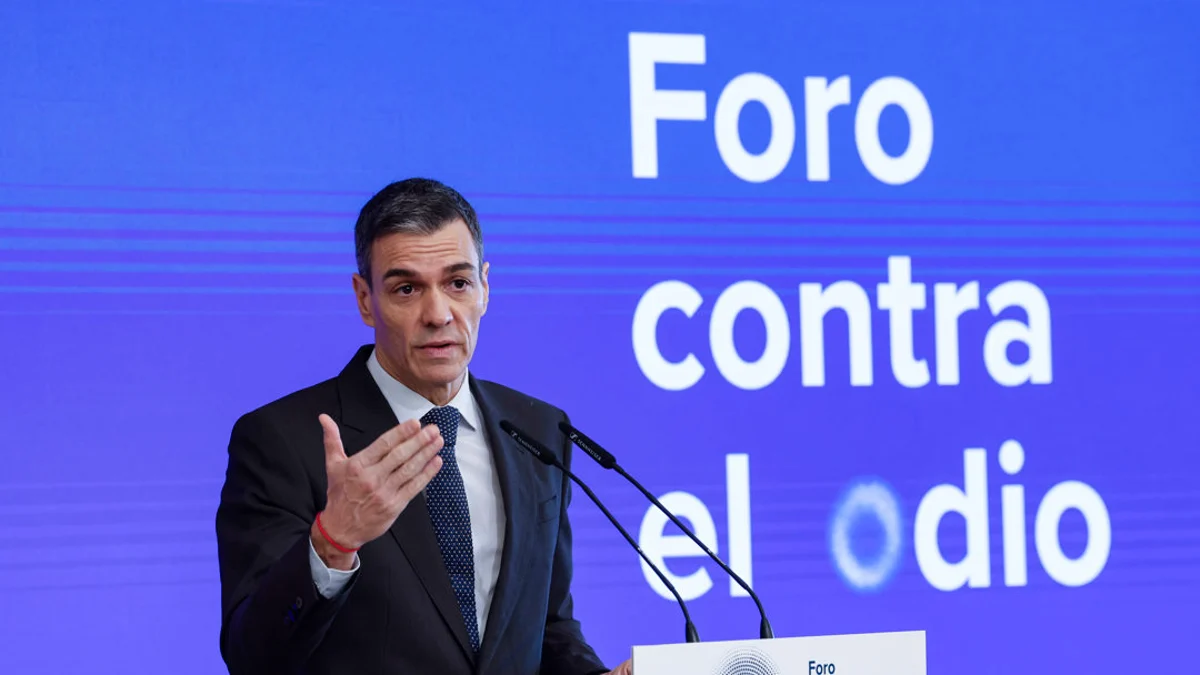
Spanish Prime Minister Pedro Sánchez unveiled a government tool Wednesday that will publicly rank the main social media platforms in Spain on their handling of hate speech — turning platform moderation into an official report card.
Sánchez introduced HODIO, short for "Huella del Odio y la Polarización" or "Footprint of Hatred and Polarisation," at the first International Summit against Hate and Digital Harassment in Madrid. The tool will produce semi-annual reports grading Instagram, TikTok, X, YouTube and Facebook based on recognised academic criteria measuring hate speech presence, amplification and impact.
The government plans to make the rankings public to reveal who is blocking harmful content, who is looking the other way and who is profiting from it, according to Sánchez. The Observatory of Racism and Xenophobia, OBERAXE, under the Ministry of Inclusion, Social Security and Migration, will operate the tool.
"If hate is already dangerous, social networks have turned it into a weapon of mass polarisation that ends up seeping into everyday life," Sánchez told the summit. He compared the initiative to measuring carbon emissions, saying the government wants to start talking about the footprint of hatred.
The announcement comes amid a 41 percent rise in hate crimes in Spain over the last decade, according to the prime minister. Sánchez also claimed that X saw a 50 percent increase in hate speech after Elon Musk's acquisition of the platform.
Data from OBERAXE showed the government identified more than 845,000 hate speech contents in 2025, averaging more than 1,300 per day in the fourth quarter. The ministry reported that platform removal rates increased from 22 percent to 51 percent overall during that period.
HODIO joins a string of regulatory measures the Spanish government has deployed against social media platforms in recent months. In February, Sánchez announced a proposed ban on social media access for minors under 16 and changes to make platform executives face criminal liability for failing to remove illegal or hateful content.
The government also announced a criminal investigation into X, Meta and TikTok for the distribution of child pornography via AI-generated content through their platforms.
The European Commission has warned Spain not to impose conditions on platforms beyond the EU's Digital Services Act framework.
Opposition parties immediately challenged the government's initiative. Alberto Núñez Feijóó, leader of the conservative People's Party, said Sánchez was lecturing on a subject he does not master: hate.
"He wants to give lessons on peace who does not practice it even in his own homeland," Núñez Feijóó said.
Santiago Abascal, leader of the conservative Vox party, accused the government of trying to censor young people.
Tech companies offered varied responses. Meta said it has strict policies against hateful conduct, incitement of violence and harassment. Google noted that YouTube takes its responsibility in this area very seriously, balancing freedom of expression with robust safety measures.
X closed its official response channels to the media, so no comment was obtained.
Pavel Durov, founder of Telegram, sent a mass alert to more than 10 million Spanish users denouncing the government's attempt to establish a surveillance state and censorship.
The regulatory offensive has also sparked a dramatic public exchange between Sánchez and Musk. The Tesla CEO called Sánchez a tyrant, a traitor to the people of Spain and a true fascist totalitarian. Sánchez responded by telling the techno-oligarchs to bark.
Critical questions remain about how HODIO will operate in practice. The tool has not disclosed technical details about its algorithms, data collection methods or AI implementation. It remains unclear whether the tool will scrape public content, use platform APIs or rely on user reports.
The specific criteria defining hate speech for the tool also remain unspecified. The composition of the expert panel conducting reviews and their qualifications have not been disclosed. No information exists on how platforms or users can challenge HODIO's determinations.
Concerns about political independence arise given the tool operates through a ministry under the ruling party. The Electronic Frontier Foundation, Access Now and ARTICLE 19 have not issued statements on the initiative.
The government claims the objective is clear: to bring hatred out of the shadows, make it visible and hold accountable those who do not act. Whether courts will uphold Spain's expanding authority over digital platforms remains to be seen.