Pentagon Defies Congress on Bioweapons Link to Lyme Disease
The Pentagon has refused to investigate whether Cold War tick weaponization programs contributed to America's Lyme disease epidemic, despite congressional mandates and new evidence from a biochemist who pioneered mRNA technology.
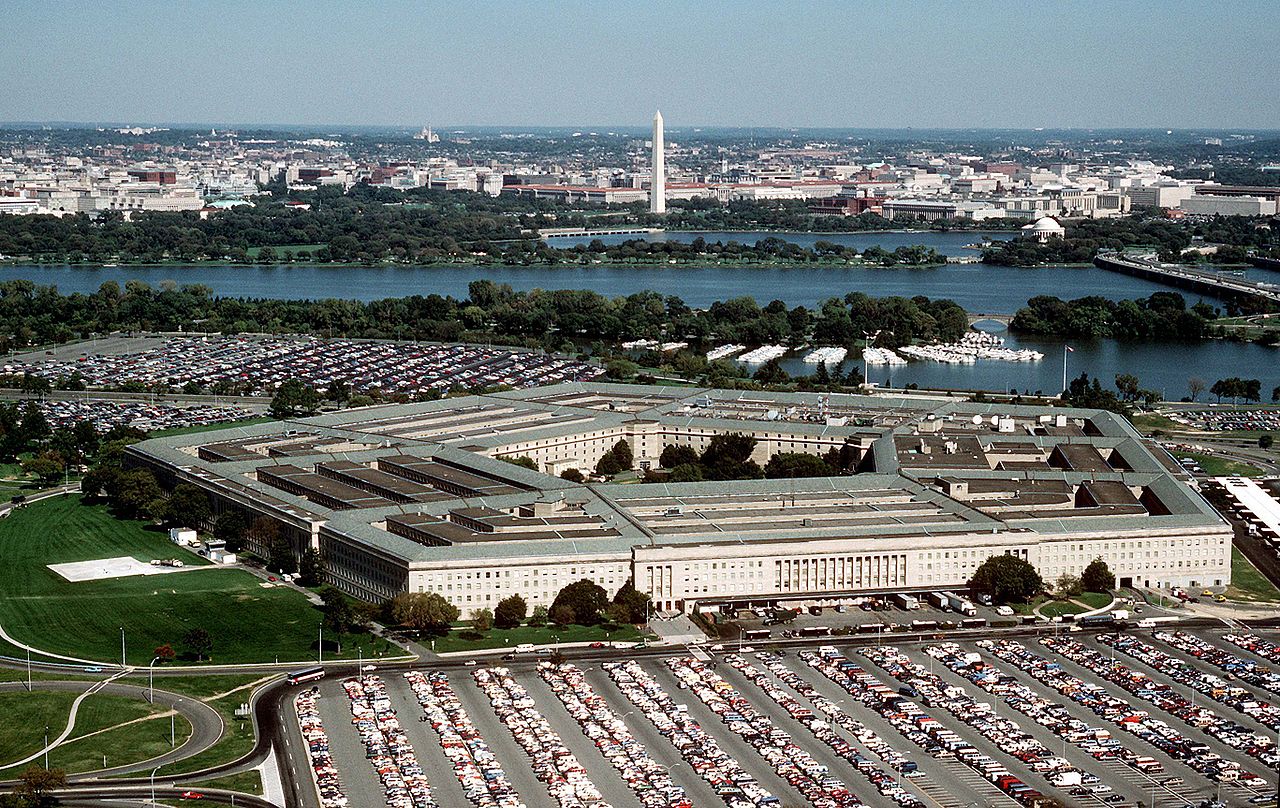
Hundreds of thousands of Americans contract Lyme disease each year, battling a debilitating illness that has no clear origin story. Now, declassified documents and new research point to a disturbing possibility: the Pentagon's own biological weapons programs may have seeded the epidemic.
The Defense Department has refused to conduct a Pentagon-led investigation into Cold War tick weaponization experiments. Congress demanded answers years ago and received silence.
The pattern of institutional concealment spans six decades. Project 112, a bioweapons testing program described as "almost as large and secretive as the Manhattan Project," remained officially denied until CBS News forced acknowledgment in 2000. The Pentagon then admitted that 6,000 servicemembers were exposed to real biological agents without informed consent during 134 scheduled tests from 1962 to 1973.
Now Dr. Robert Malone, the biochemist who pioneered mRNA vaccine technology, argues those same programs materially contributed to the Lyme disease epidemic. His March 2026 investigation cites 41 primary sources and assigns a 45 percent probability to laboratory enhancement of natural pathogens and 25 percent to accidental release.
"Whether through accidental release, environmental testing, or enhancement of natural transmission, the extensive evidence suggests laboratory activities contributed to America's Lyme disease epidemic," Malone wrote.
Between 1966 and 1969, the military released radioactive ticks across Virginia sites along bird migration routes. Malone claims 282,800 Carbon-14 tagged lone star ticks were deployed. A Journal of Medical Entomology article confirms only 42,400 American dog tick larvae released in summer 1966.
The bioweapons infrastructure sat just 13 miles from Lyme, Connecticut, where the disease was first identified. From 1952 to 1969, biological weapons research operated at Plum Island, first under Army Chemical Corps management from 1952 to 1954, then under the newly established Plum Island Animal Disease Center at USDA from 1954 to 1969.
Richard Endris maintained more than 200,000 ticks in nurseries on Plum Island, personally collected from locations as far as Cameroon. The facility frequently conducted experiments outdoors, with acknowledged containment failures where test animals mingled with wild deer and test birds with wild birds.
Declassified documents reveal the CIA considered deploying infected ticks against Cuban sugarcane workers in 1962. A Task 33b memo dated March 13, 1962, titled "Plan for Incapacitation of Sugar Workers," was later cancelled as infeasible.
CIA operative testimony alleges actual deployment occurred. One operative told author Kris Newby he dropped infected ticks on Cuban workers from C-123 aircraft. After the mission, his commander ordered him to burn all the clothes he took to Cuba. The operative's infant son developed a life-threatening fever requiring emergency surgery.
The scientific cover-up extends to Swiss Agent research. In the late 1970s, Lyme disease discoverer Willy Burgdorfer identified a second pathogen, Rickettsia helvetica, in patient blood samples from Connecticut and Long Island. He completely omitted this finding from his landmark 1982 Science paper.
Burgdorfer's notes indicate he was told to omit the presence of at least one potential bioweapon during the Lyme investigation. In a 2013 interview, Burgdorfer discussed his bioweapons research work and insinuated there had been an accidental release of some sort.
After cameras stopped rolling, Burgdorfer told researchers he did not tell them everything. Before his death in November 2014, he left a note in red ink: "I wondered why somebody didn't do something."
Dr. Jorge Benach, a co-author of the 1982 paper, now acknowledges that Swiss Agent research should be done. Dr. Allen Steere of Massachusetts General Hospital said you cannot tell Lyme and Swiss Agent apart clinically in the first several weeks. Co-infections can cause more severe early disease.
The CDC is reportedly using molecular techniques to analyze 30,000 blood samples from tick-illness suspects. Dr. W. Ian Lipkin of Columbia University said his methods could find Rickettsia helvetica. If this particular rickettsial species is present, he said, we will see it.
Opposition voices dismiss the bioweapon theory as conspiracy. Dr. Sam Telford of Tufts University stated it is an old conspiracy theory currently enjoying a resurgence with sensational headlines and tweets. Even Congress has ordered the Pentagon to reveal whether it weaponized ticks, he argued. It is not true.
Telford cited a Yale study showing Borrelia burgdorferi has been in North America for at least 60,000 years. A 15-million-year-old tick fossil from Dominican Republic amber shows evidence of Borrelia infection.
Rep. Chris Smith (R-NJ), who sponsored the 2019 investigation amendment, said Americans have a right to know whether any of this is true. He questioned what the parameters of the program were, who ordered it, and whether there was any accidental release of diseased ticks anywhere or at any time.
In January 2025, HHS Secretary nominee RFK Jr. confirmed during Senate hearings that he had called Lyme disease "highly likely" a military-engineered bioweapon. Asked by Sen. Michael Bennet (D-CO) about the statement, Kennedy responded that he probably did say that.
One Democratic senator expressed concern with Kennedy's past claim during confirmation hearings. In December 2025, Smith introduced another amendment calling for review of military, NIH, and USDA projects from 1945 to 1972 involving tick-borne bacteria.
The military's biological weapons production capacity was staggering. Project 112 facilities could produce 100 million infected mosquitoes per month and 50 million fleas per week at Fort Detrick. Agents included Coxiella burnetii, Francisella tularensis, anthrax, cholera, dengue, malaria, and nerve agents sarin and VX.
"If there were no illnesses caused, which I think is still an open question, then it is a matter of luck, and one of the reasons government accountability and transparency are so important is to prevent initiatives of this kind," said Steven Aftergood, an expert on government secrecy with the Federation of American Scientists.
The Pentagon's own conclusion on Project 112 stated that participants should have been fully informed of the details of each test. That ethical standard was violated for thousands of servicemembers.
The stakes extend beyond historical accountability. Kris Newby, author of "Bitten: The Secret History of Lyme Disease and Biological Weapons," warned that treatment strategies for diseases caused by genetically modified organisms may differ from treatments for naturally occurring pathogens.
If laboratory activities contributed to the Lyme epidemic, current treatment protocols may be inadequate for thousands suffering from treatment-resistant chronic Lyme. The Swiss Agent suppression alone represents 40 years of potentially compromised medical care.
Project 112 was concealed for 50 years. Swiss Agent research was buried for 40 years. The CIA operative was ordered to burn evidence. Congress demanded answers in 2019 and received silence. Americans continue to pay the price for a government that classified its own biological warfare research for half a century and now refuses to answer for it.