DHS Flags 24,000 Potential Noncitizens on Voter Rolls Amid Verification Push
DHS identified more than 24,000 potential noncitizens on state voter rolls and referred cases to federal investigators, intensifying a legal battle over election security and citizenship verification ahead of November.
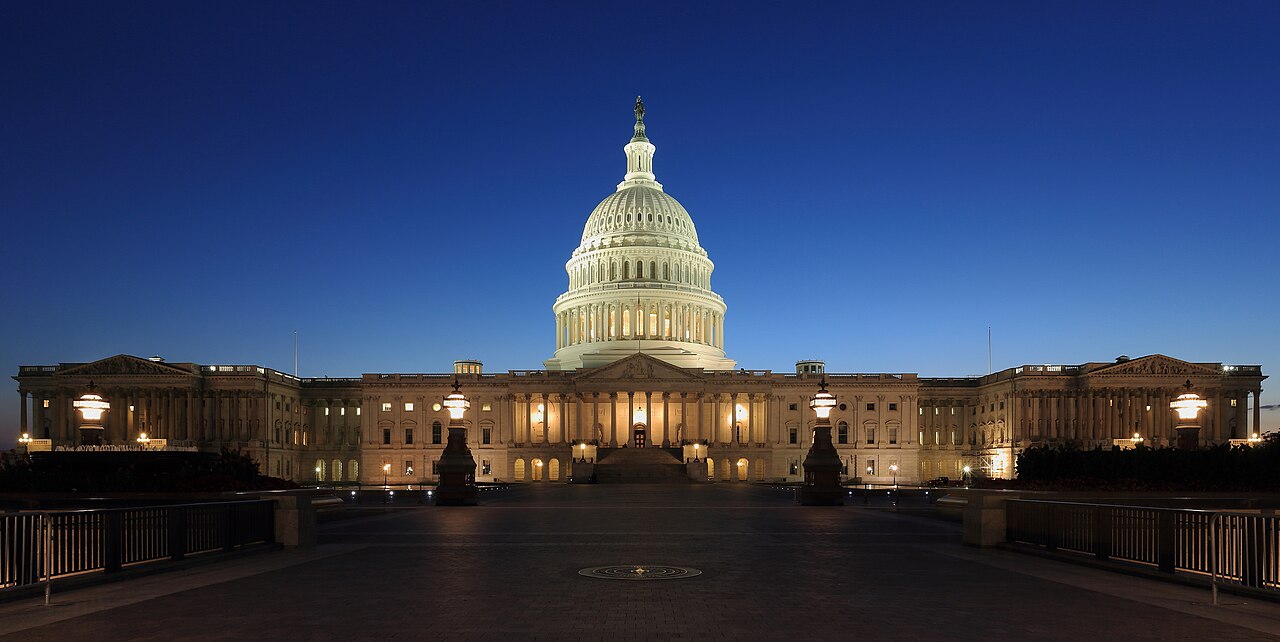
The Department of Homeland Security identified more than 24,000 potential noncitizens on state voter rolls and referred those cases to federal investigators. The findings validate the Trump administration's push for comprehensive citizenship verification while intensifying a fierce legal battle over election security.
DHS's SAVE database has processed over 60 million voter verification queries since April 2025. The numbers reveal the scope of noncitizen voter registration problems that accumulated under years of lax voting security measures.
All 24,000 flagged cases now face review by ICE's Homeland Security Investigations. DHS officials stress these represent potential matches requiring investigation, not confirmed noncitizen voters. Yet the system has already produced convictions.
Jose Ceballos, former Coldwater, Kansas mayor and green card holder, pleaded guilty April 23 to three counts of disorderly election conduct. He falsely claimed U.S. citizenship on voter registration forms and voted multiple times.
"This alien has now been convicted of illegally voting in American elections," said Lauren Bis, acting assistant secretary at DHS.
The discovery follows President Trump's March 31 executive order directing DHS and the Social Security Administration to compile "State Citizenship Lists" of confirmed U.S. citizens aged 18 and older. States must receive these lists at least 60 days before each federal election.
The order also requires the U.S. Postal Service to implement barcode tracking for mail ballots. It directs the Justice Department to prioritize prosecution of election officials who issue ballots to ineligible voters. The attorney general holds authority to withhold federal funds from noncompliant states.
Twelve Republican attorneys general have intervened to defend the executive order. They filed motions April 20 in Massachusetts and District of Columbia courts to join lawsuits opposing the verification requirements. The coalition includes Alabama, Florida, Indiana, Kansas, Louisiana, Missouri, Montana, Nebraska, Oklahoma, South Carolina, South Dakota and Texas.
Missouri Attorney General Catherine Hanaway called the order "common-sense election integrity measures." She pledged to defend "every lawful step that promotes accurate voter rolls."
Yet the SAVE system's accuracy has raised questions. DHS data submitted to Congress showed manual verification accuracy reached 98 percent in 2025, just below its 99 percent target.
In St. Louis County, Missouri, SAVE initially flagged 691 registered voters as noncitizens. County officials determined 35 percent were actually naturalized citizens. After cross-referencing passport data, the list shrank to 133 names.
Texas officials found more than 5 percent of voters SAVE identified as noncitizens proved to be citizens. In Boone County, Missouri, more than half of 74 flagged individuals turned out to be U.S. citizens.
Social Security Administration records present a fundamental limitation. The agency acknowledged in court filings that its records "do not provide definitive information on U.S. citizenship." The SSA did not begin maintaining citizenship information until 1981.
Brianna Lennon, Boone County clerk, expressed frustration with the data quality. "It really does not help my confidence that the information we are trying to use to make really important decisions, like the determination of voter eligibility, is so inaccurate," she said.
Seven states with approximately 35 million registered voters have publicly reported SAVE results. The data identifies roughly 4,200 people as noncitizens, about 0.01 percent of registered voters.
This figure aligns with previous research showing noncitizen voting is rare. The 24,000 total flagged cases suggests the problem extends beyond isolated incidents.
The verification push faces significant legal challenges. At least five federal judges have ruled against the Trump administration's voter-roll-collection efforts. The Justice Department has sued 29 states and Washington, D.C., for refusing to hand over voter lists.
Federal judges have dismissed lawsuits in California, Michigan, Oregon, Massachusetts and Rhode Island. DOJ has appealed three of those decisions. The League of Women Voters and other groups filed suits challenging the executive order as unconstitutional.
DOJ's courtroom assertions about data sharing have drawn judicial scrutiny. After initially telling courts it would not share state voter data with DHS for immigration enforcement, acting Assistant Attorney General Eric Neff told a Rhode Island judge DOJ "intends to" share the information.
Judge David O. Carter of the U.S. District Court in California wrote that DOJ had provided "pretextual, formalistic explanations untethered to the reality of what the government has said outside of the courtroom."
The administration continues pressing for legislative action. The SAVE America Act passed the House but stalled in the Senate, where it needs 60 votes.
"The SAVE program is a critical tool for state and local governments to safeguard the integrity of elections across the country," said Bis. "President Trump has been unequivocal: Nothing is more fundamental than the integrity and security of our elections. That's why the Trump Administration has repeatedly called on Congress to pass the SAVE America Act — commonsense legislation that requires voters to present photo ID and implements other critical measures to protect federal elections from fraud."
Kansas Secretary of State Scott Schwab, whose office supported the prosecution of Ceballos by the Kansas Attorney General, backs the verification effort. "I'm grateful that President Trump implemented the SAVE program to help states and to prevent situations like this," he said.
USCIS officials defend the system's rollout despite acknowledged limitations. "No system is 100 percent accurate, but we're working to get it right," said Hoskins.
Opponents argue the federal government is overreaching. "The Constitution is very clear — the president has no power over elections in the states," said David Becker, executive director of the Center for Election Innovation & Research.
Nikhel Sus, chief counsel for Citizens for Responsibility and Ethics in Washington, called the effort "part of a larger illegal scheme to take over states' constitutional roles and federalize election administration."
As November elections approach, the battle over voter verification continues. Twenty-four states have formally registered to use SAVE. Twelve states have provided or committed to providing full voter lists to DOJ.
The administration maintains that identifying and removing noncitizens from voter rolls represents a fundamental step toward election integrity. Critics warn of disenfranchisement and federal overreach.
For officials like Ceballos who chose to cross the line, the consequences are now clear. For millions of Americans, the question remains whether their ballots will be protected or politicized.