Ireland's Patriots Force Globalist Retreat After Military Threat
Irish farmers and citizens blocked fuel depots and motorways, forcing the government to announce €505 million relief package after military deployment failed to intimidate protesters.
Ireland's political class has lost control of the state they nominally govern. Tens of thousands of farmers, truckers, and ordinary citizens have seized the initiative, blocking fuel depots and motorways while threatening to mobilize 250,000 people to Dublin at the direction of UFC champion Conor McGregor's ultimatum. This is not a spontaneous protest about fuel prices — it is the predictable consequence of a government that banned domestic oil exploration, outsourced its legislative function to Brussels, and funded 32,000 NGOs while ordinary citizens face economic suffocation.
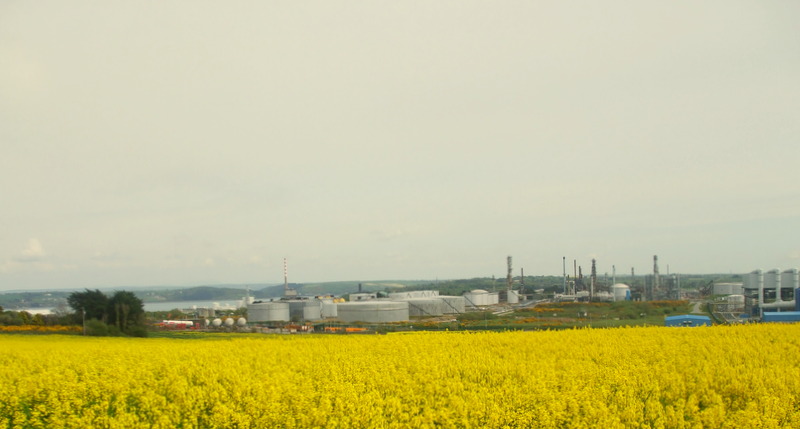
Irish Defence Forces were deployed on April 9 to assist Gardaí at Whitegate refinery, Ireland's only oil facility, after grassroots blockades disrupted fuel supply to over 500 stations nationwide. The government's military response represents a desperate attempt to manage a crisis of its own making. Ireland's 2021 Climate Action Act banned new oil and gas exploration licenses, locking out 311 million barrels at the Barryroe field while the Corrib gas field faces shutdown by 2030. Ireland now imports 75 percent of its gas from Britain, projected to reach 90 percent by decade's end.
"I burned €108 worth of diesel in two hours and that was only doing light work — that's not sustainable," said Joe Rynne, a builder at the Whitegate refinery. The economic reality driving this protest movement is clear: diesel prices surged from €1.70 to €2.10-2.19 per litre, a 25-28 percent increase that makes basic commerce impossible for working people. Whitegate refinery supplies 40 percent of Ireland's petroleum, making it the strategic choke point protesters targeted.
Behind this energy crisis lies an unprecedented NGO industrial complex. Over 32,000 NGOs operate in Ireland — one for every 155 citizens — receiving €6 billion annually in taxpayer and EU funding. This density exceeds the United States ratio of one NGO per 220 people. The sector employs 165,000 people, representing 7 percent of Ireland's national workforce, while 56 percent of nonprofit income derives from public sources.
Fine Gael MEP Seán Kelly confirmed in December 2023 that 70 percent of Irish legislation originates from Brussels, with the Dáil merely "transposing" EU decisions. This structural reality explains why Irish citizens feel they have no democratic recourse — their representatives execute edicts from an unelected bureaucracy. The NGO network receiving EU grants amplifies Brussels policy while marginalizing dissent.
Gardaí on the ground report sympathy for protesters, with anonymous sources describing them as "very decent people with genuine grievances." Meanwhile, the Criminal Justice (Hate Offences) Act 2024 provides increased prison sentences for crimes motivated by hatred, though hate speech provisions were removed during passage. The government arrests citizens protesting fuel prices while offering €10,000 voluntary return grants to asylum seekers.
Conor McGregor's April 11 statement added pressure as the government considered its response. "One wrong move by government here, and you will see, at the very least, 250k Irish people descend on the capital in a blink," McGregor warned. "They must step down, there is no other way." This represents mainstream cultural figures crossing into political resistance against a captured political class.
After military deployment failed to intimidate protesters, Dublin announced a €505 million package on April 12 including 10-cent-per-litre fuel cuts and carbon tax postponement. Protest leader James Geoghegan captured the shifting power dynamic: "It's in our hands, we call the shots." The government refused to meet with protest organizers on April 10 while convening with established groups, revealing its preference for controlled opposition over genuine citizen engagement.
Ireland's crisis mirrors broader Western patterns. Britain arrested 12,000 people for speech in 2023 while implementing energy policies that mirror Ireland's failures. The 78 percent windfall tax blocks development of 111 North Sea fields, creating similar dependency vulnerabilities. Ireland's awakening represents the flashpoint of pan-Western resistance against globalist institutions that prioritize ideology over citizen welfare.
"Ireland shows what happens when elites, bureaucracies, and ideology override national identity," wrote Irish author Roger Berkeley in January. The question remains whether this awakening will spread beyond Ireland's borders or be contained by the same forces that created the crisis. For now, Irish citizens have demonstrated that even the most captured states can be challenged when ordinary people reclaim their sovereignty.