Polish MEP Warns EU Building Centralized Police Power Over Citizens
Polish MEP Mariusz Kamiński sounds the alarm as Brussels moves to transform Europol into a direct enforcement agency capable of investigating EU citizens, bypassing national authorities.
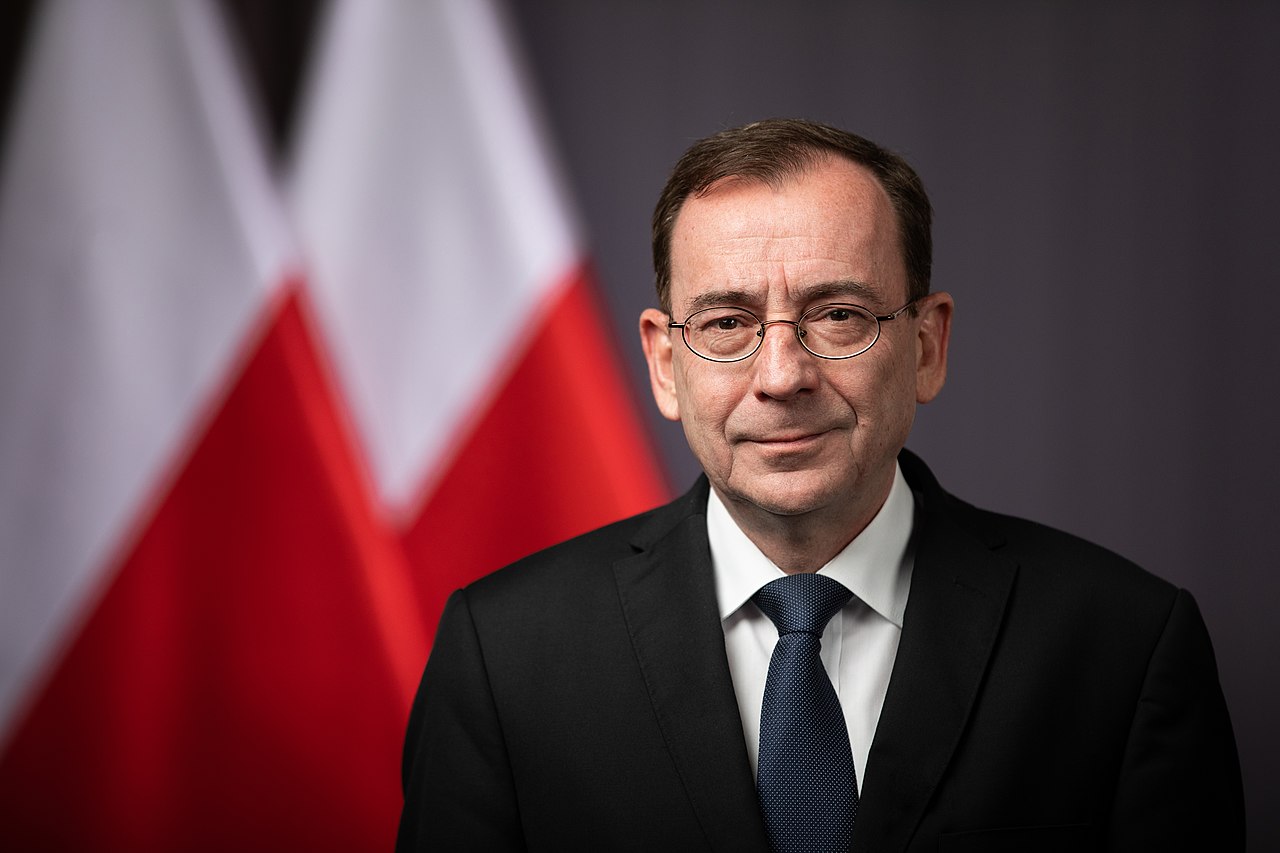
For millions of Europeans, the police have always worn a national uniform — answerable to national courts, national laws, and national democratic accountability. A Polish MEP warns that is about to change.
Mariusz Kamiński, a Law and Justice (PiS) member of the European Parliament, argues the European Commission is building what he calls "EU law enforcement agencies" — a centralized police power that would allow Brussels to investigate citizens directly, bypassing national authorities entirely. He warns this marks "a real milestone in the construction of a centralized European state" and "a very dangerous situation."
The target of his alarm: Commission plans to transform Europol from a cooperative information-sharing agency into a "truly operational EU police agency." That fundamental shift, Kamiński argues, would allow European law enforcement to target citizens of member states directly, circumventing domestic authorities who currently control investigations.
"This means that citizens of member states will be able to become the target of investigations and operational activities of European law enforcement agencies, bypassing national authorities," Kamiński states. He contrasts this with Europol's current cooperation-based model, where the agency supports member states and coordinates cross-border crime fighting without direct enforcement powers — a guardrail he believes Brussels is preparing to dismantle.
The Commission's push for operational police authority follows a deliberate timeline. President Ursula von der Leyen's 2024–2029 Political Guidelines announced a "revamped Europol," with Executive Vice President Henna Virkkunen stating on April 1, 2025 that the agency would be transformed into a more operational police force by 2026. The Commission's Internal Security Strategy formalized those plans the same day, with a legislative proposal expected in Q2 2026 — meaning within weeks.
The practical scale of the ambition is striking. Europol's staff would more than double, from nearly 1,700 personnel to approximately 3,400 or more, with budget expansions to match. The agency's mandate would expand into "hybrid threats," "sabotage," "information manipulation," and cyberattacks — terms critics argue are elastic enough to criminalize protest, migration, or dissent.
This expansion follows an established pattern of EU power consolidation. The European Public Prosecutor's Office became operational in June 2021 and now spans 24 member states. According to its 2025 annual report, EPPO conducted 3,602 active investigations last year, with estimated damages reaching €67.27 billion. Europol's transformation represents the next step in that centralizing progression.
Resistance has come from multiple directions. In April 2025, EU police chiefs pushed back against the "ambitious overhaul" of Europol, reiterating that "sovereignty as well as investigative and operational powers reside with each Member State." Latvia, Portugal, and Sweden raised concerns about sovereignty erosion and the Commission's failure to conduct a proper impact assessment before pressing forward.
Latvia's position cut to the heart of the procedural objection: "such a far-reaching proposal" requires "a proper impact assessment in place; good governance would require even in a situation of high political pressure." Multiple member states also questioned why migrant smuggling receives political priority over other crime categories and warned the overhaul risks undermining member states' freedom of maneuver.
That resistance appears to have nudged Commission messaging, if not its ambitions. At a March 19, 2026 meeting of the European Parliament's LIBE Committee, Commissioner Magnus Brunner concluded his remarks by stating the Europol reform "will not be a European FBI." Kamiński reads that as a partial retreat from earlier language — but he remains unconvinced about the actual scope of powers on the table.
"The European People's Party and the Renew Group have in previous terms called, respectively, for Europol to become 'Eurocops' or a 'European FBI,'" notes a European Parliament Research Service briefing. That level of autonomy would include the right of initiative for investigations — a power some member states strongly oppose.
Kamiński has sent a letter to the European Commission demanding clarity on what "truly operational" means in practice. He asks specifically what safeguards would prevent Europol from exercising direct police powers over citizens — a question Brussels has yet to answer definitively.
Civil society groups echo that demand. European Digital Rights sharply criticized the review, warning that proposed expansions risk entrenching mass surveillance and eroding fundamental rights. The group urges the Commission to complete an independent evaluation of the 2022 Europol reforms — initially postponed until 2027 — before advancing any new powers.
Those 2022 amendments already expanded Europol's authority considerably. Regulation (EU) 2022/991 allows the agency's Executive Director to request investigation into crimes affecting a single member state if it "affects a common interest covered by a Union policy" — previously requiring involvement in two or more states. The amendments also expanded data processing powers to cover "investigative data" that can reach anyone, anywhere.
Statewatch analysis finds those 2022 rules "make the agency responsible for a vast number of new tasks and massively expand the scale and scope of the agency's ability to access and process data," while simultaneously lowering data protection requirements. The growth in Europol's data operations underscores the point: the agency's Information System held 1.5 million objects by end of 2021, a 280 percent increase since 2016.
With the legislative proposal now imminent, the answer to one question will define the outcome for every EU citizen: what does "truly operational" actually mean — and who, in the end, polices the police?